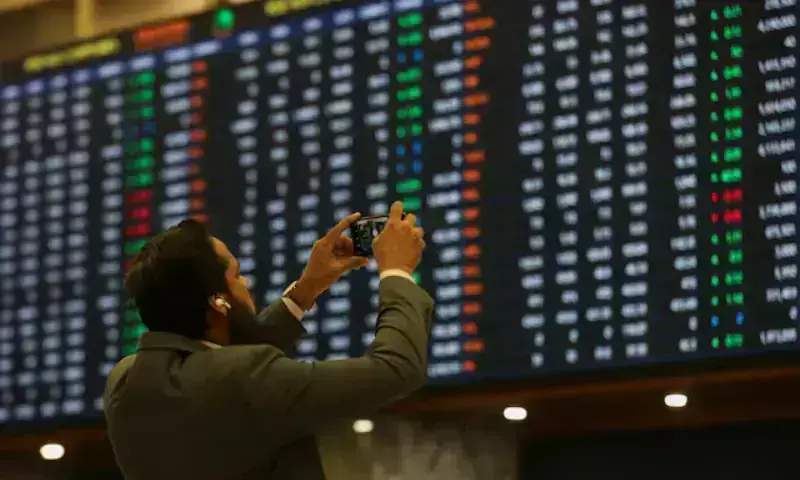



KARACHI — Panic selling gripped the Pakistan Stock Exchange (PSX) on Tuesday as the benchmark KSE-100 index plunged by more than 4,500 points in intraday trade, mirroring intense anxieties over escalating military tensions in the Middle East.
The benchmark index fell past critical support levels, extending a steep downward trajectory that began during the previous session.
پاکستان اسٹاک مارکیٹ میں بدترین مندی#BOLNews #BreakingNews pic.twitter.com/tf4EHXsivh
— BOL Network (@BOLNETWORK) July 14, 2026
Market Breakdown (July 14, 2026)
Following Monday’s drop below the 180,000-point psychological threshold, the selling pressure intensified immediately after Tuesday’s opening bell.
At 10:00 AM, the KSE-100 plunged 3,464.89 points to hover at 176,462.15. By 12:30 PM, cumulative losses had widened to 4,588.79 points, dragging the index down to 175,338.25 — representing a sharp 2.55% single-day collapse.
The Strait of Hormuz Crisis
The primary catalyst behind the market’s risk-off sentiment is the rapidly deteriorating security situation in the Strait of Hormuz.
Following the United States’ decision to reinstate its naval blockade of Iran, both nations stepped up hostile actions in the vital shipping corridor. This sudden escalation abruptly broke the relative peace established by the bilateral memorandum of understanding signed on June 17.
The immediate fallout has reverberated directly through global commodity and domestic equity markets. Brent crude futures climbed 1.8% to $84.80 per barrel, while US West Texas Intermediate (WTI) jumped 2.2% to $79.84. Both reached four-week highs, raising immediate red flags over Pakistan’s future import bill.
Sectors highly sensitive to energy costs and economic cycles — including cement, steel, and automotive — suffered the heaviest percentage losses. The sudden geopolitical risk also triggered automated and manual profit-locking from institutional investors, eager to cash out after the KSE-100’s record-breaking rallies earlier in the year.
With crude prices climbing and shipping routes threatened, analysts warn that medium-term macroeconomic projections may face downward revisions if the blockade drags on, leaving local equities vulnerable to further volatility.