



ISLAMABAD — The federal government on Thursday sanctioned the supply of 175,000 tonnes of 100 percent fresh indigenous wheat to the Pakistan Army and formally integrated an international definition of “forced labor” into its national import policy framework.
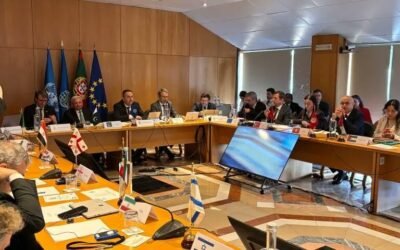
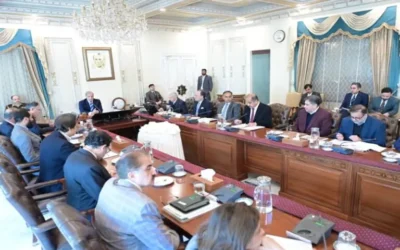
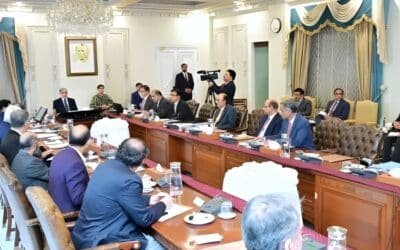
The benchmark decisions were ratified during a high-level assembly of the Economic Coordination Committee (ECC) of the cabinet, presided over by Federal Minister for Finance and Revenue Muhammad Aurangzeb.
Shift to Local Crop Boosts Quality, Cuts Costs
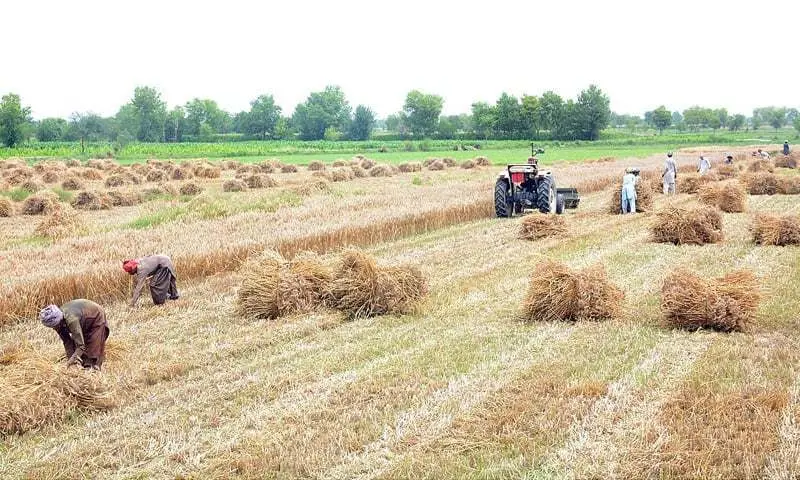
The Ministry of Defence had formally requested that the military’s staple dietary allocation be pulled entirely from the fresh 2026-27 domestic harvest. The military administration emphasized that wheat flour remains the core staple for armed forces personnel, directly impacting the operational morale of troops stationed in extreme environments ranging from glacial peaks to arid desert terrains.
Historically, the Pakistan Agricultural Storage and Services Corporation (Passco) fulfilled the army’s annual 175,000-tonne quota on a 50:50 ratio blending imported and domestic grains. However, the reliance on imported grains precipitated widespread internal complaints regarding taste, texture, cooking behavior, and the visual appearance of traditional chappatis.
ECC Approves Key Measures on PASSCO Winding-Up and Trade Policy
The Economic Coordination Committee (ECC) of the Cabinet met today under the chairmanship of the Federal Minister for Finance and Revenue, Senator Muhammad Aurangzeb, and approved summaries submitted by various… pic.twitter.com/2yye1OztB9
— Ministry of Finance, Government of Pakistan (@Financegovpk) July 2, 2026
Following a temporary window where the military had to source local wheat independently via private contractors to guarantee food quality, the ECC has permanently authorized a 100 percent domestic supply model. The fiscal realignment is projected to save an additional Rs 2.8 billion in state expenditure, according to the military’s finance wing.
Legal Realignment with ILO Global Conventions
In a bid to strengthen Pakistan’s trade governance and international compliance, the ECC approved an official amendment to the Import Policy Order 2022. The directive incorporates a precise legal definition of “forced labor” modeled after the International Labour Organisation (ILO) Forced Labour Convention 1930 (No. 29).
Under the newly adopted code, forced or compulsory labor is defined as all work or services extracted from any individual under the menace of any penalty, and for which the said person has not offered themselves voluntarily.
The commerce ministry clarified that this definition will strictly exclude standard civic duties, compulsory military service, or any essential emergency services ordered by a court of law.
Summary of Major Economic Cabinet Decisions
| Policy Focus Area | Approved Measure & Scope | Strategic Objective |
| Military Logistics | 175,000 tonnes of 100% indigenous wheat (2026-27 crop) | Enhances nutritional quality for frontline troops; eliminates reliance on imported wheat lines. |
| Labor & Trade Reform | Institutionalized the ILO definition of “Forced Labor” | Reinforces compliance with global trade bodies and strengthens international export credentials. |
| Corporate Winding-Up | Rs 4.188 billion corporate severance package for Passco staff | Facilitates an orderly termination of the corporation on par with Utility Stores Corporation models. |
| Commodity Liquidation | Open bidding auction of 8,197.989 tonnes of flood-damaged grain | Minimizes state treasury losses via third-party validated competitive disposal. |
Beyond agricultural and trade frameworks, the committee evaluated a financial sustainability and structural governance roadmap presented by the Ministry of Federal Education and Professional Training concerning Quaid-i-Azam University (QAU) in Islamabad.