



WASHINGTON / UNITED NATIONS — The United States has reaffirmed its firm support for Pakistan’s right to defend itself against persistent terrorist attacks. The endorsement comes at a critical geopolitical juncture, just as a split vote at the United Nations General Assembly disrupted a two-decade-long consensus on global counterterrorism policy.
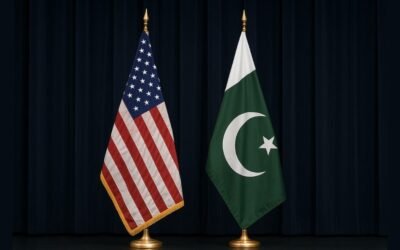
A spokesperson for the US State Department stated that the American government “supports Pakistan’s right to defend itself against terrorist attacks,” acknowledging that the Pakistani people have suffered immensely at the hands of violent extremists.
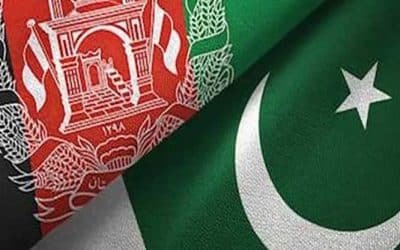
The validation follows targeted counterterrorism operations executed by Pakistani forces along the volatile Afghan border. The operations were launched in direct retaliation for a recent terrorist assault targeting the Pakistan Rangers Sindh local headquarters in Karachi’s Gulistan-i-Jauhar area.
US says it supports Pakistan’s right to defend itself against ‘terrorist attacks’ https://t.co/Bz5GoiqOHU https://t.co/Bz5GoiqOHU
— Reuters (@Reuters) July 2, 2026
UN Consensus Fractures Over Strategy Review
Despite the alignment between Washington and Islamabad regarding cross-border defense, the two nations found themselves on opposite sides of a historic UN vote. On July 1, the United Nations General Assembly adopted the ninth review of the Global Counterterrorism Strategy (GCTS).
For the first time since the framework’s adoption in 2006, the traditional consensus collapsed, forcing a recorded vote. The resolution ultimately passed with 140 nations voting in favor—including Pakistan—while a prominent minority bloc actively opposed or abstained from the draft.
Voting Split and Policy Objections
| State / Bloc | Vote Position | Core Institutional Objections |
| United States | Against | Described the text as “bloated, outdated, and lacking focus.” Argued that the 170-plus paragraph document watered down operational requirements and ignored explicit US policy redlines. |
| Israel & Argentina | Against | Criticized the resolution for being repetitive and failing to incorporate institutional modernization to track modern threats. |
| Pakistan & OIC | In Favor (With Reservations) | Supported the wider framework but explicitly regretted that proposals from Islamic countries regarding foreign occupation, state terrorism, and Islamophobia were ignored. |
| Japan | Abstained | Initially recorded as an abstention due to a technical error; the delegation later clarified its intent was to vote in favor. |
Pakistan Warns of Decentralized, Evolving Threats
Addressing the UN General Assembly plenary session, Pakistan’s Permanent Representative to the UN, Ambassador Asim Iftikhar Ahmad, reminded the assembly of the devastating human toll of the conflict, noting that more than 1,200 Pakistanis were killed in terrorist incidents over the past year alone.
Ambassador Iftikhar underscored that while Pakistan remains at the vanguard of global counterterrorism—playing an indispensable role in degrading Al Qaeda—the current UN architecture is failing to address modern gaps.
“A terrorism-free future requires a comprehensive multilateral approach that rejects any attempt to equate the legitimate struggle for self-determination under international law with terrorism.”
— Ambassador Asim Iftikhar Ahmad, Pakistan’s Permanent Representative to the UN
The Pakistani envoy urged comprehensive reforms in the UN counterterrorism framework, calling for:
Digital Financial Regulation: Stricter multilateral control over digital assets, virtual currencies, and crypto networks to choke terrorist financing channels.
Tech Platform Accountability: Improved global regulation of major social media architectures to combat online radicalization, asymmetric recruitment, and state-sponsored disinformation.
Institutional Neutrality: Safeguarding intergovernmental oversight bodies—such as the Financial Action Task Force (FATF)—from being weaponized as political tools by individual states.