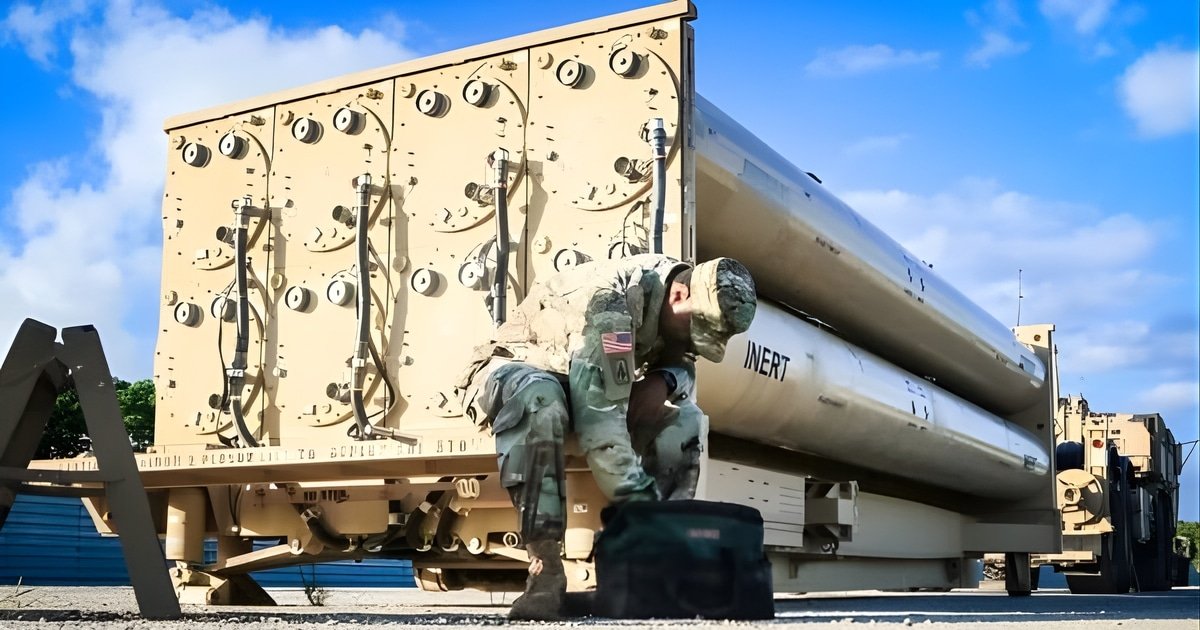





The United States has initiated a strategic redeployment of its most advanced missile defense assets, shifting components of the THAAD system from the Korean Peninsula to the Middle East. This urgent “rebalancing” follows the heavy depletion of interceptor stocks and the reported destruction of critical radar units during the first 12 days of Operation Epic Fury.
🚨⚡️ Washington is pulling THAAD and Patriot systems from South Korea to reinforce Israel after reports that at least two AN/TPY-2 radars were lost at a U.S. base in the Gulf — not the Arab Gulf states that paid trillions for “protection.” Gulf. pic.twitter.com/Jadzc1TcTG
— SilencedSirs◼️ (@SilentlySirs) March 12, 2026
Bolstering Israel’s Shield
The deployment is specifically designed to reinforce Israel’s “layered” defense architecture, which has been under sustained pressure from Iranian ballistic missile barrages.
- Radars Targeted: Satellite imagery recently confirmed that Iranian strikes may have successfully targeted AN/TPY-2 radars (the “eyes” of the THAAD system) in Jordan and the UAE, creating dangerous gaps in early warning coverage.
- Interceptor Shortfall: Analysts estimate that the U.S. Army has expended a significant portion of its THAAD interceptor inventory—potentially leaving fewer than 200 missiles remaining globally for a conflict of this intensity.
- The “Patriot” Shift: Alongside THAAD, advanced MIM-104 Patriot batteries are also being moved from the Indo-Pacific to protect U.S. regional hubs like Al Udeid Air Base in Qatar.
BREAKING:⚡🚨
🇺🇸❌🇰🇷South Korea returned all its deployed THAAD and Patriot systems to US for defending Israel from Iranian missiles and drones.
🚨Reports indicates, a major American Air Defense setback for Japan and South Korea or Taiwan. pic.twitter.com/yADOuShnMU
— RealWestern (@RealWester19512) March 12, 2026
South Korea’s Defensive Gamble
The move has sparked a heated debate in Seoul regarding the “hollowing out” of South Korea’s defense against North Korea.
- Presidential Stance: South Korean President Lee Jae-myung stated that while he opposes the transfer, he “cannot fully enforce” Seoul’s position on U.S. military asset movements.
- The Deterrence Argument: President Lee reassured the public that South Korea’s own military budget (roughly 1.4 times North Korea’s GDP) and existing domestic systems are sufficient to maintain deterrence.
- The “Self-Reliance” Call: However, the transfer has intensified calls for South Korea to accelerate its own high-altitude defense programs, such as the L-SAM, to reduce dependence on shifting U.S. priorities.
The Economic Burden of Missile Defense
The financial cost of maintaining this “exquisite” defense is becoming a central issue in Washington.
- Munition Burn: The U.S. reportedly burned through $5.6 billion in munitions during the first 48 hours of the war alone.
- Replacement Gap: Defense experts warn that new THAAD interceptors ordered today may not be delivered until April 2027, creating a “protection gap” that Iran appears to be exploiting through high-volume, low-cost drone and missile swarms.
“The reality is that we are using million-dollar interceptors to stop thousand-dollar drones. This is not a sustainable economic model for a protracted war.” — Analysis from CSIS.
You May Like To Read: Iranian Strikes Ignite Tankers in Iraq as Conflict Defies ‘Victory’ Claims
A Global Rebalancing?
The redeployment proves that the war with Iran is no longer a localized conflict; it is forcing the U.S. to choose between theaters of operation. If North Korea perceives a significant weakening of the “THAAD shield” in Seongju, it could embolden provocations in the Indo-Pacific.
Check out our latest video: