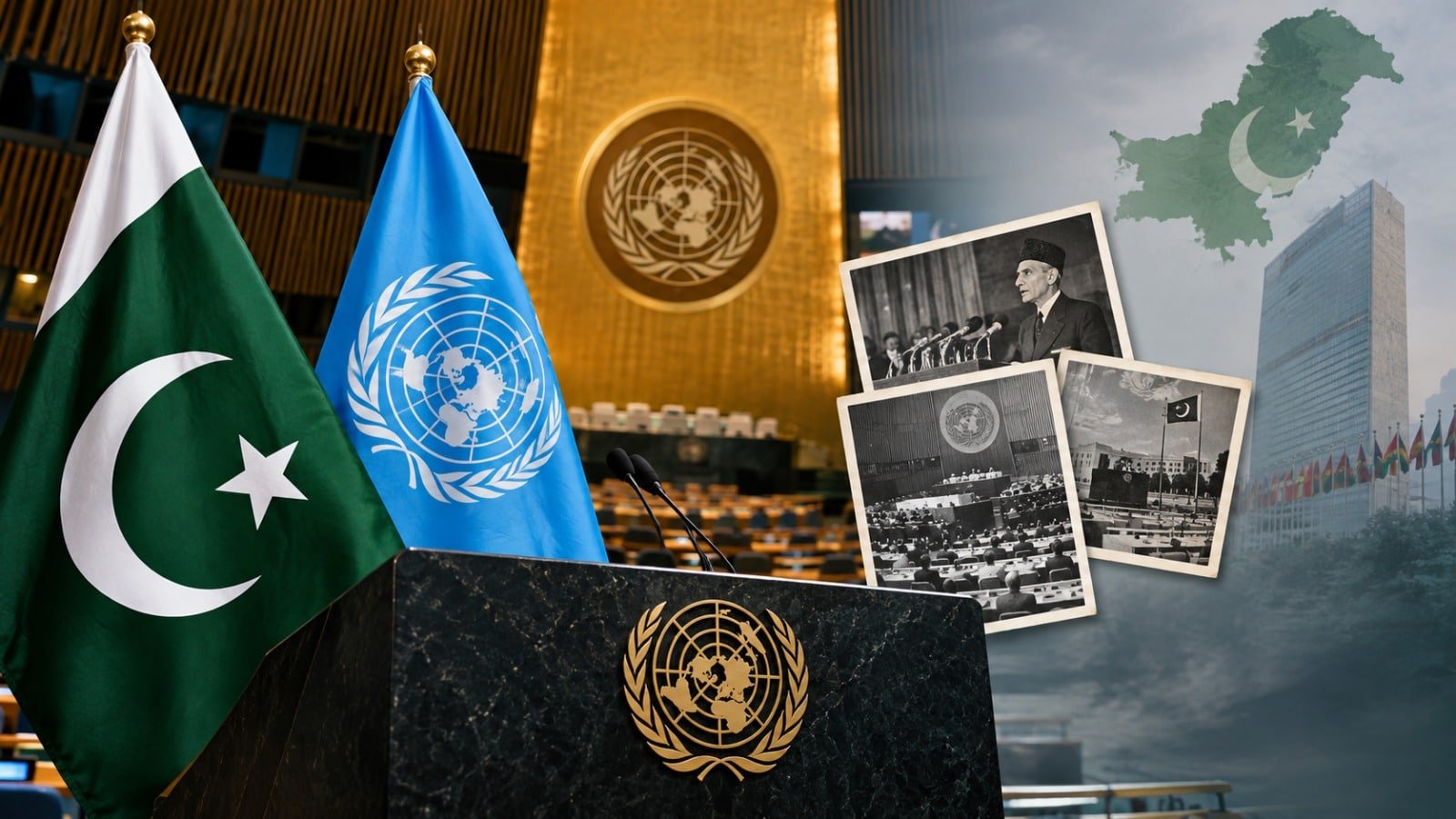



Pakistan became a UN member in September 1947, three weeks after independence. Since then, Pakistan has had the chance to participate in the annual general debate of the General Assembly on a yearly basis without any break, including wars, pandemics, or other events. That means Pakistan has been represented at the podium around 78 or 79 times. That’s the most honest way to look at the number.” There is no official scoreboard for “Pakistan’s UNGA speech count”, and whoever has delivered it has depended on the country’s political climate. Sometimes the president has spoken, sometimes the prime minister has spoken, and sometimes a foreign minister has filled in when the top leader couldn’t travel, or the government was in crisis. Several sessions were held virtually, the COVID-19 pandemic being the most prominent. So it is more useful and accurate to look at who has spoken and the topics they have repeatedly mentioned, rather than trying to find a precise number.
How remarkable that these themes have been so constant through nearly eight decades of dramatically different governments, military and civilian, left and right, allied with Washington and allied with Beijing. Every year, almost without fail, there are three subjects: Kashmir, a complaint of global justice about the international system being biased against poor countries, and the security crisis Pakistan is passing through.
The early years: a young state finds its voice
Pakistan’s first Foreign Minister, Sir Muhammad Zafrulla Khan, effectively was Pakistan’s UN voice for its first seven years in existence, heading the country’s delegation to the General Assembly from 1947 to 1954. He became such a fixture of the institution that he was later elected President of the General Assembly itself for its 17th session in 1962, and went on to preside over the International Court of Justice, the only Pakistani to ever hold that post.
Those early Pakistani interventions at the UN were dominated almost entirely by Kashmir. The dispute erupted within months of independence, went to the Security Council in January 1948, and set the template Pakistan has followed at nearly every UN platform since: frame Kashmir as an unresolved decolonization issue, invoke the UN’s own Security Council resolutions calling for a plebiscite, and press the international community to finish what it started. That framing hasn’t meaningfully changed in over seventy years, even as the diplomatic weather around it has shifted many times over.
The Bhutto era and the walkout that’s more famous than any speech
The single most quoted moment in Pakistan’s UN history isn’t technically a General Assembly speech at all. On December 15, 1971, with Pakistani forces in the east collapsing and Bangladesh’s independence imminent, Foreign Minister Zulfikar Ali Bhutto addressed the Security Council, not the General Assembly, and delivered a speech that ended with him tearing up his notes and walking out of the chamber. His line “we will fight for a thousand years, if it comes to that” is still one of the most recognized quotes in Pakistani political history. He flew home days later to become president.
It is important to distinguish that moment from Bhutto’s real appearances at the General Assembly, which happened in the 1970s, when the tone was more consistent. These appearances centered on Pakistan’s early position on nuclear issues after India’s 1974 test, to which Bhutto responded with his famous promise that Pakistanis would “eat grass” if they had to so as to build their own bomb. Bhutto was president and then prime minister during this time. That has been the essence of Pakistan’s nuclear messaging at the United Nations ever since – that nuclear weapons are not a first strike, but rather an existential response to an Indian threat.
The Zia years: Afghanistan takes center stage
In the 1980s, General Zia-ul-Haq’s UN statements for Pakistan were more or less directed at Afghanistan. In 1979, the Soviet Union invaded Afghanistan, making Pakistan a frontline state, the base for a US-supported insurgency against the Soviet forces, and home to millions of Afghan refugees. This was a major part of Zia’s UN messaging, highlighting Pakistan’s role in bearing a major humanitarian burden and pushing for a negotiated Soviet withdrawal.
Kashmir didn’t disappear from the agenda in this decade, but it took a back seat to the more immediate crisis on Pakistan’s western border, a pattern that would repeat itself again after 2001, when Afghanistan once more became impossible for any Pakistani leader to avoid discussing at the UN.
Benazir Bhutto and the return of a civilian voice
Benazir Bhutto’s two terms as prime minister, in the late 1980s and again in the mid-1990s, brought a different register to Pakistan’s UN presence: democracy and human rights framing, alongside the standing Kashmir position, at a time when Pakistan was trying to rebuild its international image after a decade of military rule. She used the platform to position Pakistan as a moderate, democratic Muslim-majority state, a theme that would resurface decades later in different forms under other leaders trying to counter perceptions of the country as unstable or extremist.
1998: the year Pakistan told the world it had the bomb
Nawaz Sharif’s address to the 53rd session of the General Assembly, delivered on September 23, 1998, is one of the more consequential Pakistani UN speeches on record, simply because of the timing. Four months earlier, India had conducted nuclear tests at Pokhran, and Pakistan had responded within weeks with its own six tests at Chagai. By the time Sharif reached the podium in New York, the entire South Asian security picture had changed.
He carefully framed his message around the idea of self-defense. According to the official record of the UN meeting, Sharif told the Assembly that Pakistan had not carried out the tests but had been forced to acquire nuclear deterrence because of India’s meddling with the strategic balance in the region. He paired this with a truly remarkable pledge – a stated intention not to violate the Comprehensive Nuclear-Test-Ban Treaty by September 1999. He also warned that Pakistan would invoke the treaty’s supreme national interest clause to opt out of any commitment if India resumed testing. Now the claim that a settlement was more urgent because of nuclear parity was explicitly linked to Kashmir and incorporated in the same speech.
Sharif returned to the same podium in 2016, after the Uri attack had inflamed India-Pakistan tensions again, with a speech that leaned heavily on Kashmir, demanded the release of what he called Kashmiri political prisoners, called for a UN-supervised plebiscite, and pointed to Pakistan’s Zarb-e-Azb military operation as evidence of its own seriousness on counterterrorism. India’s response, delivered through its right of reply, called the speech an act of self-incrimination given Pakistan’s own record on militancy, a pattern of sharp verbal exchanges between the two delegations that has become a near-permanent fixture of UNGA week every year.
Musharraf and the post-9/11 pivot
General Pervez Musharraf’s UN appearances after 2001 were shaped entirely by one event. Overnight, Pakistan went from a state under American sanctions over its nuclear tests to a frontline ally in the US-led war on terror. Musharraf’s UN messaging in this period stressed Pakistan’s cooperation against al-Qaeda and the Taliban, sought international recognition for the cost the country was absorbing, in lives, displacement, and military resources, and continued pressing the Kashmir position, though with less room to maneuver given Pakistan’s dependence on Washington’s goodwill at the time.
Zardari, and Kashmir amid Pakistan’s own war on terror
Asif Ali Zardari’s presidency in the years after 2008 coincided with Pakistan’s own brutal internal fight against domestic militancy, including the Pakistani Taliban’s insurgency in the northwest. His UN statements during this period balanced Kashmir with a case that Pakistan itself was a leading victim of terrorism, not merely a state accused of exporting it, a defensive framing that Pakistani leaders have had to maintain at the UN ever since, given how often the terrorism question gets thrown back at Pakistan’s delegation by India and others.
Nawaz Sharif’s third term: climate arrives on the agenda
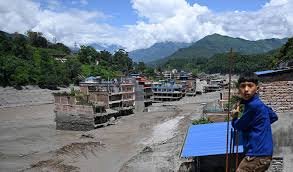
A new theme had firmly entered Pakistan’s UN vocabulary by the time Nawaz Sharif addressed the 69th session in 2014: climate change, driven by lived experience rather than abstract concern. “The recent monsoon floods have killed hundreds, displaced millions and destroyed homes, livelihoods and crops,” Sharif told the Assembly, taking the opportunity to call on the international community to move from talking about climate change to funding a response. He said this was in line with Pakistan’s Vision 2025 plan, which was to present Pakistan as a state with its own development agenda and deserving of international support and not just a victim of global ills. Sharif also used the platform to reiterate Pakistan’s nuclear posture of “credible minimum deterrence and restraint” rather than an open-ended arms race with India. This language has been remarkably consistent across multiple Pakistani leaders since then.
Imran Khan: the most quoted Pakistani UNGA speech in a generation
Imran Khan’s September 2019 address to the 74th session is probably the single most discussed Pakistani UN speech since Bhutto’s 1971 walkout, and for good reason. It came weeks after India revoked Article 370, stripping Jammu and Kashmir of its special constitutional status, and Khan built an emotionally charged, unscripted-feeling address around four connected themes: climate change, global money laundering by corrupt elites, rising Islamophobia worldwide, and Kashmir.
Khan opened with climate, warning that ideas without funding were “mere hallucination” and noting Pakistan’s position among the countries most exposed to glacial melt and extreme weather. He moved to money laundering, arguing that wealth siphoned out of poor countries by their own ruling elites into Western financial systems did as much damage as any foreign exploitation. He then connected Islamophobia in the West to what he described as a wave of Hindu nationalist politics in India, before spending the back half of the speech on Kashmir, framing India’s actions as a humanitarian crisis under curfew and warning, in a moment that generated global headlines, that a war between two nuclear-armed states was not an unthinkable outcome if the situation wasn’t defused. Coverage from UN News at the time captured this directly, describing Khan as warning of the risk of all-out conflict.
The four-theme structure of 2019 had become something close to a template, rather than a one-off, as he returned to nearly the same set of themes in a virtual address in 2020, adjusted for the moment: Pakistan’s COVID-19 response as a policy success story, continued warnings on climate, and the same underlying case on Islamophobia and Kashmir.
Shehbaz Sharif: floods, mediation, and the Trump factor
Shehbaz Sharif’s UN appearances since taking office have been shaped by two very different pressures. His 2022 address came in the immediate aftermath of Pakistan’s catastrophic monsoon floods, which put climate finance and loss-and-damage funding at the center of Pakistan’s UN messaging in a way even sharper than Nawaz Sharif’s 2014 speech, given the scale of that year’s devastation.
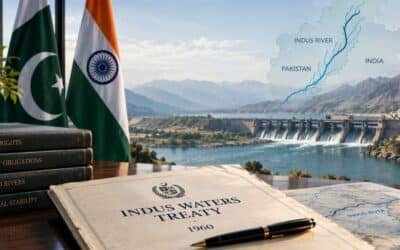
His 2025 address, delivered at the 80th session, was marked by a substantial change in tone across India. Sharif told the Assembly that Pakistan had “won the war” in May 2025 and was now seeking “peace” after a brief and intense military clash with India. He also credited a ceasefire brokered by US President Donald Trump, whom Pakistan had formally nominated for the Nobel Peace Prize. He reiterated Pakistan’s long-standing position on Kashmir’s right to self-determination and called for a full-fledged dialogue with India on the Indus Waters Treaty framework. Importantly, he also condemned what he called “Hindutva-driven extremism” as a global threat, continuing the critique of religious nationalism that Imran Khan had brought years before into official government rhetoric under a different party altogether. This is a sign of just how durable some of these talking points have grown, regardless of who is actually in power in Islamabad.
That mediation story has surfaced again just this week. President Trump, during the 81st session of the UNGA, mentioned Prime Minister Shehbaz Sharif as a “terrific man” and brought up the Pakistan-India ceasefire in his list of eight wars his administration had helped resolve. The government of Pakistan has publicly embraced this framing, though it remains contentious with India, which has consistently rejected any suggestion that the crisis was resolved through outside mediation rather than direct bilateral de-escalation. Shehbaz Sharif will be expected to address this session on September 25, and previews from Pakistan’s UN ambassador suggest the address will discuss the broader regional security picture, climate finance, Kashmir and Palestine.
The themes that never really change
And if you step back from the individual speeches, you see a pattern emerge. Kashmir has been cited in almost every Pakistani UNGA speech since 1947, irrespective of who was speaking or which country Pakistan was closest to. The framing of nuclear weapons as a defensive necessity rather than as an act of aggression has been a recurring theme in discussion since 1998 and has never really diminished in importance. Terrorism is forever, but the frame in which it is framed is decade-specific. At one point, Pakistan is framed as an ally in the war on terrorism, and at another, it is defending itself against accusations of facilitating it. Climate change, after the devastating floods of 2010 and 2022, is the latest and most serious addition to this list. It is the only issue where Pakistani UN statements now attract genuine international sympathy, instead of the usual bilateral pushback from India.
What has changed more than the content is the emotional register. Zafrulla Khan and the early foreign ministers were careful, legalistic in their language, the language of a new state trying to make its mark in an institution it had just joined. Bhutto was in open dramatic defiance. To the audience, Zia and Musharraf were generals presiding over alliances of convenience. Imran Khan’s speech was more a campaign speech in the sense that it was unscripted, personal, and designed as much for viral videos as a diplomatic record. Shehbaz Sharif’s latest speeches are transactional and measured, linked closely to specific ongoing negotiations, water rights, ceasefire credit, and climate financing, rather than broad ideological statements. The venue has been the same for seventy-eight years. The championing of Pakistan on the podium and the person there change with every government that comes to power.
Frequently asked questions
How many times has Pakistan addressed the UN General Assembly?
There’s no official published count, but Pakistan has held UN membership since September 1947 and the General Assembly’s general debate has occurred every year since the UN’s founding, so Pakistan has had a speaking slot at roughly 78 to 79 sessions. Who actually delivered each address, president, prime minister, or foreign minister, has varied with Pakistan’s political situation at the time.
What is the most famous Pakistani speech at the UN?
Zulfikar Ali Bhutto’s December 1971 address to the UN Security Council, which ended with him tearing up his speech and walking out, is the most iconic, though it was a Security Council session, not a General Assembly address. For General Assembly speeches specifically, Imran Khan’s 2019 address on Kashmir, Islamophobia, and climate change is probably the most widely discussed in recent memory.
Does Pakistan always raise Kashmir at the UN?
Yes, in some form, in nearly every General Assembly address since 1947, regardless of which party or which type of government, civilian or military, was in power. It’s the single most consistent theme in Pakistan’s UN messaging.
When did climate change become a major theme in Pakistan’s UN speeches?
It rose to prominence following major monsoon floods in 2014 and gained rapid momentum after devastating floods in 2022. This event caused Pakistan to place climate finance and loss-and-damage compensation as a key UN demand under Shehbaz Sharif.
When is Shehbaz Sharif’s next UNGA speech?
His office has said he will speak at the 81st session of the General Assembly on September 25, 2026, when he is expected to talk about Kashmir, Palestine, climate change, and multilateral cooperation.
You May Like To Read: Inside the New Pakistan-China Boundary Commission — And Why India Is Furious About It