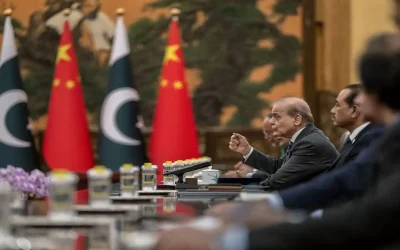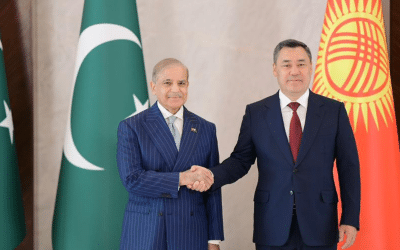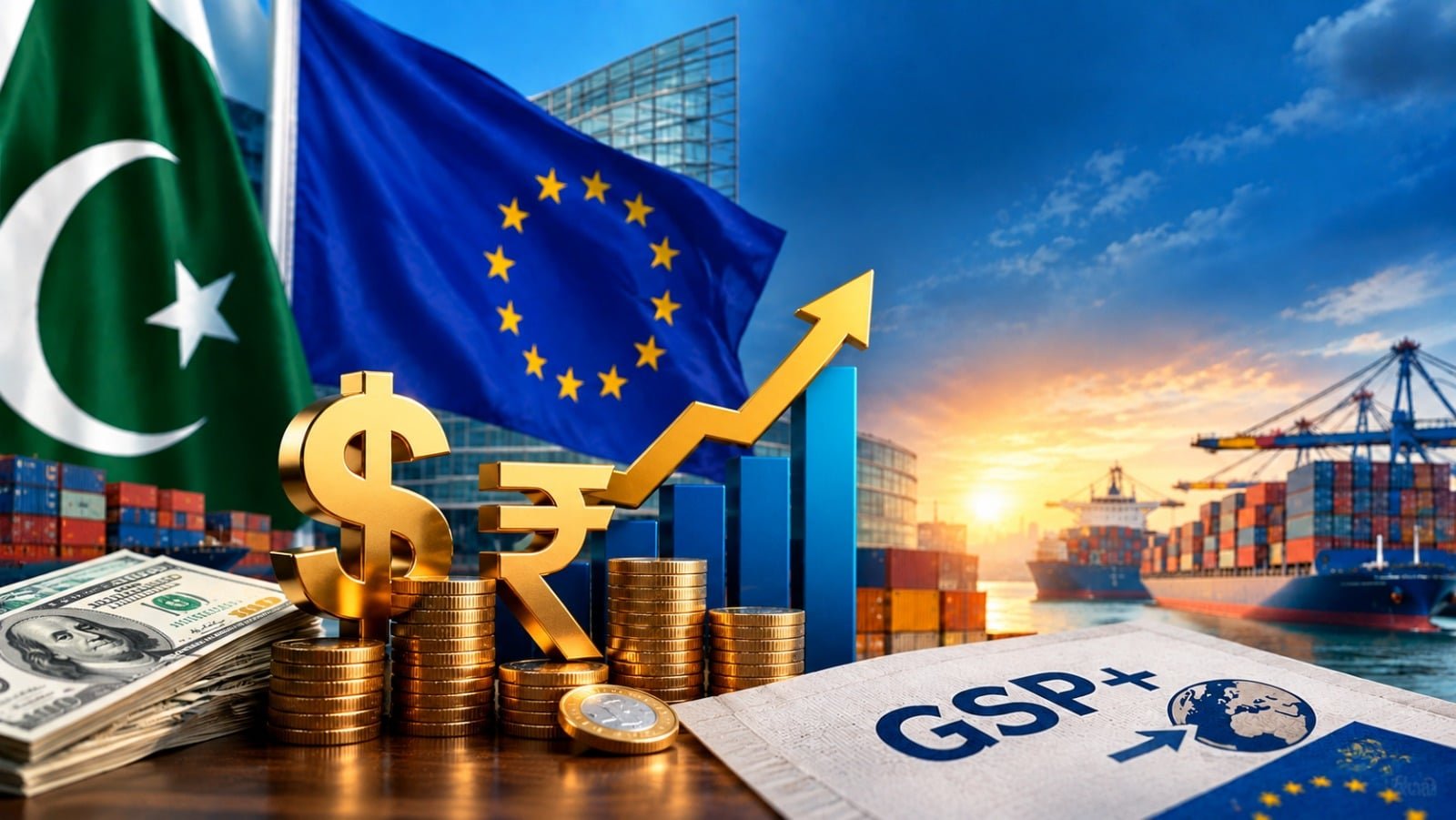


On September 23, in a meeting room on the sidelines of the UN General Assembly in New York, Prime Minister Shehbaz Sharif sat down with two of the EU’s most senior officials, European Council President António Costa and European Commission President Ursula von der Leyen, and made a point of bringing up one specific trade scheme. Not aid. Not investment pledges. GSP+, the EU program that lets most Pakistani exports enter Europe at zero or reduced tariffs.
“It was a very good meeting,” von der Leyen said, adding that the EU was together with Pakistan on human rights, rule of law and democracy. She also wrote about the meeting afterward. The final sentence is not a trivial one. It is the same language that is associated with conditions Pakistan has yet to comply with to remain in the scheme.
If you’ve read headlines about GSP+ before and skimmed past them, this is the moment to actually understand what it is. The scheme is up for a major overhaul starting in 2027, Pakistan is the single largest beneficiary in the world, and the country is now racing to prove it still qualifies under tougher rules while its two biggest textile rivals gain ground in the same European market. Here’s the full picture.
What GSP+ actually is
The EU’s Generalized Scheme of Preferences dates back to 1971, built on a UN trade body’s idea that rich countries should let poor countries sell into their markets more cheaply, to help those economies grow through trade instead of aid. Most developing countries get the basic version of this, called standard GSP, which cuts tariffs on a range of goods.
The enhanced tier is called GSP+. Instead of a small tariff reduction, most product categories (about two-thirds of all tariff lines in the EU) are subject to zero tariffs. But GSP+ is not free. To qualify, a country has to ratify and effectively implement 27 international conventions on governance, environmental protection, labor rights, and human rights. The conventions range from anti-corruption treaties to core labor standards. The strings are tied to the trade deal; that is the whole point.
Pakistan has been a GSP+ beneficiary since January 1, 2014. As of today, it’s one of only a handful of countries in the scheme, and by far the biggest one. The European Commission itself describes Pakistan as the largest GSP+ beneficiary in the arrangement.
What it’s actually worth to Pakistan
Start with the trade numbers, because they tell you exactly why Shehbaz Sharif brought this up personally to two of the most powerful people in Brussels.
Total trade between Pakistan and the EU reached $12.1 billion in 2024, making the EU Pakistan’s second-largest trading partner overall, after China, and accounting for roughly 13.6 percent of Pakistan’s total trade. Pakistan’s exports to the EU alone came to about $9 billion that year, which works out to around 27 to 28 percent of everything Pakistan sells to the entire world. One trading bloc, one quarter of the country’s total export earnings.
Now narrow it to what GSP+ specifically does inside that number. Of Pakistan’s EU-bound exports in 2024, somewhere between 88 and 90 percent were eligible for GSP+ preferential treatment, and Pakistani exporters actually claimed the preference on about $7.1 billion worth of that trade, a utilization rate above 95 percent. That’s an important detail: it’s not enough to be eligible for a tariff break; exporters have to actually use the paperwork and processes to claim it, and Pakistani firms do, consistently, at one of the highest usage rates of any GSP+ country.
The direct savings from those tariff cuts were around €732 million in 2024; some sources suggested that the dollar equivalent was around $790 million. From 2014, when GSP+ was introduced, until 2024, the latest year for which data from the European Commission is available, imports from Pakistan to the EU totaled some €68.9 billion. Not an error in the rounding of Pakistan’s trade balance. That’s been a fundamental component of it for 10 years.”
Textiles carry almost the entire relationship
If you strip away the macro numbers, GSP+ is really a story about one industry. Textiles and clothing made up somewhere between 70 and 76 percent of everything Pakistan sold to the EU in 2024. Within that category specifically, around 89 percent of Pakistan’s textile and apparel export lines to Europe currently move under GSP+’s preferential terms.
Industry estimates suggest that without that preference, Pakistani textile and clothing exports would have been subject to tariffs of some 9 to 12 percent on entry to the EU market. Such a tariff increase is not a mere bump in the road for an industry that already operates on thin margins and competes worldwide on price; it is the difference between winning or losing the order from a European buyer. That is why in Pakistan, the textile lobby watches every announcement of an EU policy on GSP+ the way a farmer watches the sky before the harvest.
It is worth remembering how the industry first obtained tariff-free access. Pakistan’s exporters did not get GSP+ solely on the basis of their trade performance. The 2010 floods prompted the EU to provide economic relief to Pakistan by accelerating duty-free access to its goods, culminating in Pakistan’s full GSP+ entry in 2014. The scheme has political significance in Brussels beyond that of mere commerce, growing out of a humanitarian gesture into a decade-long trade relationship.
Why this is a big deal specifically right now
This is the aspect that makes this meeting of Shehbaz Sharif different from the usual diplomatic niceties and makes it timely.
The current GSP+ framework expires on December 31, 2026. The EU has already brought in its successor regime, which changes the rules quite considerably. Existing beneficiaries, such as Pakistan, are granted a transitional grace period to maintain their existing preferences until the end of December 2028. But the program isn’t guaranteed starting in January 2029. They will have to make a fresh application to each country under the new system.
Also, the new system requires more information. The updated framework raises the number of mandatory international conventions from 27 to 32 and includes provisions on labor rights, child rights, disability access and climate commitments. Of the above conventions, Pakistan has reportedly ratified five. But the EU’s own monitoring reports have found shortcomings in the implementation of the treaties, as opposed to the formal ratifications.
According to the most recent evaluation by the European Commission covering the period 2023 to 2025, Pakistan’s ratification of the 27 existing conventions has been maintained. Nevertheless, the Commission noted a number of regressions and compliance concerns. Identified issues include enforced disappearances, extrajudicial killings, restrictions on freedom of expression, threats to journalists and minority communities, judicial independence, and access to justice. That report also pointed out the legislative and administrative progress made by Pakistan, so it is not a one-sided failing grade, but it is also not a clean pass.
This is precisely the tension that supports Shehbaz Sharif’s UNGA meeting. Pakistan’s announcement of “commitment to the framework” is a diplomatic term, but it is really a signal that is meant to address these compliance concerns. It is an effort to reassure EU leadership that Pakistan is committed to addressing these gaps before the more difficult 2029 application window.
The competition Pakistan can’t ignore
There’s a second pressure making this moment urgent that has nothing to do with human rights conditions and everything to do with who else is selling into the same European stores.
In January 2026, India has wrapped up negotiations on a free trade pact with the European Union. With the implementation of the agreement, all Indian textile and apparel tariff lines will be brought down to zero, a status Pakistan currently enjoys under GSP+. However, India’s access to this status is through a binding trade treaty, not a conditional preference program that is linked to 32 evolving conventions and can be reviewed, monitored, and revoked. A treaty is a more lasting form of access than a preference scheme.
On the other side, Bangladesh, currently one of the world’s largest apparel exporters, is scheduled to graduate out of its least-developed-country trade status, which will change the terms it exports under to Europe as well, reshuffling the competitive field further.
Put those two developments together and Pakistan is facing a squeeze from both directions in the exact market where it earns a quarter of its export revenue. If GSP+ access weakens or lapses for Pakistan while India secures a permanent tariff-free deal, Pakistani textile exporters could find themselves paying tariffs a competing Indian factory doesn’t pay at all, on the same product, into the same European city.
What Pakistan is doing about it
Pakistan’s Commerce Ministry is reportedly preparing an action plan tailored to meet the new 32-convention requirement before the 2029 reapplication deadline. This is the boring, bureaucratic side of this story – legislative changes, reporting mechanisms and the coordination between federal and provincial governments on labor and human rights enforcement – the kind of work that we don’t often hear about in the media, but that is key to protecting a $9 billion trade relationship.
This endeavor is in line with the meeting of Shehbaz Sharif with the UNGA leadership; however, it is being done at the leadership level and not the technical level. But with the technical compliance work done through ministries and monitoring reports, the political stability of the relationship is what he is trying to maintain by bringing up the GSP+ issue personally with the EU’s top two officials and linking it to reaffirmed commitments to the wider Pakistan-EU Strategic Engagement Plan. The EU-Pakistan relationship, Von der Leyen said in a public statement, was explicitly tied to “democracy, the rule of law, human rights and civic space” – a gentle but pointed reminder of what Pakistan still needed to do.
The broader economic context raises the stakes. Pakistan’s IT and digital services exports, a separate and fast-growing industry from textiles, fetched $4.6 billion in the last fiscal year, up 20 percent from the year before. Pakistan’s development is also partly dependent on the trust that European clients have in terms of its governance and stability, which is the same reputational ground on which GSP+ compliance is situated. A closer tie with the EU not only protects textile tariffs but also enhances investors’ confidence in industries that extend beyond garments.
@anushayer 🇵🇰🇪🇺 پاکستان اور یورپی یونین کے تجارتی تعلقات میں اہم پیش رفت جی ایس پی پلس کے تحت تعاون جاری رکھنے کے عزم، 65 ملین یورو کے معاہدوں اور پاکستان کی برآمدات کے لیے نئے مواقع پر ایک نظر۔ موجودہ فریم ورک کے اختتام کے بعد نئے نظام میں پاکستان کے لیے کیا چیلنجز ہوں گے؟ #Pakistan #EuropeanUnion #GSPPlus #Trade #Exports #PakistanEU #Economy #pakistan #PakistanNews ♬ original sound – Anoshay Ikram
What happens if Pakistan loses GSP+
We must be upfront about the disadvantages, because they are the main reason this story is important. If Pakistan cannot maintain continued preferential access after the transition period ends in 2028, the textile sector, which employs a large part of Pakistan’s industrial labor force and constitutes a large share of the country’s export earnings, would be faced with EU tariffs of 9 to 12 percent overnight on products that now enter the EU duty-free. That’s not a gradual transformation.” It’s a cliff.
Given that Pakistan already runs a persistent trade deficit and depends heavily on export earnings to manage its foreign exchange position, and given that the country remains under an IMF program where export performance factors into broader fiscal stability, a GSP+ loss wouldn’t stay contained to one industry. It would ripple into the same foreign reserves and currency pressures that show up elsewhere in Pakistan’s economic story, including, as it happens, the fuel and electricity pricing pressures covered elsewhere on this blog.
That doesn’t mean Pakistan is on the verge of losing the scheme. The country has been able to retain its GSP+ status through several review cycles since 2014, including periods that drew harsher criticism than the current one. But the window of opportunity for complacency has closed. The simple days of almost automatic GSP+ renewal are likely gone, with more conventions, stricter monitoring, and two competitors gaining ground simultaneously.
You May Like To Read: Why Your Electricity Bill in Pakistan is not about Electricity Only?
Frequently asked questions
What is GSP+ in simple terms?
It’s a European Union trade program that lets certain developing countries export most goods to the EU with zero or very low tariffs, in exchange for ratifying and implementing 27 international conventions on human rights, labor rights, environmental protection, and governance. Pakistan has been part of it since 2014.
How much does Pakistan benefit from GSP+?
In 2024, Pakistani exporters avoided approximately €732 million in tariffs on exports worth around $7.1 billion to the EU thanks to GSP+ preferences. The European Union is Pakistan’s second largest trading partner and largest single export market, comprising roughly 27 to 28 percent of Pakistan’s total exports.
Why is GSP+ mostly about textiles?
Because textiles and clothing make up 70 to 76 percent of everything Pakistan exports to the EU, and about 89 percent of those specific textile export lines currently enter under GSP+’s preferential terms. Losing the scheme would hit this one industry hardest by far.
Is Pakistan’s GSP+ status at risk?
Not right away. The transitional regulations currently put in place Pakistan’s preferences until the end of 2028. But the EU’s revised scheme raises the number of conventions to be complied with from 27 to 32 from 2027. Pakistan will have to make a fresh application to retain its access beyond 2029. Recent EU monitoring reports have identified compliance problems, including in the areas of press freedom and enforced disappearances.
Why did Shehbaz Sharif bring up GSP+ at the UN?
His meeting with EU Council President António Costa and Commission President Ursula von der Leyen came as the EU finalizes its new GSP+ framework and monitors Pakistan’s compliance record. Reaffirming commitment to the scheme was a signal that Pakistan intends to meet the tougher requirements ahead of the 2029 reapplication deadline.
How does India’s EU trade deal affect Pakistan’s GSP+?
India concluded a free trade agreement with the EU in January 2026 that will bring its textile tariffs to zero through a permanent treaty, rather than a conditional preference scheme. That gives India a more secure, less reviewable form of access to the same European market Pakistan competes in, adding pressure on Pakistan to keep its GSP+ status intact.
You May Like To Read: Why Petrol Price in Pakistan Changes Every Single Day (And Who’s Really Paying For It)