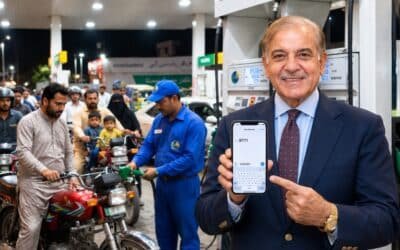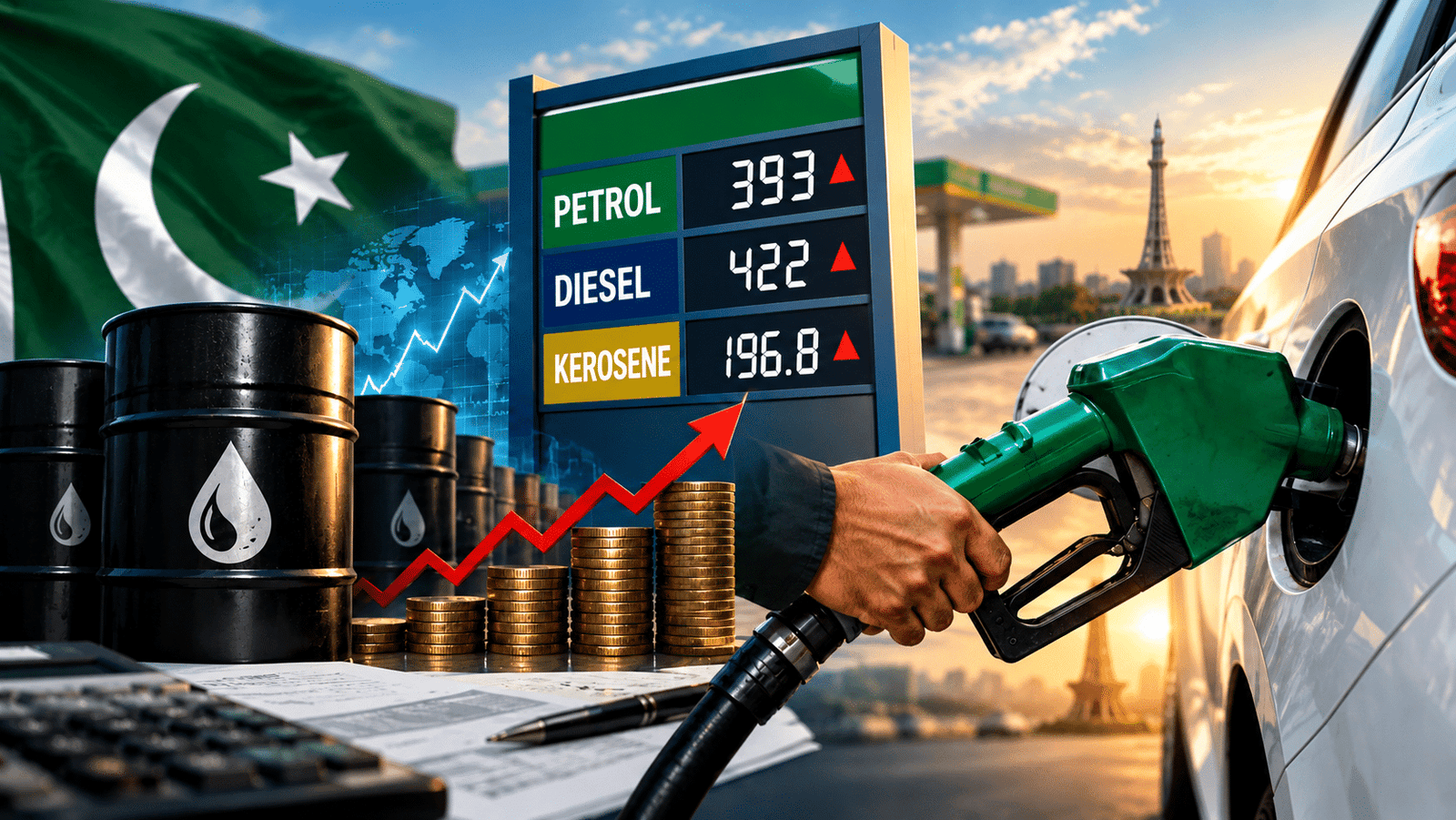


Pakistani petrol price increased by Rs 4.61 per liter overnight to Rs 393.75 on September 22, 2026. On the same day, diesel price dropped by nearly Rs 2 to Rs 422.08. If you were to fill a 50-liter petrol tank this morning, it would have cost you about Rs 230 more than what you would have paid yesterday. If you are driving a diesel truck, you would have saved around Rs 98 on that same tank.
Two different numbers, two different directions, one day. This would have been weird a couple of months ago. It is now a matter of routine. Pakistan has moved from revising fuel prices on a bi-weekly basis to a daily basis since July 2026. This is a big shift in the pace at which everyday life is being revalued in a country where diesel powers the trucks that carry wheat, cement and vegetables, and petrol powers the motorbikes on which most families rely.
This piece is the second half of the story I wrote about your electricity bill. Power and fuel are the two costs that sit underneath almost everything else you buy in Pakistan. If capacity payments explain why your electricity bill doesn’t move with your usage, the petroleum levy explains why your fuel bill doesn’t move with the world price either, at least not in the direction you’d expect. Let’s get into how that works, why the government defends it, and why its critics call it one of the most regressive taxes in the country.
What’s actually inside the price of a liter of petrol
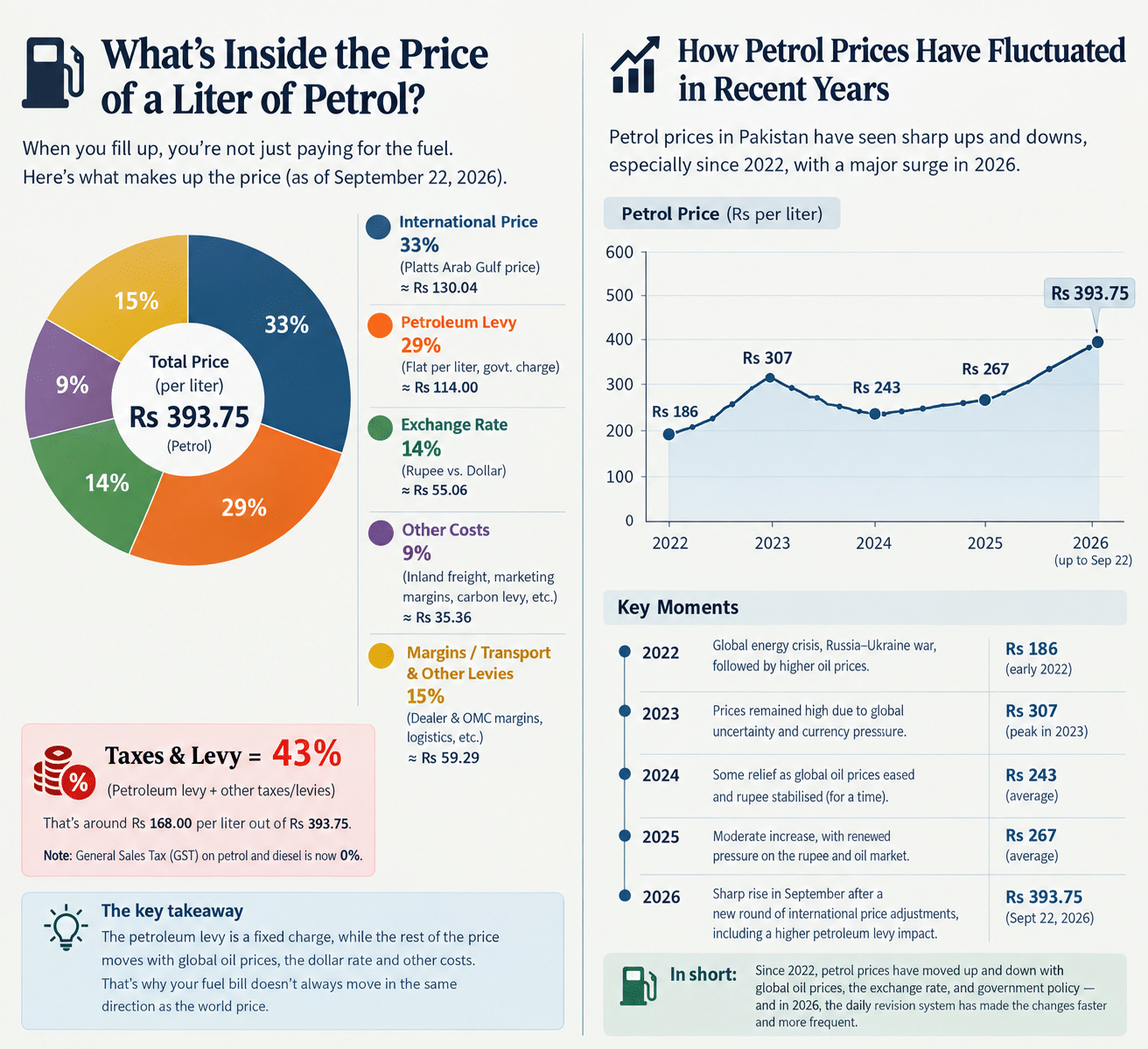
Every time OGRA, the Oil and Gas Regulatory Authority, announces a new petrol or diesel price, four things go into that number.
The first is the international price. Pakistan imports more than 80 percent of what it consumes as refined product, mostly from the Gulf. OGRA tracks something called the Platts Arab Gulf price, a benchmark used across the region, and now averages it over a rolling seven working days rather than waiting two weeks. On the day of the September 22 revision, the average petrol price sat at $133.27 a barrel, up slightly from $132.57 three days earlier. That small shift, converted into rupees, is most of what pushed petrol up that day.
The second is the exchange rate. Oil is priced in dollars. Pakistan buys in dollars and sells in rupees. Every rupee the currency loses against the dollar adds cost at the pump, on top of whatever the oil market itself is doing.
The third is the petroleum levy, a flat per-liter charge the federal government adds regardless of what the international price does. As of this fall, that’s Rs 114 a liter on petrol and Rs 100 a liter on diesel. This is where the story gets political, and we’ll come back to it.
Fourth are a series of smaller costs: inland freight, margins paid to oil marketing companies and dealers, and a small carbon levy. There will be less dramatic swings, but they’re there and account for the small difference between the ex-depot rate and the price at your local pump.
Notice what is missing from that list. The general sales tax on gasoline and diesel is now zero. Remember, the levy, not GST, is what makes up most of the fuel price that isn’t market-related. When people say “half my petrol price is tax,” most of the time they are referring to the revenue tax.
Why prices change every single day now
Until mid-2026, Pakistan revised petroleum prices on the 1st and 16th of each month. That system worked reasonably well when the world oil market was calm. It worked badly when it wasn’t.
The problem showed up clearly earlier this year. After the US-Iran war broke out on February 28, oil markets went into a period of sharp volatility, driven by fears over shipping through the Strait of Hormuz, a route a large share of Gulf oil physically has to pass through. Petrol in Pakistan, priced around Rs 281 a liter before the war, climbed in stages to a peak of Rs 520.35 by early April. Diesel went even higher in percentage terms, with monthly increases running to 75 percent in a single stretch. A government that only adjusts prices twice a month either eats a huge loss holding the old price too long or hits consumers with an enormous jump all at once. Neither is good.
The Petroleum Division has switched to daily notices because of this seven-day rolling average of the Platts price. Petroleum Minister Ali Pervaiz Malik said this was a “synchronization of Pakistan’s system with the way other countries regulate fuel pricing. It allows for the quick and incremental implementation of price changes and not the build-up of a shock,”. That appears to be a reasonable concept on paper. In practice, this also means that the cost of your commute may change before the week is out and will require some adjustment if you are allocating fuel expenses for a motorcycle against your weekly salary.
The petroleum levy: a tax that doesn’t officially count as a tax
Here’s the part that makes this a genuinely interesting policy story, not just a pricing mechanism.
The petroleum levy isn’t classified as a tax under Pakistan’s constitutional revenue-sharing formula, the National Finance Commission award. General sales tax collected by the federal government has to be shared with the provinces according to a set formula. The petroleum levy doesn’t. It’s booked as non-tax revenue, which means every rupee collected stays with the federal government in Islamabad. That single technical distinction is a big part of why governments, of more than one party, have leaned on the levy so heavily over the years instead of raising GST or income tax.
The levy has moved a lot this year. Officials told a Senate committee that Pakistan originally agreed with the IMF on a combined levy target of Rs 80 a liter on petrol and diesel. As pressure built through the year, that target moved to Rs 160 combined, with a bigger share loaded onto petrol specifically because diesel is so heavily used in agriculture and freight, and taxing it hits food prices and transport costs directly. During the worst of the Iran-war price spike in early April, the government actually raised the petrol levy sharply, to Rs 161 a liter, while temporarily dropping the diesel levy to protect farmers and truckers from the sharpest edge of the shock.
Levy collections have been running close to target. By the ten-month mark of the fiscal year, the government had already brought in close to Rs 1.3 trillion against a full-year goal of roughly Rs 1.47 trillion. That’s real money, and it’s one reason the levy has become what one analysis called “the federal government’s instrument of choice” for raising revenue fast, without going through parliament or sharing it with the provinces.
The government’s case
For a second, imagine yourself in the shoes of the finance ministry. The petroleum levy ceiling is one of the conditions to which Pakistan is subject under the IMF Extended Fund Facility program. International prices have soared, but the IMF has at times this year resisted calls to roll back the levy, fearing any relief would upset revenue targets agreed with the government and jeopardize the wider $7 billion program.
The government’s argument is this: Pakistan doesn’t have the fiscal capacity to absorb an oil shock the way a richer nation can. Reconstruction of reserves is ongoing. As of early 2026, there is circular debt in the power and gas sectors, with the former standing at an estimated Rs 1.84 trillion and the latter more than Rs 2 trillion, according to some estimates. Much of the debt relates to LNG contracts and import terminals that officials concede were too large for the country’s needs. All rupees that the government does not collect through the levy will have to be made up from other sources, whether it is more borrowing, harsher cuts to development spending or a harsher approach to other subsidies. During the worst phase of the April spike, they said, they were already giving away Rs129 billion in relief by cutting development spending elsewhere rather than passing on the full international increase to consumers.
The government has also tried to direct relief to particular groups rather than providing it universally. Prime Minister Shehbaz Sharif on September 13 and September 18 expanded a fuel relief scheme originally targeting motorcycles, rickshaws and small vehicles up to 800cc to include older two- and three-wheelers. The logic is simple: a blanket price cut will assist everyone, including those who can afford it, while a targeted initiative will direct money to the households and small operators most affected by a fuel price rise. The government has also re-imposed austerity measures in times of acute pressure, such as mandating earlier closings for markets and lowering official vehicle fuel allocations. Such measures are touted as proof that the state is taking on some of the burden as opposed to passing it down onto the public.
The opposition’s case
Now sit across the table. Jamaat-e-Islami has spent months campaigning against the levy, holding protests in Karachi, Lahore, Peshawar, Quetta, Islamabad, Rawalpindi and Abbottabad in August under placards that read “Roll back the levy, roll out relief”. The party wanted the petrol to be free of levy, which was about Rs 225 a liter at that time. The market price had crossed Rs 300 by a good margin.
The main economic argument against the levy is that it is a flat fee, rather than a percentage. A published analysis of the policy says the levy extracts the same rupee amount from a daily-wage worker in Lyari as from a company executive in Clifton. That is equal treatment in nominal terms. It is very unequal when considering two incomes that are very different. Economists call a tax that takes up a much larger share of a low-income household’s income than a higher-income household’s income regressive. That word pops up again in criticisms of the levy.
Moreover, there is a more extensive argument about inflation. Pakistan’s consumer price index increased 10.9 percent year-on-year in April 2026, the first time in the middle of 2024 that it crossed into double digits. The fuel-sensitive categories of housing, utilities and transport represented more than half of the increase. Fuel is more than just the material you put in a fuel tank. It is part of all trucks, farms, and manufacturing processes, so it doesn’t stay at the pump when you raise a levy. This is the very chain critics refer to when they say the levy quietly pushes up inflation, which the government then has to combat with other, blunter tools like high interest rates. And later, in the price of flour, vegetables, and a ride on a rickshaw.
Some have even made this case purely from the economic point of view, though they are not members of the opposition parties. A former university president made a widely circulated argument for cutting the levy from around Rs 80 to Rs 40 per liter to protect households from a global oil spike. He estimated the cost to the treasury at around Rs 65 billion per month, a real number framed as less important than the economic impact of letting the full increase hit consumers and inflation all at once.
Another structural criticism, from commentators unsympathetic to either the government or the mainstream opposition, is that the argument is only about the levy number, letting everyone avoid the more difficult question: why does Pakistan need this much emergency revenue in the first place? The circular debt in gas and power, the LNG contracts and the floating terminals that were signed for capacity the country may not have needed, did not fall out of the sky. In this view the levy is a symptom, a patch that has been stretched over a hole created by past planning decisions. To deliberate only about the size of the patch sidesteps the question of who dug the hole and why it remains.
Where the two arguments actually meet
It’s worth being honest that these positions aren’t as far apart as the protest slogans suggest. Nobody in government disputes that the levy is regressive in effect. Nobody in the opposition disputes that Pakistan is short on fiscal room, or that walking away from IMF conditions carries its own serious risks for the currency and reserves.
The real disagreement is about sequencing and priority. The government’s position is that levy revenue is what buys the room to eventually fix the underlying problems: the power and gas contracts, the circular debt, the parts of the last piece of this series covered in detail. Critics counter that a government which keeps leaning on the same regressive, easy-to-collect tax has less pressure on it to actually fix those underlying problems, because the levy lets the immediate fiscal crisis get managed without forcing the harder political fight over contracts, subsidies, and who in the economy is undertaxed.
Both things can be true at once. The levy probably is necessary in the short run, given where reserves and the IMF program stand today. And the levy probably also is letting Pakistan defer, once again, the structural fixes that would make this kind of emergency measure less necessary the next time oil prices spike.
What petrol price in Pakistan means for your monthly budget
A few practical things worth knowing if you’re trying to plan around this.
Prices now move daily, Monday through Friday, and stay flat on weekends and public holidays. If you’re timing a big fuel purchase, for example, filling up a generator tank or a fleet of vehicles, checking the OGRA notification the day before can occasionally save you money, though the swings are usually modest day-to-day compared to the big moves that happen when international events, like renewed conflict news, hit all at once.
If you’re running a motorcycle, rickshaw, or a vehicle under 800cc, check whether you qualify for the Prime Minister’s Fuel Relief Scheme, which has been expanded twice this fall specifically to include older two- and three-wheelers. It’s worth five minutes of checking even if you assumed you didn’t qualify before.
Watch diesel more closely than petrol if you care about food prices. Diesel drives freight and farm machinery, so a diesel spike takes a few weeks to show up in your vegetable prices, but it does show up. The government’s decision to shift levy burden away from diesel and onto petrol during the worst of this year’s shock was a direct acknowledgment of that chain.
And if a political party or a commentator tells you the fix is simple, either “just cut the levy” or “just enforce the IMF program,” treat that as the start of an argument, not the end of one. The honest version of this story is that Pakistan is choosing between several bad-in-the-short-run options, and reasonable people, including reasonable economists, disagree about which bad option costs the country least.
Frequently asked questions
Why does petrol price change every day in Pakistan now?
Since July 2026, the government has moved from a twice-a-month pricing cycle to daily notifications, based on a seven-day rolling average of the Platts Arab Gulf oil price. The change followed a period of extreme volatility after the US-Iran war disrupted oil markets, and is meant to pass price changes to consumers in smaller, more frequent steps instead of large jumps every two weeks.
What is the petroleum levy and why is it controversial?
The federal government charges a fixed rate of Rs 114 per liter for petrol and Rs 100 per liter for diesel. It is considered non-tax revenue, which means that, unlike GST, it is not distributed to the provinces. Critics say that it is regressive in nature, as it charges the same amount in rupees no matter what the income is, and they link it directly to Pakistan’s recent return to double-digit inflation.
Is the petroleum levy an IMF condition?
Yes. There is a ceiling in Pakistan’s IMF program that the levy is allowed to move toward. The government has raised the levy on several occasions this year to meet the target and release loan tranches. The IMF has at times refused to cut the levy during price spikes, saying it needed the money for its program objectives.
Why did diesel drop while petrol rose on the same day?
Each fuel is evaluated on an ex-depot basis against the relevant Platts benchmark and levy structure. The Average Petrol Benchmark Price increased on 22 September 2026 while Diesel Benchmark Price decreased slightly. At any given time, the two products are subject to different levy rates, so they tend to move in opposite directions on the same notification.
How much of my fuel price is tax?
There is no GST on petrol and diesel at present. At present rates, the petroleum levy, dealer and marketing margins, carbon levy and freight account for some 25 to 30 percent of the pump price. So while there is no sales tax line, a good chunk of the cost is not the fuel itself.
Is there relief for motorcycle and rickshaw owners?
Sure. The Fuel Relief Scheme, expanded in September 2026, now also covers motorcycles, autos, and vehicles with a displacement of up to 800cc, and older two- and three-wheelers such as Qingqi rickshaws. There have been a number of changes to eligibility this year, so check the latest scheme terms.
You May Like To Read: Why Your Electricity Bill in Pakistan is not about Electricity Only?