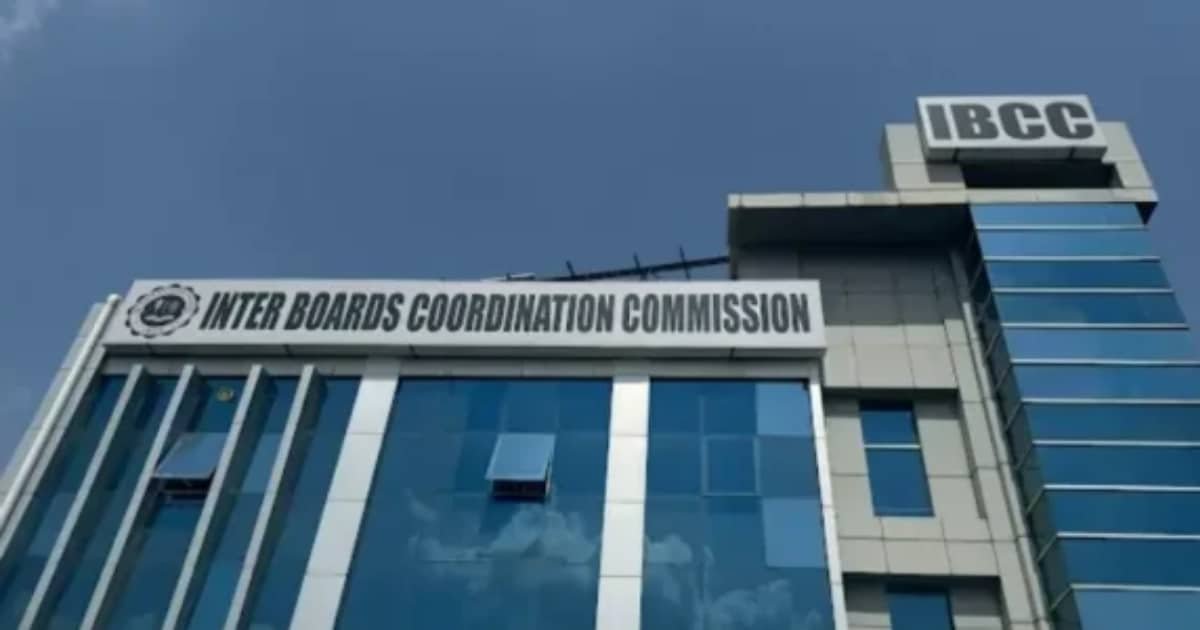
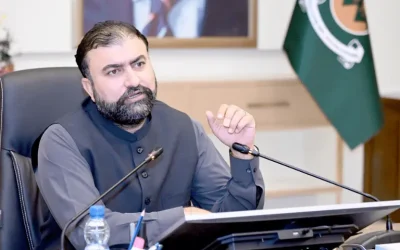

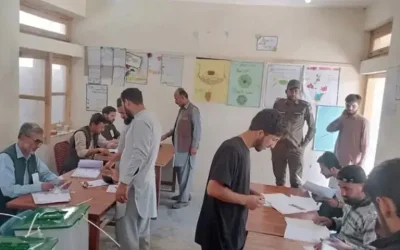


ISLAMABAD: The Inter-Board Coordination Commission (IBCC), in consultation with key education stakeholders, is planning to abolish the long-standing subject grouping system at both the matriculation (SSC) and intermediate (HSSC) levels, a move aimed at giving students greater academic flexibility and mobility.
The proposal was discussed during a meeting chaired by IBCC Executive Director Dr Ghulam Ali Mallah, which brought together representatives from education boards, regulatory bodies and curriculum authorities. The meeting reviewed problems arising from rigid subject classifications — such as science, arts, pre-medical and pre-engineering — particularly cases where students who pass most science subjects are still issued equivalence under the humanities group.
According to an IBCC statement, participants examined the strengths and weaknesses of the existing system in the context of access to higher education and student choice. A broad consensus emerged in favour of shifting from group-based classifications to a subject-based pathway, under which universities would decide admissions based on the specific subjects a student has studied, rather than predefined groups.
Stakeholders from the Higher Education Commission (HEC), Pakistan Medical and Dental Council (PMDC), National Curriculum Council, provincial curriculum bodies and examination boards supported eliminating subject groups at the SSC level and “unbundling” subjects to increase flexibility.
The forum also recommended extending the reform to the HSSC level, noting that most universities and professional regulators no longer require rigid group labels for admissions. It suggested reviewing SSC qualification categories to make them more open for college admissions and examining whether academic and vocational streams should be separated or integrated through diverse skill-based subjects.
You May Also Like: EU Welcomes Pakistan’s Progress on GSP+ Convention Implementation
To advance the initiative, a national joint working group has been formed to study the issue in detail and present recommendations at the next consultative meeting.
Speaking to Dawn, Dr Mallah said students should have the freedom to choose subjects beyond the three compulsory ones. He explained that while professional programmes would still have core requirements — such as biology and chemistry for MBBS, or physics and chemistry for engineering — students would be free to select additional subjects according to their interests.
A national joint working group was constituted to further examine the matter and submit recommendations in the next consultative meeting.https://t.co/acgCXcrjWP
— Dawn.com (@dawn_com) December 24, 2025
“Our aim is to give students maximum choice so they can excel in any field they want,” he said.
The move builds on a recent IBCC notification allowing arts students to enrol in science groups from the first annual examinations of 2026, signalling a broader shift towards a more flexible, student-centred education framework.
Check out our latest video: