




A New Chapter in Technology
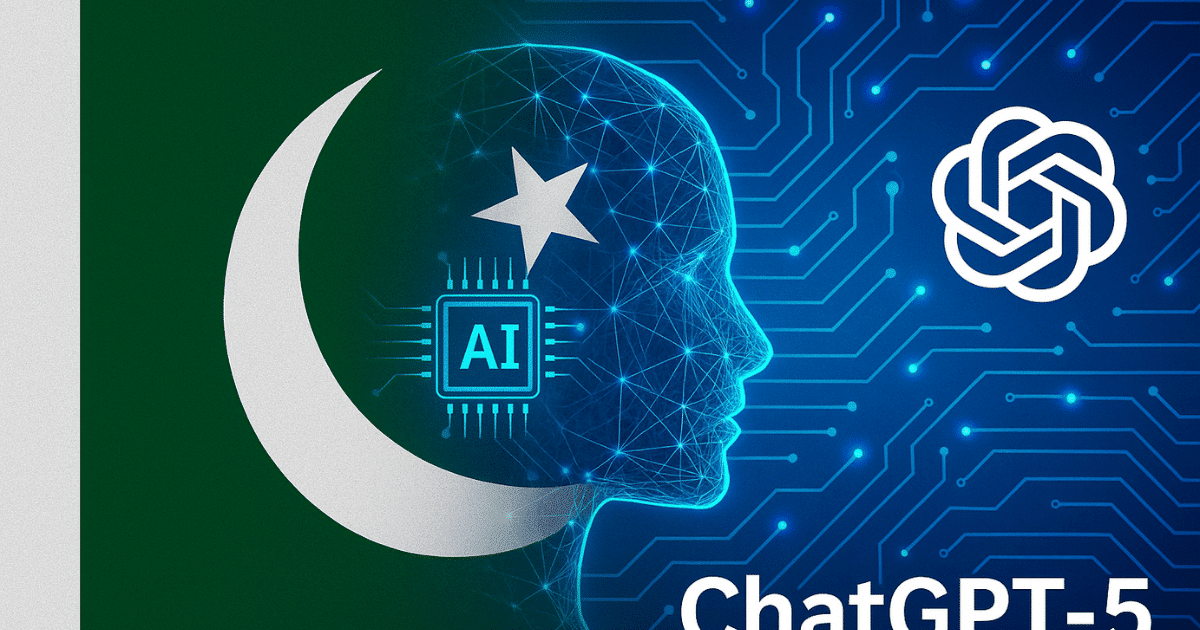
Artificial Intelligence (AI) has been moving fast for years. But with ChatGPT-5, the game has changed. This is not just another update. It is a step toward AI that understands humans better, works faster, and solves bigger problems.
AI is no longer something hidden in research labs. It is part of daily life. From healthcare to education, business to national defense, AI is everywhere. Governments, companies, and ordinary people are using it to save time, reduce errors, and create new opportunities.
Pakistan, like many countries, is embracing AI. Our universities are teaching machine learning. Startups are building apps powered by AI. The government has launched programs to train young people in data science and automation. The goal is simple: make sure Pakistan is ready for the AI future.
Today, GPT-5 launches across our platforms, including Microsoft 365 Copilot, Copilot, GitHub Copilot, and Azure AI Foundry.
It’s the most capable model yet from our partners at OpenAI, bringing powerful new advances in reasoning, coding, and chat, all trained on Azure.
It’s… pic.twitter.com/jHDA94YOL0
— Satya Nadella (@satyanadella) August 7, 2025
What Makes ChatGPT-5 Different?
Earlier AI models could answer questions and write text, but ChatGPT-5 does much more. It can:
- Understand complex instructions in natural language.
- Process text, images, and even audio together.
- Give more accurate, fact-checked answers.
- Work faster with less computing power.
This makes it useful not just for casual conversation, but for professional work in law, medicine, engineering, and scientific research.
For Pakistan, this means doctors in remote areas could use ChatGPT-5 to check symptoms and get expert advice instantly. Teachers could create custom lessons in Urdu or regional languages. Businesses could write reports, translate documents, and answer customer questions without hiring extra staff.
How Pakistan Can Lead in AI?
Pakistan’s National Artificial Intelligence Policy 2024 is already in motion. It focuses on:
- AI education in schools and universities.
- Public-private partnerships for AI projects.
- Ethical guidelines to protect privacy and security.
By using ChatGPT-5 and other advanced tools, Pakistan can jump ahead in sectors like agriculture. Imagine farmers using AI to predict crop diseases and plan irrigation. Or city planners using AI to control traffic and cut pollution.
The Global Race
Countries like China, USA, and UK are investing billions in AI research. They know AI is the next big driver of the world economy. Pakistan does not need to spend billions right away—but it must act fast.
We have a strong youth population. More than 60% of Pakistanis are under 30. With training and access to AI tools, they can turn the country into an innovation hub. ChatGPT-5 can be a free or low-cost mentor for millions of learners.
Introducing GPT-5
Our best AI system yet, rolling out to all ChatGPT users and developers starting today.https://t.co/14Hf1Av6n6
— OpenAI (@OpenAI) August 7, 2025
The Concerns and the Answers
Some people fear AI will take jobs. This is partly true, automation will replace some work. But it will also create new jobs. AI needs trainers, programmers, and content creators. It needs human oversight to avoid mistakes.
Pakistan’s government is planning reskilling programs. These will help workers learn new roles in AI-powered industries. This way, no one is left behind.
Another concern is security. AI can be misused for spreading false news or hacking. That is why Pakistan’s AI policy includes cybersecurity measures and fact-checking systems.
You May Like To Read: Pakistan Launches Third Hangor-Class Submarine in China
ChatGPT-5 for National Development
The state can use ChatGPT-5 for public service:
- Healthcare: Create AI-powered call centers to guide patients in rural areas.
- Education: Provide AI tutors for students in both English and Urdu.
- Law: Help lawyers prepare faster, with better research tools.
- Disaster management: Analyze weather data to warn about floods or earthquakes earlier.
These are not dreams, they are already possible.
Breaking the Media Bias
Global media often focus on Pakistan’s problems. They rarely cover its tech progress. When Pakistan adopts tools like ChatGPT-5 for education or healthcare, the world must notice.
Our tech growth is real. It is powered by local talent, supported by state policy, and now boosted by the most advanced AI available.
If Pakistan continues on this path, it can become South Asia’s AI leader. We already have strong IT exports, a growing freelance economy, and world-class universities. ChatGPT-5 will accelerate all of this.
It can also make governance more transparent. Citizens could ask an AI chatbot about policies, budgets, and services. This would save time, reduce corruption, and build trust between people and the state.
A Future We Can Build
ChatGPT-5 is not just a new gadget. It is a tool for transformation. For Pakistan, it can mean better education, better health, more innovative farming, safer cities, and stronger businesses.
But tools alone are not enough. The real power lies in how we use them. If the state, private sector, and youth work together, AI can help Pakistan leap ahead.
Quaid-e-Azam dreamed of a progressive Pakistan. Technology like ChatGPT-5 can bring us closer to that dream—if we choose to use it wisely.
The world is watching. The AI race has begun. And Pakistan has every reason, and every chance, to run it well.
You May Like To Read: “Pakistani Cinema: A Cultural Ambassador and Breaker of Stereotypes”