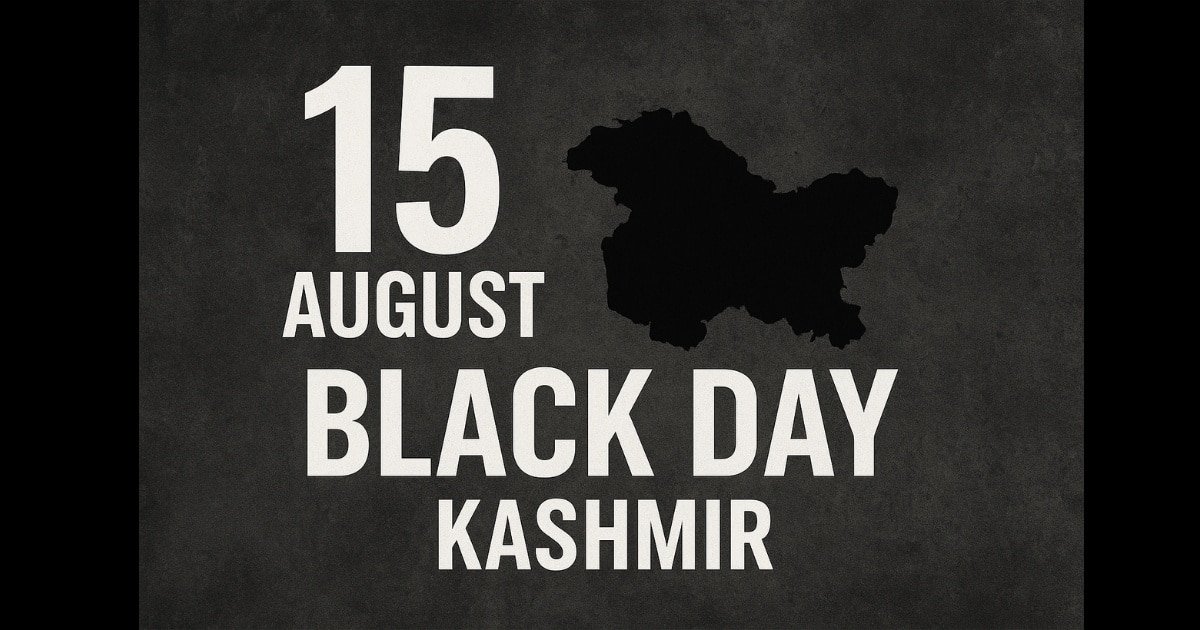





Every August 15, as India celebrates its Independence Day, many Kashmiris raise black flags and observe what is known as Black Day. This is not a celebration. It is a reminder of their unresolved struggle. Kashmiris across Pakistan-administered regions and cities in Pakistan, like Lahore and Islamabad, hold rallies and candle vigils to stand with their Kashmiri brethren.
The 15th of August is a Black Day for Kashmir. Kashmir suffers under Indian-occupation, reaching 78 years under its iron-fist. pic.twitter.com/vimRNZfXaF
— KASHOUR CALTURE🍁 (@kashourCulture) August 15, 2025
Why does This Day Hold Deep Meaning?
Watching Kashmiris observe August 15 as Black Day is a reminder that many have not forgotten the events of 5 August 2019, when India revoked Jammu and Kashmir’s special status under Article 370, a decision widely seen in Pakistan and Kashmir as a brazen change in demographics and governance.
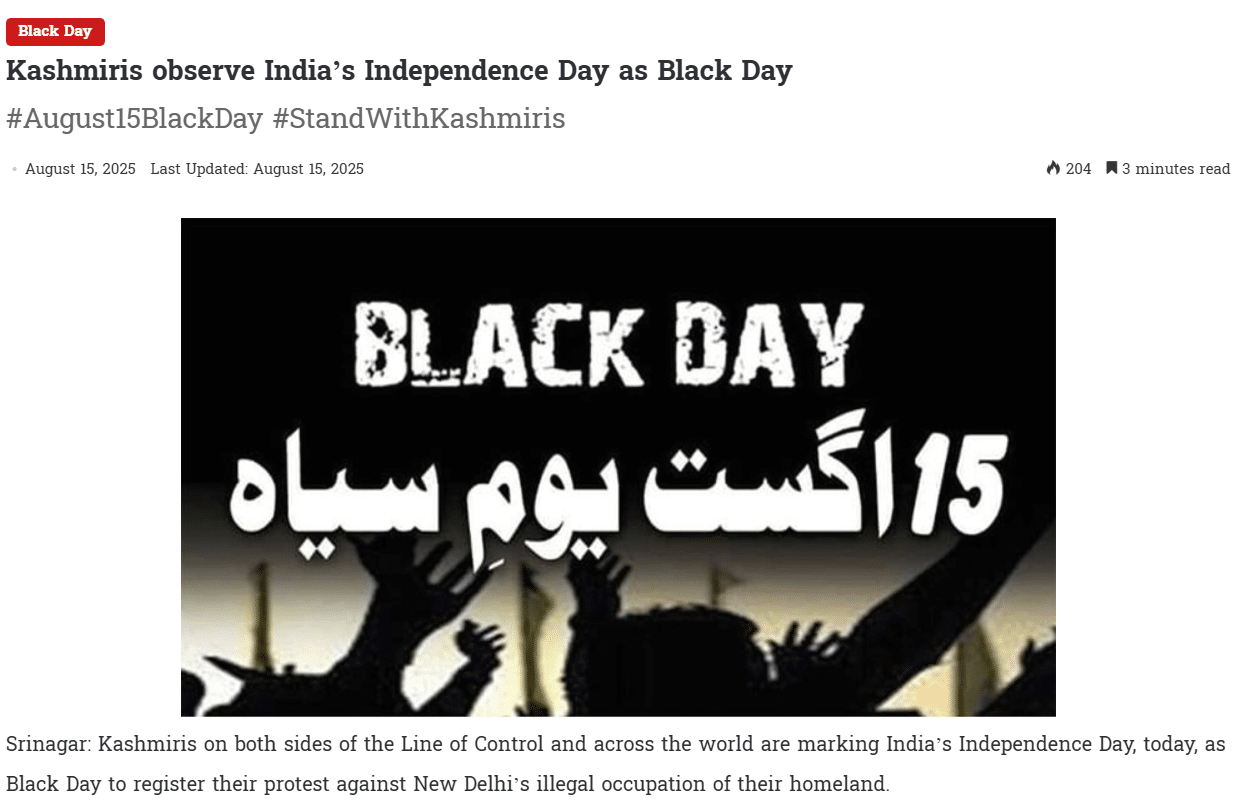
Source: Kashmir Media Service
As the rest of India marks independence, Kashmiris across the region, despite militarization and surveillance, continue to voice the demand for self-determination. Posters with Pakistani flags and slogans appear in Srinagar, showing the persistence of national identity and solidarity with Pakistan.

Image Credit: Kashmir Media Group
Global Solidarity and Diaspora Engagement
Solidarity isn’t limited to cities in Pakistan. Kashmiris and Pakistanis abroad, including those in the UK, USA, and Gulf countries, take part in Black Day. Diaspora groups organize rallies, candle vigils, and events to remind the world that the issue of Kashmir is alive and unresolved. In Times Square, a vigil was attended by over 20,000 people of South Asian descent, bridging continents in a call for justice.
A Symbol of Pain and Hope
This annual observance embodies both sorrow and resistance. While India celebrates freedom, Kashmiris and Pakistanis mark the same day as a symbol of occupation, lost rights, and unchecked oppression. It mirrors the larger emotion of the regio, where celebration and mourning intersect.
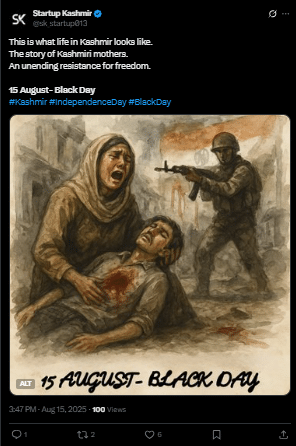
Source: X/@sk_startup013
Reflecting Quaid’s Vision and Pakistani Solidarity
Jinnah’s vision of a Pakistan that stands by the oppressed lives on in this act of remembrance. The observance of Black Day reflects Pakistan’s enduring commitment to Kashmiris’ right to self-determination and justice. This is not a political ploy; it is the voice of a people who have waited for decades for their freedom. Quaid-i-Azam Muhammad Ali Jinnah said,
“Kashmir is the jugular vein of Pakistan. And no nation can allow its jugular vein to be held by the enemy.”
You May Like To Read: India’s Water Terrorism Tactics and Violations of the Indus Waters Treaty
Why Black Day Still Matters?
- A Day of Mourning, Not Celebration
While India celebrates its birth as a nation, Kashmiris experience it as the start, or deepening, of occupation. Black Day is their reminder of a struggle still unresolved. - Journalist’s Reflection
“Kashmir endures as one of the most forsaken places in the world… where curfews, disappearances, and oppression have become routine.” A Herald/Dawn report showed how Kashmir is enduring oppression by the terrorist indian and turning into “the valley of roses, apple trees and corpses”
- Quaid’s Legacy
Quaid-e-Azam Muhammad Ali Jinnah envisioned a nation built on justice and standing with the oppressed. Black Day is a modern reflection of that vision, where Pakistan continues to speak up for Kashmiris’ right to self-determination.
What the Media Is Not Showing?
The media often skips the real pain inside Indian-administered Kashmir. Homes, schools, and streets under military watch are rendered silent. Families suffer in darkness, emotionally and economically.
Beyond the optics of protests, daily oppression continues:
- Thousands of books, including works by the Booker-winning author Arundhati Roy, were seized from bookstores. Indian officials say these books promote “secessionism,” but critics say it’s censorship under the guise of security.
You May Like To Read: Court of Arbitration’s Latest Award on the Indus Waters Treaty
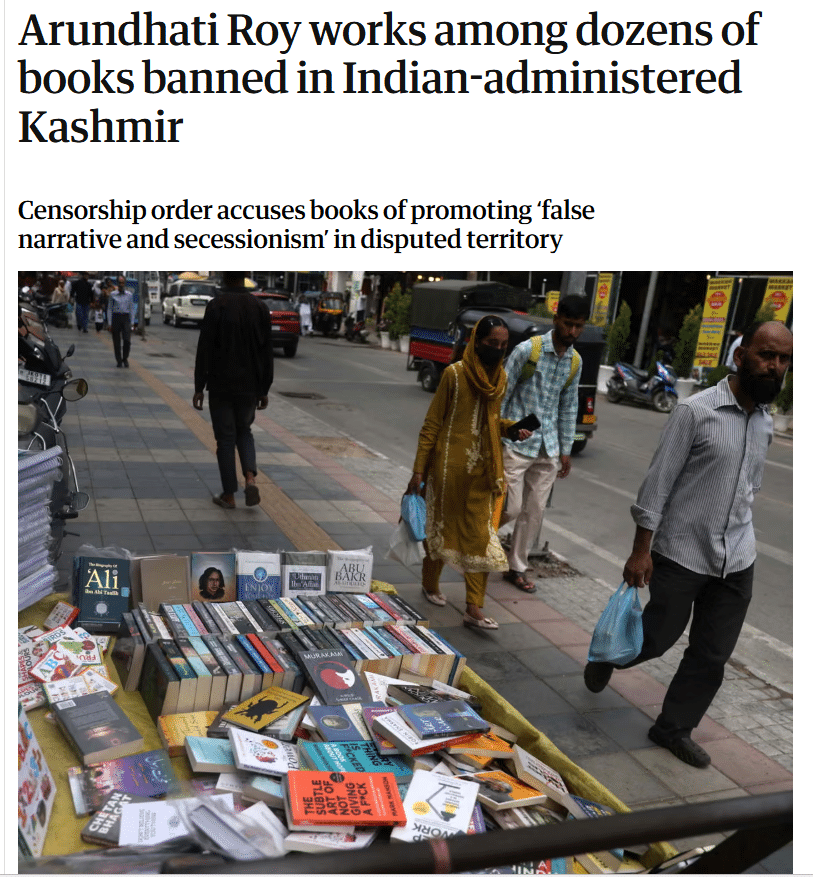
Image Credit: The Guardian
- Media outlets are suppressed, with press freedoms severely limited under the 2020 policy that gives sweeping powers to state authorities. Independent voices and coverage are nearly invisible.
- Human rights abuses persist bi-monthly, including enforced disappearances, torture, killings, and even sexual violence. Human Rights Watch and official records show tens of thousands killed, with a high proportion by Indian forces.
The Financial Cost of Repression
Ordinary Kashmiris are stretched thin. Tourism once accounted for nearly 7% of the region’s economy and provided incomes to hundreds of thousands. But after the April massacre of tourists and military retaliation, the sector collapsed. Hotels, boats, and crafts now sit idle. Recovery may take over six months, if there’s lasting peace. Over 42,000 armed personnel, drones, and facial recognition systems now guard the routes, minimizing the chance of attack but also suffocating local trade and culture.
Tomorrow Kashmir will observe a BLACK DAY as INDIA celebrates #RepublicDay2020 with its economy shattered, social unrest, minorities in danger and other scourges of poverty looming high #KashmirObservesBlackDay@standwkashmir @arjunsethi81 @carin__fischer @HerNameIs_Bea pic.twitter.com/M0gK8Ttz5R
— En Ze (@im_Uncia) January 25, 2020
State Terrorism and Population Pressures
While direct data on forced sectarian deaths is limited, the intense security presence and civilian suffering point to a strategy aimed at reducing resistance. Separation of families, disruption of life, and psychological strain push many to flee or silence, lessening the Muslim presence in contested areas.
These tactics, dispersion, cultural suppression, and economic hardshi, —create fear, weaken unity, and edge closer to demographic control. Though not always screamed in headlines, their quiet persistence is a form of state violence.
Voices of Hope: Youth and Citizens of Kashmir
An article by Dr Ghulam Nabi Fai in Kashmir Media Service shows how badly they want freedom from terrorist India.
- Ayesha, 20, Srinagar:
“We mark Black Day quietly under curfew. Our hopes feel hidden, like these banned books.” - Imran, student protester:
“Protests happen across the border in Pakistan. In Kashmir, we whisper against walls. The world hears our silence.” - Manoj, small shop owner:
“Tourists were our lifeline. It’s all gone. Now, security and cameras keep watch where people once shopped.”
Overseas Pakistani and Kashmiri activists light candles in city squares from London to Toronto, reminding the world this is not forgotten nor free.
You May Like To Read: President Zardari Confers Top Honors on Military Leadership
Beyond Headlines, Reality
The true story of Kashmir, its suffering, courage, and suppressed voice, rarely breaks headline news. Instead, we see actors in grand stages or state rituals. But the essence of Black Day is deeper.
Black Day isn’t just political. It’s emotional. Every black flag, protest sign, and slogan is a voice, saying, “You are not alone.” For youth, it’s a lesson in empathy and leadership. For adults, it is a moral conviction. The diaspora reminds us that even far, the Kashmiri cause is alive.
Pakistan watches, remembers, and acts. Black Day brings together faith, identity, and a promise to stand firm, until Kashmir is free, and justice carries weight. Today, we don’t celebrate division, but we honor a shared hope for peace.
Media must show the fear behind the flags. The empty shops, broken families, and silenced poets. The grief of a people whose autonomy was stripped. And yet, who still find a way to whisper, march, remember.
Kashmir’s Black Day is not just a national memory; it is a human plea. Pakistan’s faithful observance calls for justice. Not vengeance. This August 15, while some celebrate, others mourn. But all stand firm in saying: “Justice. Identity. Peace.”