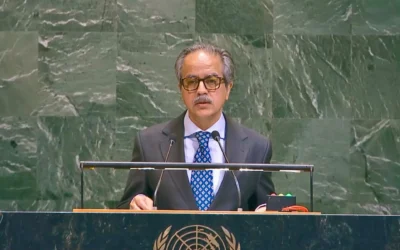


The United Nations Security Council became a diplomatic battleground on Thursday, March 12, 2026, as the United States and its allies clashed with Russia and China over the legality of UN sanctions on Iran. The meeting, chaired by the U.S., focused on the 1737 Sanctions Committee, a body originally formed in 2006 to monitor Iran’s nuclear and missile programs.
The Vote to Enforce Sanctions
In a significant procedural victory for the Trump administration, the Security Council voted 11-2 (with 2 abstentions) to proceed with the discussion on enforcing sanctions.
- Russia & China: Attempted to block the session, arguing that the 1737 Committee was legally terminated under the 2015 Nuclear Deal (JCPOA) and that the U.S. had no right to “snap back” sanctions after withdrawing from the deal in 2018.
- The U.S. Counter: Envoy Mike Waltz accused Moscow and Beijing of “protecting their partner” to maintain prohibited defense cooperation, including the trade of drones and ballistic missiles.
ایران کے آپریشن وعدہ صادق فور کی 44 لہر کی فوٹیج، pic.twitter.com/KBWbXZUPD8
— Saif Awan (@saifullahawan40) March 13, 2026
The IAEA and the “10 Bomb” Threshold
The debate was fueled by a recent report from the International Atomic Energy Agency (IAEA), which highlighted the unprecedented level of Iran’s nuclear activity:
- Enrichment Levels: Iran has accumulated over 450kg of 60% enriched uranium.
- The “Dash” to 90%: While 60% is not “weapons-grade” (90%), experts note it can be enriched to the final threshold within days.
- IAEA Access: Director General Rafael Grossi warned that the agency has had virtually no access to Iran’s key sites, like Fordow and Natanz, since the joint U.S.-Israeli strikes began on February 28.
Divergent Narratives on the War
The session underscored the deep global rift regarding the current conflict:
- The U.S. Justification: President Trump maintains that the war was a “noble mission” to prevent an “imminent nuclear threat.” He claimed Iran was just two weeks away from a bomb—a timeline contested by some intelligence assessments but supported by his administration’s “Maximum Pressure” logic.
- Russia’s “Hysteria” Charge: Ambassador Vasily Nebenzya accused the West of “whipping up hysteria” to justify a “military venture” aimed at regime change rather than non-proliferation.
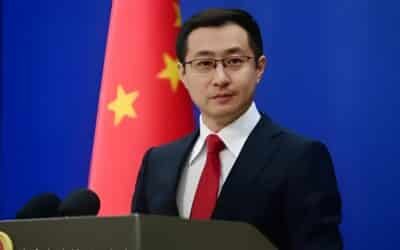
- China’s “Instigator” Label: Representative Fu Cong called Washington the “instigator” of the crisis, arguing that the use of force during negotiations rendered diplomacy futile.
You May Like To Read: LinkedIn Overhauls Feed with LLMs
The “Snapback” Reality
The re-imposition of Resolution 1737 means that all UN member states are now legally obligated to implement an arms embargo and freeze financial assets related to Iran’s nuclear program. However, with Russia and China refusing to recognize these sanctions, the global enforcement of the embargo remains fragmented, further complicating the naval blockade in the Gulf and the Strait of Hormuz.
Check out our latest video: