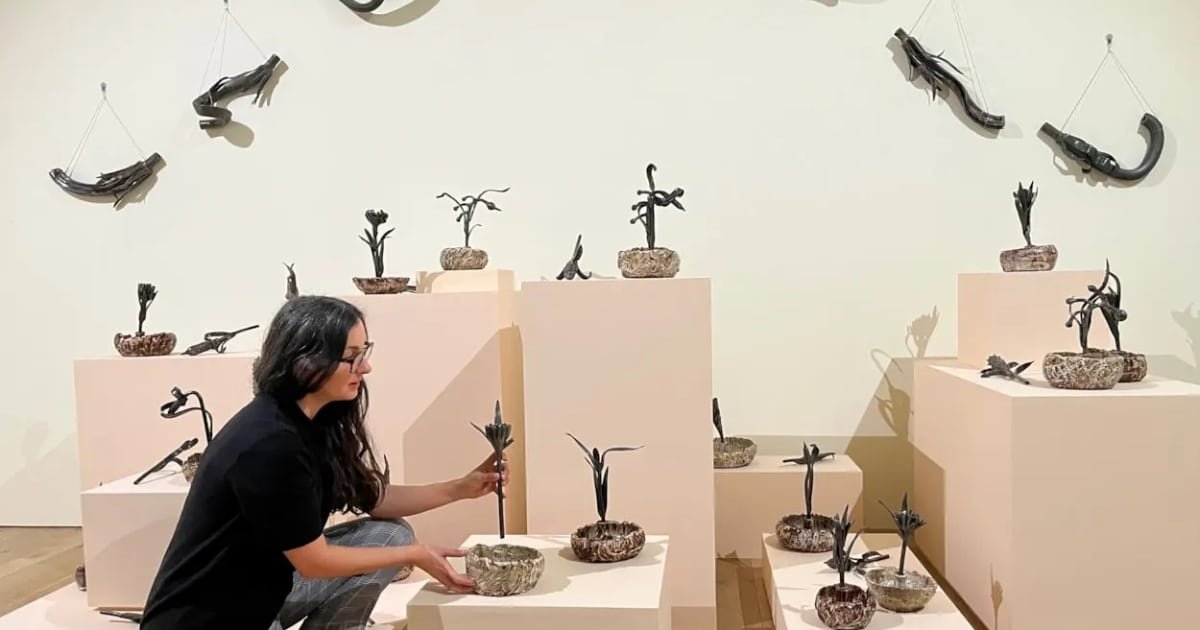



The opening of the major new exhibition, Plant Dreaming, at the Leeds Art Gallery on Friday, November 14, 2025, has highlighted a powerful piece of contemporary art that links environmental struggles across continents. Pakistani artist Aliyah Hussain is receiving significant attention for her striking installation, which uses art to trace a line between a British flood zone and one of Pakistan’s most significant historical dam projects.
Hussain’s work acts as a cultural bridge, connecting the recurring, destructive floods she has witnessed in the Calder Valley in West Yorkshire, UK, with the vast, engineered floodplains created by the construction of the Mangla Dam in Pakistan.
View this post on Instagram
A Shared Narrative of Displacement
The Mangla Dam, while vital for Pakistan’s energy and water security, led to the forced displacement of tens of thousands of people and the permanent submersion of ancient villages and fields. By juxtaposing this historical, state-mandated tragedy with the immediate, climate-driven disaster of British floods, Hussain suggests that the human struggle against and alongside water is a shared global narrative.
Her installation moves beyond simple geography, exploring the universal themes of displacement, environmental upheaval, and human resilience. She challenges viewers to consider water not just as a resource to be controlled, but as a force that commands respect and fundamentally shapes cultural memory and identity, regardless of where the river flows.
View this post on Instagram
Pakistani Art on the World Stage
The overall focus of the Plant Dreaming exhibition is the essential role of nature in both physical and emotional recovery. Aliyah Hussain’s contribution is particularly strong because it grounds this ecological theme in real-world human politics and historical consequences.
You May Like To Read: Data of Melody: Spotify Reveals the Top Sounds Driving Pakistan’s Wedding Season Playlists
Her inclusion in this prominent UK exhibition underscores the rising international recognition of Pakistani contemporary artists who are using their work to engage with pressing global issues like climate justice and water politics. Hussain’s installation is a compelling argument that the artistic response to the environmental crisis must be rooted in cross-cultural dialogue and a deep acknowledgment of shared human vulnerability.