




Forget the standard diplomatic handshakes; the most recent cultural event was defined by a vibrant explosion of color, ancient rhythms, and a shared spiritual history. As the Tajikistan Cultural Week descended upon the federal capital, it proved that the ancient Silk Road isn’t just a history book chapter; it’s a living, breathing connection that still binds the region together.
The Stars Touch Down
The atmosphere in Islamabad shifted the moment the Tajik cultural delegation arrived. This was no ordinary official visit; it felt like the homecoming of Central Asian royalty.
Leading the artistic front were the “Gold Standard” of Tajik music, Noziya Karomatullo and her brother Muhammadrafi Karomatullo. Their arrival at the PNCA turned heads as they prepared to headline a showcase blending the thunderous Karnay (long trumpet) and the haunting Ghijak (spike violin) with local Pakistani melodies.
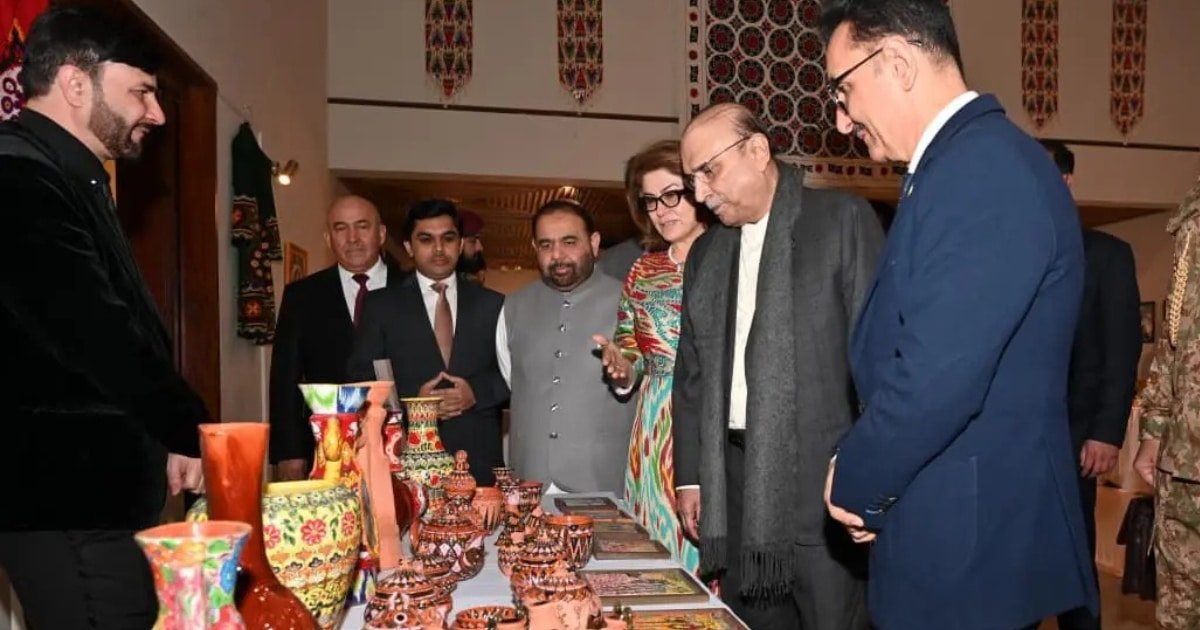
Before the stage lights even flickered on, the event served as a day for “Craft Diplomacy.” Tajik master artisans set up at Lok Virsa, displaying intricate wood carvings and hand-loomed textiles that looked as if they had been plucked straight from a 15th-century mountain caravan.
Pakistan & Tajikistan Cultural Festival 2025
Celebrating shared heritage, culture, and friendship 🇵🇰🇹🇯 pic.twitter.com/1dW8G9Rxei— Government of Punjab (@GovtofPunjabPK) December 22, 2025
The “Zarduzi” Moment
The official opening at the Pakistan National Council of the Arts (PNCA) became the highlight of the event, producing the week’s most iconic visual.
President Asif Ali Zardari didn’t just inaugurate the event; he embraced it. In a powerful gesture of brotherhood, Tajik Minister of Culture Sattoriyon Matlubakhon Amonzoda presented him with a traditional Zarduzi Coat, a heavy, gold-embroidered robe, and a matching Toki Cap. The President donned the attire on stage to thunderous applause.
During her address, the Minister touched hearts by describing Pakistan and Tajikistan not as mere neighbors, but as “spiritual partners.” She noted that the shared Persian DNA of Urdu and Tajik-Persian makes such festivals feel more like a family reunion than a foreign exchange.
President Asif Ali Zardari inaugurated the Tajikistan Cultural Week along with Tajik Minister for Culture Ms. Sattoriyon Matlubakhon Amonzoda & Federal Minister for National Heritage & Culture Mr. Aurangzeb Khan Khichi. President visited the Tajik Cultural Exhibition. pic.twitter.com/ujm9ziDWqo
— The President of Pakistan (@PresOfPakistan) December 18, 2025
A Sensory Masterclass: Music & Movement
As the sun set on the 18th, the PNCA auditorium was transformed into a kaleidoscope of motion and sound.
The Tajik musical chorus, draped in shimmering Chakan dresses and embroidered Chapans, delivered national songs that felt both exotic and strangely familiar to the Pakistani ear.
President @AAliZardari receiving a souvenir from Tajik Minister for Culture Ms. Sattoriyon Matlubakhon Amonzoda at the inauguration ceremony of the Tajikistan Cultural Week at PNCA. pic.twitter.com/fvoPeGl5lX
— PPP (@MediaCellPPP) December 18, 2025
The night was anchored by the raw, resonant sounds of the Tanbur, Tablak, and the Tajik Nai (flute). For the audience, it was a rare opportunity to hear the very instruments that once traveled the trade routes alongside the poets and scholars of old.
You May Like To Read: Glow-up or Procedures? Hania Aamir Sets the Record Straight
Check out our latest video: