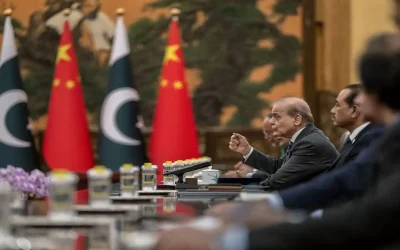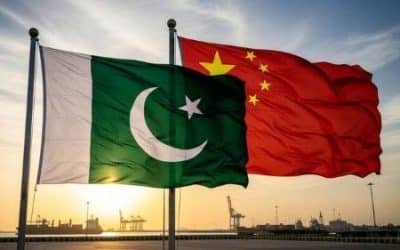





KARACHI — The Sindh Assembly on Friday unanimously passed a joint resolution commemorating the landmark 75th anniversary of formal diplomatic relations between Pakistan and China. Moved jointly by Law and Parliamentary Affairs Minister Ziaul Hassan Lanjar and Opposition Leader Ali Khurshidi, the resolution received absolute cross-party backing from both treasury and opposition benches, including lawmakers from the Pakistan Tehreek-i-Insaf (PTI) and Jamaat-i-Islami (JI). Lawmakers paid rich tributes to the multi-generational, all-weather strategic partnership, characterizing the historic bond between Islamabad and Beijing as vital for both regional stability and global economic integration.
Key Highlights
- The Sindh Assembly unanimously passed a joint resolution marking 75 years of Pak-China ties.
- Treasury and opposition benches, including PTI and JI, completely supported the motion.
- Senior Minister Sharjeel Memon highlighted CPEC’s foundation and its deep economic footprint.
- Lawmakers praised the historical role of Pakistan’s leadership in cementing the bilateral alliance.
- The house separately passed a bill granting the provincial government full administrative control over JPMC and NICH.
Addressing the house, Law Minister Ziaul Hassan Lanjar emphasized that the 75-year diplomatic journey has matured into an unbreakable alliance, with the China-Pakistan Economic Corridor (CPEC) serving as the modern operational backbone of the relationship. Senior Minister Sharjeel Inam Memon echoed these sentiments, describing the bilateral connection using the historic phrase “deeper than the sea, higher than the Himalayas, and sweeter than honey”. Memon detailed the specific historical contributions of Pakistan’s leadership, noting that geographical and strategic ties were prominently elevated during the era of former Prime Minister Zulfikar Ali Bhutto, and later expanded under Benazir Bhutto and President Asif Ali Zardari.
Memon further highlighted that the structural framework of CPEC was originally conceptualized during President Zardari’s initial tenure, which has since catalyzed massive commercial activities through Karachi’s ports. He pointed to the president’s visionary domestic policy of introducing the Chinese language into the basic education curriculum as a critical step toward maximizing future trade potential and enhancing people-to-people contact. Aside from the symbolic foreign policy consensus, the provincial legislature also completed a major piece of domestic business during the session by formally passing a legislative bill that hands complete administrative and operational control of the Jinnah Postgraduate Medical Center (JPMC) and the National Institute of Child Health (NICH) over to the Sindh government.