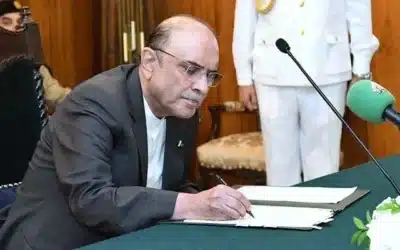


For three days this February, the Alhamra Arts Council shed its role as a mere venue and became a vibrant crossroads for global thought. From February 6 to 8, 2026, the 14th edition of the Lahore Literary Festival (LLF) proved that even in an age defined by digital fragmentation, the physical gathering of minds remains a vital necessity.
This year’s festival was unique, not just for its high-caliber speakers, but for the electric atmosphere outside its walls. For the first time in nearly two decades, LLF shared the weekend with the official return of Basant. The result was a city split between the sky and the stage, a “Double Festival” that saw Lahore at its most chaotic, colorful, and intellectually alive.
Lahore Literature Festival is a bookworm’s dream, and so much more! pic.twitter.com/0baUvSUnDd
— Jane Marriott (@JaneMarriottUK) February 9, 2026
Day 1: The Weight of History
The festival opened on Friday, February 6, with a sense of solemnity and grandeur. While the first kites were being hoisted over the Walled City, Hall 1 was packed for the opening keynote by legendary Oxford historian Robin Lane Fox.
Fox’s discourse on Alexander the Great was a masterclass in narrative history. He invited the audience to look beyond the myth of the victorious invader, presenting instead a human figure driven by a mix of Aristotelian philosophy and raw ambition. Hearing him describe Alexander’s crossing of the Indus while sitting just a few miles from that very geography provided an electric sense of continuity.
As the session ended, the crowd spilled into the Alhamra courtyard, where the Basant effect was already visible. Students mingled with foreign delegates, many wearing colorful clothes in a nod to the festivities outside.
Highlights of #Day1 of Lahore Literary Festival at Alhamra, the Mall#alhamra #LLF #festival #Basant2026 #Basant @lhrlitfest pic.twitter.com/JZu8DQoXK8
— Alhamra (Lahore Arts Council) (@AlhamraLAC) February 6, 2026
Day 2: Power, Memory, and the Global Gaze
Saturday, February 7, saw the attendance swell. Despite the roar of music from nearby rooftops and the constant “Bo-Kata” cheers echoing from the distance, the intellectual rigor inside Alhamra didn’t waver.
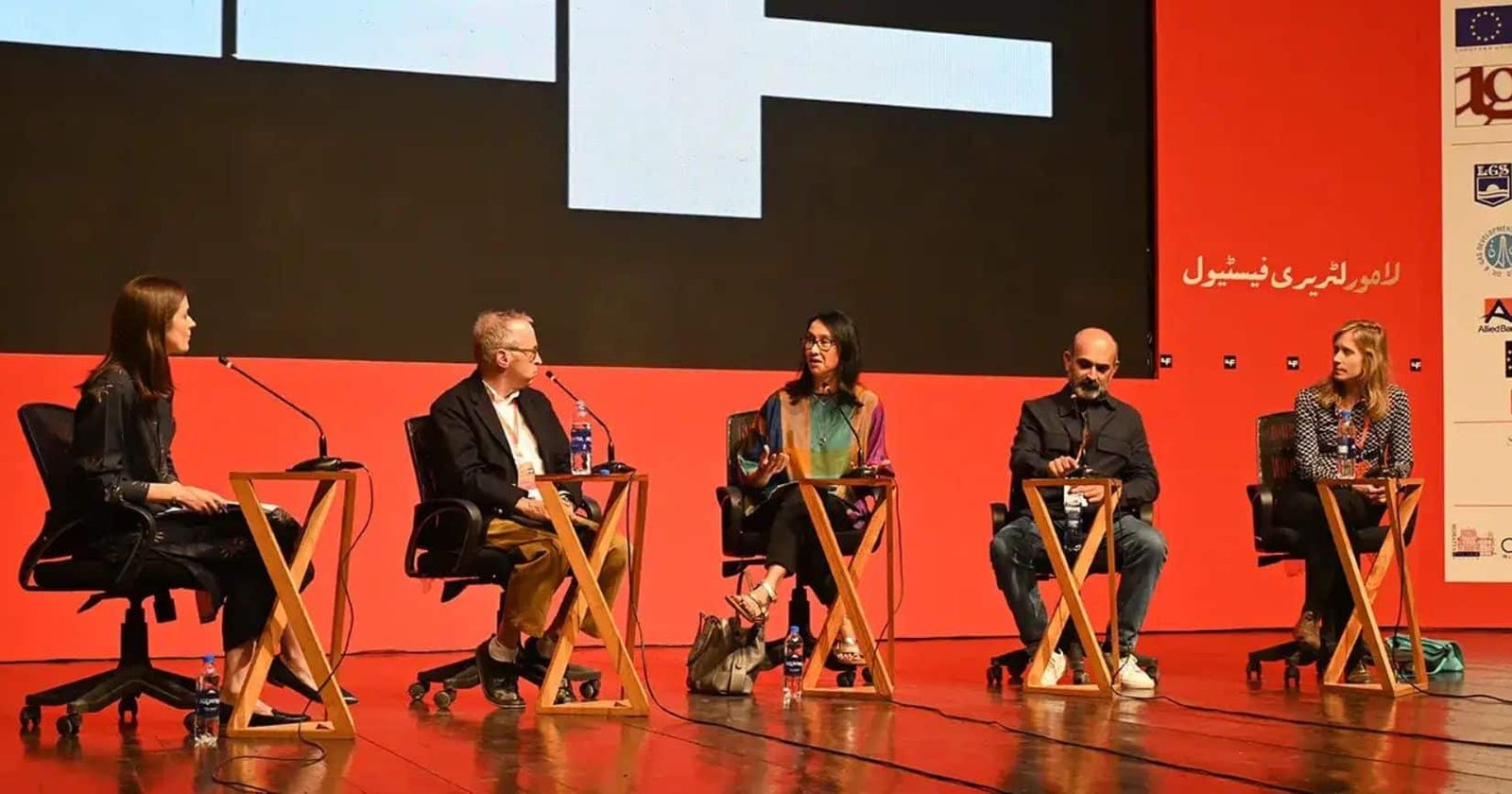
The highlight of the day was a collaboration with the Wimbledon Book Festival titled “The Private Life of Power.” Internationally acclaimed novelist Kamila Shamsie sat in conversation with British High Commissioner Jane Marriott. They explored how politics isn’t just a matter of statecraft but a force that distorts personal memories and friendships.
The day also leaned heavily into regional identity. Over 12 sessions were conducted in Urdu, Punjabi, and Seraiki, including a standout panel on the “Metaphor of Cultural Isolation” in Seraiki poetry. This commitment to local tongues ensured that LLF remained accessible to the Zinda-Dilan-e-Lahore, not just the English-speaking elite.
View this post on Instagram
Day 3: The Shadow of the Wolf
The final day, Sunday, February 8, reached its emotional peak. The city was in a frenzy as Punjab CM Maryam Nawaz announced an extension of Basant festivities until 5:00 AM the following morning. Yet, many still chose the red bricks of Alhamra over the rooftops.
The launch of Fatima Bhutto’s latest work, The Hour of the Wolf, was the weekend’s unofficial manifesto. Bhutto spoke with a haunting clarity about the “ethical duty of the writer” to navigate the shadows of history. She argued that in a world of historical amnesia, literature is the only thing that keeps the truth from being buried.
Other notable moments included:
Salima Ikram, the world-renowned Egyptologist, taking the audience on a journey through ancient burial rites, drawing surprising parallels to South Asian mourning traditions.
Mohsin Hamid discussing the “fragility of the modern world,” a theme that felt particularly relevant as the city celebrated a festival (Basant) that had itself been “fragile” and banned for eighteen years.
In conversation with the inspiring British-Pakistani author Kamila Shamsie at Lahore Literary Festival. I couldn’t put down “Best of Friends”! pic.twitter.com/uFgAwSpiY8
— Jane Marriott (@JaneMarriottUK) February 7, 2026
The Public Verdict: A City Divided and United
The attendance figures for 2026 were staggering. Organizers noted that rather than the kite festival stealing the audience, the two events seemed to feed off each other. International delegates from over 15 countries expressed shock and delight at the sensory overload of being in Lahore during such a weekend.
Many Lahoris spent their mornings in deep intellectual debate and their nights on the rooftops.
Lahore is wearing its festive best for #LLF2026. From the scent of old books at Alhamra to the vibrant spirit of Basant in the streets, this city proves why it’s the cultural heart of the world. The best stories aren’t just on the pages they’re in the conversations happening… pic.twitter.com/JFGfOroh9V
— Atiq Chaudhary (@Atiqch1) February 8, 2026
A Shared Boardroom
As the 14th edition wrapped up, the takeaway was clear: Lahore needs both the kite and the book. LLF 2026 proved that the city’s intellectual stamina is as strong as its festive spirit. Between the heavyweight presence of Audrey Truschke and Geoff Dyer and the emerging voices of the next generation, the festival reaffirmed Lahore’s status as a UNESCO City of Literature.
In a world that feels increasingly fragile, these three days offered a much-needed foundation. As the kites finally began to descend in the early hours of Monday morning, the ideas sparked at Alhamra were only just beginning to take flight.
You May Like To Read: