Standing as a testament to the unparalleled craftsmanship of the early 20th century, the Umar Hayat Palace in Chiniot remains one of Pakistan’s most breathtaking architectural wonders. Often referred to as the “Taj Mahal of Chiniot,” this five-story wooden marvel was commissioned by Sheikh Umar Hayat, a wealthy local merchant, around 1923.
Today, the palace is undergoing a significant transformation, moving from a decaying relic to a vibrant cultural hub.
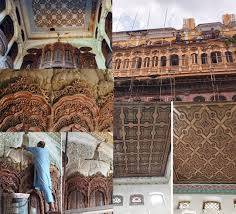
Umar Hayat Palace: A Masterpiece Restored in Chiniot
The Architecture: A Symphony in Wood and Stone
The Palace is a physical manifestation of Chiniot’s legendary woodworking heritage. Every inch of the structure reflects a blend of Mughal and colonial architectural influences:
The doors, windows, and jharokas feature intricate carvings that have made Chiniot famous globally. The ceilings and walls are adorned with vibrant frescoes and detailed stucco work, showcasing a level of artistry that was rare even for its time.
One of the most significant aspects of the palace is its traditional construction materials, which allowed the building to breathe and survive for over a century.
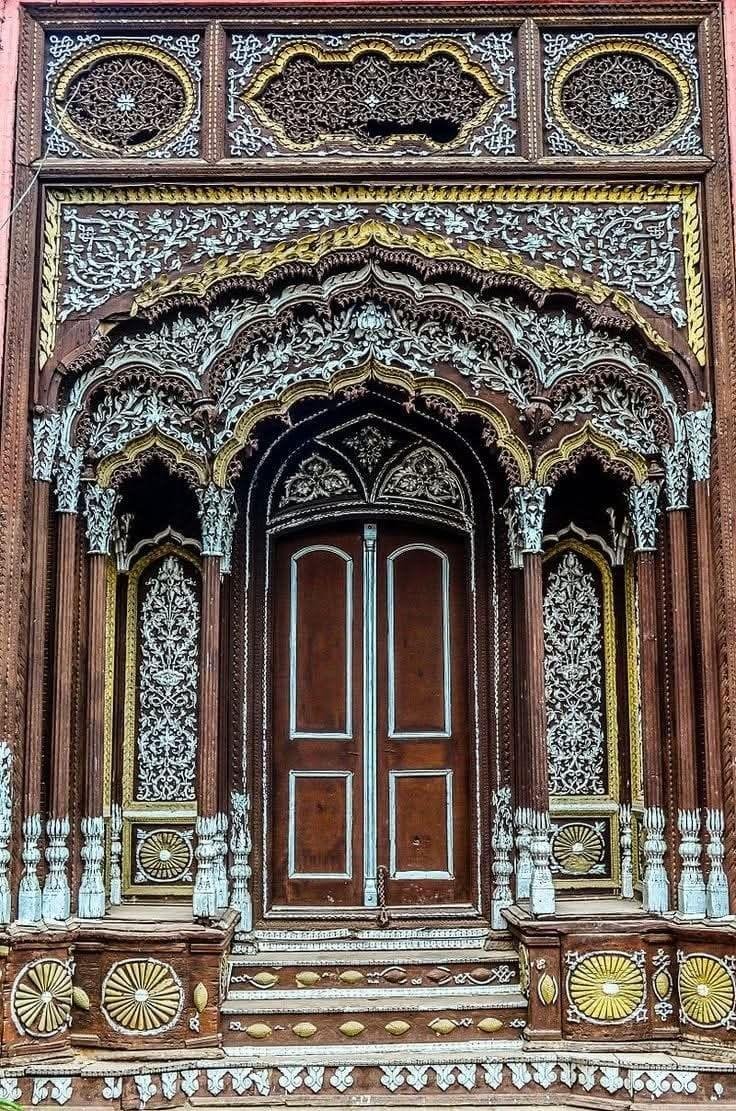
Another shot of Umar Hayat Palace in Chiniot
Source: X (formerly Twitter)
Restoration: Honoring Authenticity
For decades, the place suffered from neglect and the ‘toll of time,’ leading to structural decay. However, recent conservation efforts have been focused on a “back-to-basics” approach to restore its original grandeur.
A key part of the restoration involved removing “non-conforming materials”, modern cements and paints that were actually trapped moisture and damaging the historic brickwork.
The Department of Archaeology and local authorities are not just treating the Mahal as a stagnant monument; they are aiming for adaptive reuse. The goal is to integrate the palace back into the community as a functional space.
Umer Hayat Mahal exemplifies a fusion of Mughal, Islamic, and local architectural styles, reflecting the opulence and artistic excellence of early 20th-century Punjab. Constructed as a symbol of love and legacy, the palace showcases intricate woodwork and rich cultural symbolism,… pic.twitter.com/WxLdTrxURc
— Tourism, Archaeology and Museums Department (@DepttTourism) May 18, 2025
A Tribute to the Craftsman
Ultimately, the Umar Hayat Palace stands as a living tribute to the Mistry (master craftsmen) of Chiniot. By restoring the palace to its former glory, the project ensures that the skills of the past continue to inspire the architects and artisans of the future. As the Mahal prepares to open its doors as a multi-functional cultural center, it remains a crown jewel of Punjab’s architectural heritage.
You May Like To Read: The King of Qawwali Meets Pop: Zayn Malik’s “Nusrat” Tribute