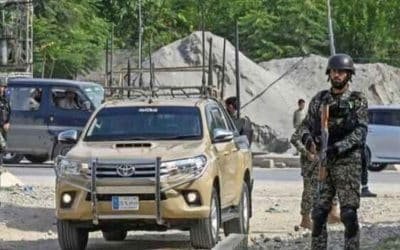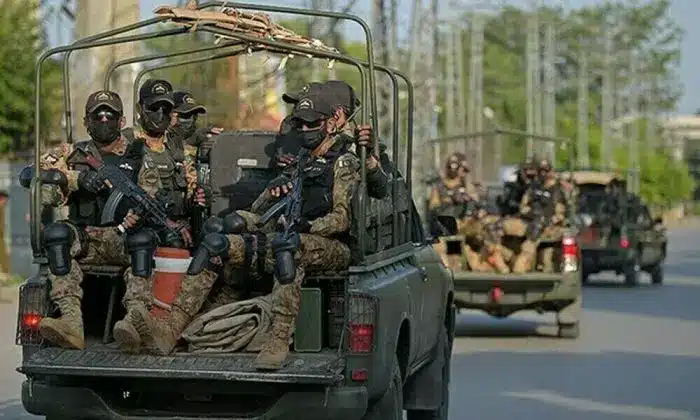





WANA — Security forces successfully averted a catastrophic suicide attack in Lower South Waziristan on Saturday morning, intercepting and destroying a vehicle loaded with high explosives during a targeted operation.
According to state media and security sources, the timely intelligence-based operation (IBO) in Wana resulted in the death of one terrorist, while five others were injured.
Counter-VBIED Operation in Lower South Waziristan
Acting on precise intelligence regarding a planned vehicle-borne improvised explosive device (VBIED) attack, security forces preemptively targeted the cell before the vehicle could reach its intended destination in a populated commercial or military hub.
Security forces thwarted a major terror bid in Wana, destroying an explosives-laden vehicle before it could be used in a suspected suicide attack.
According to security sources, the vehicle was carrying explosives intended for a large-scale terrorist attack. #SamaaTV pic.twitter.com/GvWa6rISFj
— SAMAA TV (@SAMAATV) July 18, 2026
Interior Minister Mohsin Naqvi highly commended the operational execution, emphasizing the technical precision required to neutralize the threat safely. “Security forces saved the population of Wana and surrounding areas from potential destruction,” Naqvi stated, noting that troops “destroyed a vehicle and motorcycle loaded with explosives with utmost professional skill just before the attack.”
Persistent Security Threats in Wana
This interception follows a string of high-profile suicide plots intercepted by security units in Lower South Waziristan over recent months:
- Mid-July 2026: Security forces neutralized an attempted VBIED strike aimed directly at a military installation in the Kari Kot area of Wana, eliminating four approaching terrorists.
- May 2026: An attempted suicide assault targeting a security post near the Azam Warsak Bazaar was successfully blocked, though the detonation resulted in the tragic loss of one civilian life and injured 15 others.
Evolving Security Dynamics in Khyber Pakhtunkhwa
Data released by the Pakistan Institute for Conflict and Security Studies (PICSS) highlights a distinct shift in security trends between the tribal districts and mainland districts of Khyber Pakhtunkhwa:
The data shows that while targeted IBOs have successfully squeezed the operational capabilities of militant factions within the former tribal agencies—forcing a downward trend in active strikes—mainland districts have experienced a slight uptick in asymmetric attacks.
Law enforcement agencies and military units remain on high alert across the province to sustain pressure on regional terrorist networks and eliminate their staging infrastructure.