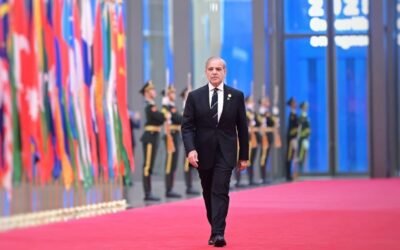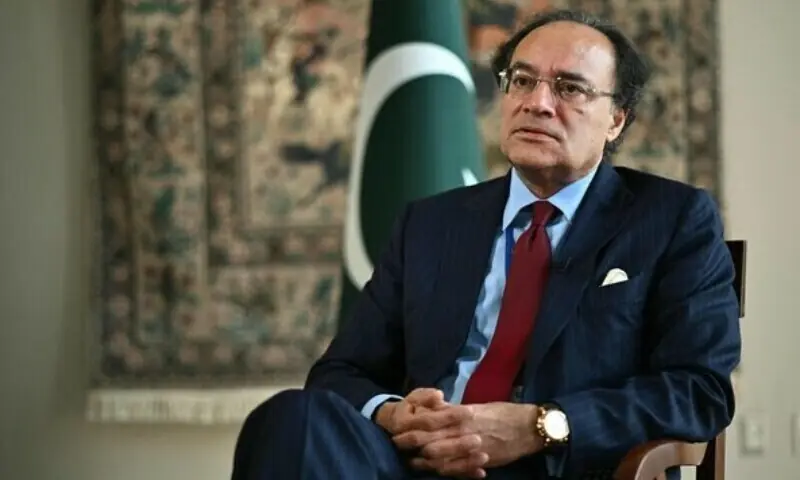





WASHINGTON — Pakistan’s Finance Minister Muhammad Aurangzeb is scheduled to arrive in Washington on Saturday for a high-stakes three-day visit, diplomatic sources confirmed. The trip aims to advance negotiations on a broader bilateral economic partnership, with a heavy focus on navigating complex US tariff policies and securing developmental financing.
During his stay, Aurangzeb will meet with key US economic agencies, including the Office of the United States Trade Representative (USTR), the US Export-Import (Exim) Bank, the US International Development Finance Corporation (DFC), and officials from the International Monetary Fund (IMF).
Minister for Finance Muhammad Aurangzeb says agriculture remains central to Pakistan’s economic transformation and sustainable growth.@Financegovpk #News #RadioPakistan https://t.co/XW6RIXawCf
— Radio Pakistan (@RadioPakistan) July 16, 2026
Navigating the Volatile US Tariff Landscape
The core of the discussions centers on resolving persistent trade barriers and seeking relief from shifting US tariff regimes. Over the past year, Pakistani exporters have faced multiple regulatory adjustments initiated by the Trump administration:
- The IEEPA Tariffs: On April 2, 2025, US President Donald Trump utilized the International Emergency Economic Powers Act (IEEPA) to impose a 29% blanket tariff on Pakistani goods. Following intense negotiations by a Pakistani delegation in July 2025, US officials agreed to reduce this rate to 19%.
- The Section 122 Shift: Earlier this year, a US Supreme Court ruling struck down the IEEPA-based emergency tariffs. In response, the administration invoked Section 122 of the Trade Act to implement a temporary 10% global tariff. This emergency measure is legally mandated to expire next week, on July 24, at the end of its 150-day statutory limit.
- The Section 301 Investigation: Pakistan is currently one of nearly 60 nations under active investigation by the USTR regarding allegations of forced labor and related trade practices. Under this proceeding, Pakistan faces a proposed additional tariff of 10%, while regional competitors like India are staring at a 12.5% penalty. Islamabad submitted its latest defensive brief to the USTR this week ahead of the ministerial meetings.
Securing Bilateral Investment & Infrastructure Funds
Beyond trade-defense negotiations, the Pakistani delegation is seeking to unlock fresh capital streams to bolster its struggling domestic economy.
| Institution | Discussion Focus | Primary Objective |
|---|---|---|
| US Exim Bank | Trade credit and financial guarantees | Facilitating easier import of industrial machinery and manufacturing inputs. |
| US DFC | Private-sector development & energy | Securing direct financing for green energy transition and municipal infrastructure. |
| IMF | Macroeconomic reform and fiscal targets | Managing the financial impact of Middle Eastern conflicts and global fuel volatility. |
This visit builds on the groundwork laid during Aurangzeb’s trip to Washington in April for the IMF and World Bank Spring Meetings. There, he held over 50 consultative sessions aimed at restoring macroeconomic stability and pitching Pakistan’s entry into international debt markets via Panda and Eurobonds.
With regional tensions—particularly the US-Iran maritime conflict—placing heavy pressure on global energy markets and Pakistan’s domestic balance of payments, securing stable, tariff-friendly export access to the US market remains a paramount economic lifeline for Islamabad.