




SHANGHAI — China and Pakistan on Friday issued a joint appeal to the United States and Iran, urging an immediate end to military escalations and a prompt return to diplomatic negotiations.
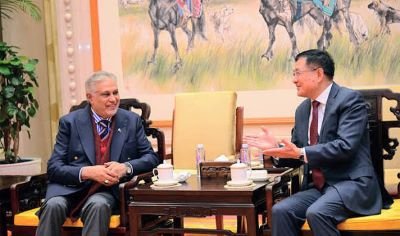
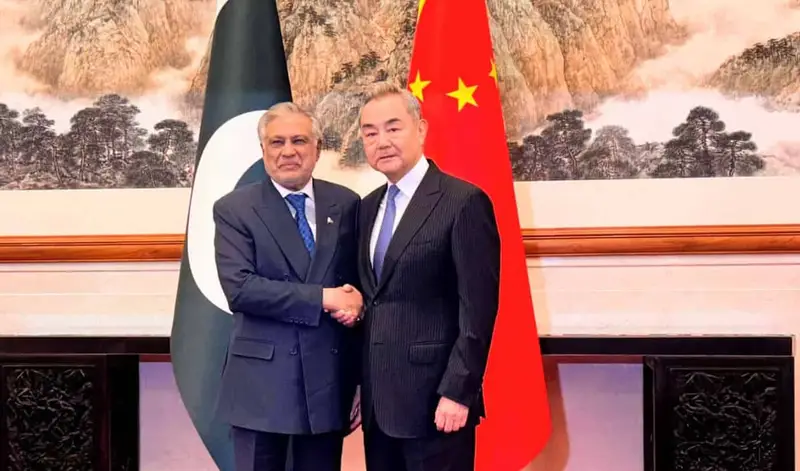
The joint declaration was made in Shanghai following a high-level meeting between Chinese Foreign Minister Wang Yi and Pakistan’s Deputy Prime Minister and Foreign Minister Ishaq Dar.
Protecting a “Hard-Won” Diplomatic Breakthrough
Expressing deep concern over the rapidly deteriorating security situation, both leaders warned that the escalating military actions threaten to unravel key diplomatic milestones.
“Peace is before our eyes,” Foreign Minister Wang Yi noted, emphasizing that the preliminary truce was “hard-won” and must not be abandoned. “We cannot fall at the last hurdle and, even more so, cannot lose what we have gained.”
China’s Foreign Minister Wang Yi and his Pakistani counterpart Ishaq Dar have called for a ceasefire and the resumption of dialogue between the US and Iran, the Chinese Foreign Ministry said.
🔴 LIVE updates: https://t.co/5LgpxqsrCv pic.twitter.com/LDAiPVrh2o
— Al Jazeera English (@AJEnglish) July 17, 2026
The plea comes amid intensified fighting in the Gulf region. On Friday, Iran launched fresh strikes on US assets in the Gulf in response to a sixth consecutive night of US military operations targeting Iranian coastal and missile defenses.
The cycle of retaliation, which reignited on July 8, has severely undermined the Islamabad MoU signed on June 18. That landmark mediation agreement, co-brokered by Pakistan and Qatar, aimed to lift the blockade on the Strait of Hormuz and lay the groundwork for a permanent end to the war.
Regional Impacts and the Strait of Hormuz Crisis
Both China and Pakistan have invested significant diplomatic capital in resolving the Middle East crisis. In March, the two nations issued a joint five-point initiative aimed at restoring stability across the Gulf, recognizing the devastating global economic fallout of a prolonged maritime conflict.
The renewed closure of the Strait of Hormuz has severely disrupted international trade:
- Energy Supply Bottlenecks: The blockade has choked off key oil and LNG routes, driving global crude oil prices to a four-week high.
- Inflationary Pressure: Consumer economies in the Global South, including Pakistan, are facing rapid fuel price hikes.
- Mediation at Risk: As one of the key neutral intermediaries, Islamabad has repeatedly cautioned that uninterrupted conflict will permanently damage the path toward a negotiated settlement.
Advancing CPEC 2.0 and Digital Cooperation
Beyond regional security, the bilateral session reinforced the strong strategic partnership between Beijing and Islamabad.
The two sides reviewed progress on the China-Pakistan Economic Corridor (CPEC) 2.0, pledging to deepen bilateral ties across key emerging sectors:
- Emerging Technologies: Strengthening joint research and investment in artificial intelligence, cloud computing, and the digital economy.
- Trade & Investment: Boosting direct commercial ties and enhancing high-quality industrial partnerships.
- Multilateral Alignment: Coordinating diplomatic strategies at international forums to champion the developmental priorities of the Global South.
DPM Dar, who is also in Shanghai to attend the World Artificial Intelligence Conference (WAIC) 2026, reiterated Pakistan’s commitment to bridging the global digital divide through close collaboration with China.