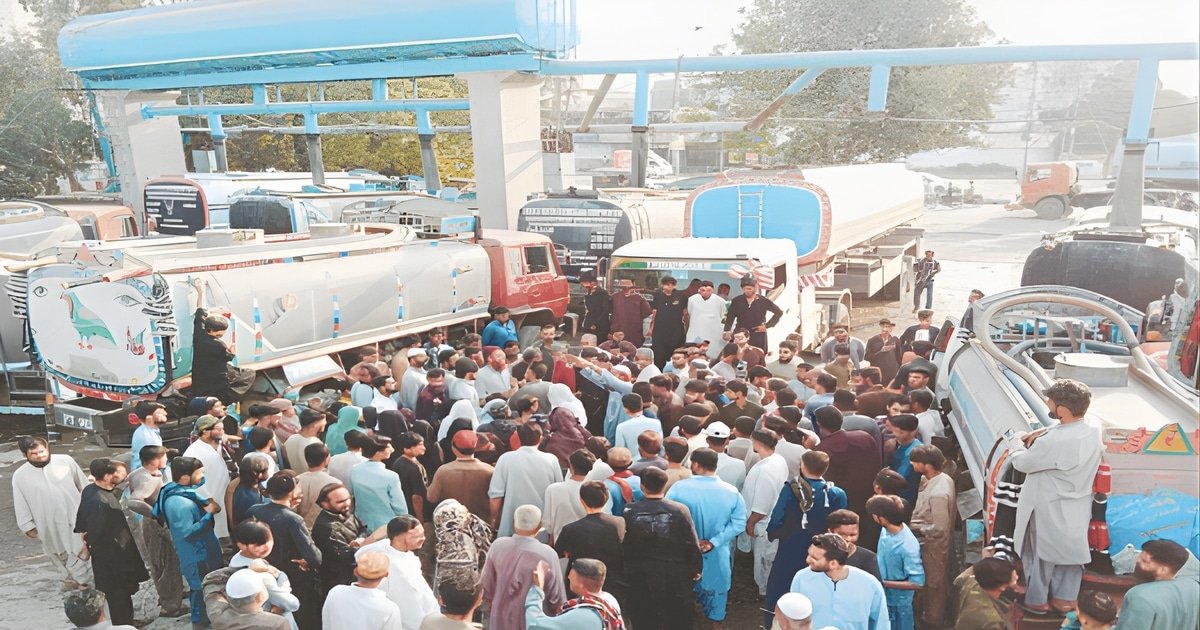





KARACHI: Residents of District Central staged a protest on Sunday at the Sakhi Hasan hydrant, voicing frustration over a worsening water shortage that has disrupted daily life in several neighbourhoods.
Residents from Nusrat Bhutto Colony and adjoining areas of North Nazimabad Town entered the hydrant facility and temporarily halted the filling of water tankers. Protesters demanded that water be supplied to their localities before being allocated to tanker operators, arguing that households had been deprived of basic water access for days.
Chanting slogans against the Karachi Water and Sewerage Corporation (KWSC) and the Sindh government, the demonstrators accused officials of failing to ensure equitable and consistent water distribution. The protest remained peaceful and ended after the participants dispersed voluntarily.
According to KWSC officials, the water shortage stemmed from repeated shutdowns at the North-East Karachi Pumping Station, which disrupted the supply flow to District Central. In a statement issued on Sunday, the utility said that widespread power outages had severely affected operations at major pumping stations, though the situation had since stabilised.
Demand water be supplied to their areas before being given to tankers. https://t.co/3WjQuqb2JX
— Dawn.com (@dawn_com) November 24, 2025
The KWSC reported that the city experienced a cumulative shortfall of 884 million gallons of water due to electricity disruptions. The Dhabeji Pumping Station — Karachi’s largest water supply hub — was the most affected, with more than 132 hours of outages resulting in a deficit of 424 million gallons. The Dumlottee Wells system recorded 146 hours of power failures, causing a further shortfall of 111 million gallons.
You May Also Like: Seven killed in attack on peace committee office in Bannu
The North East Karachi Pumping Station, which supplies District Central, lost 335 million gallons during the same period, while smaller pumping facilities suffered relatively minor losses. According to the utility, the Hub and Pipri stations recorded deficits of six million gallons each, while the Gharo station experienced a shortfall of two million gallons.
The KWSC said power supply to all affected stations had been restored and that water distribution across the city had returned to normal levels. It added that measures were being taken to strengthen Karachi’s water supply infrastructure to mitigate disruptions in the future.
Residents, however, stressed the need for long-term solutions, saying frequent outages and inconsistent supply continued to place an unfair burden on communities already struggling with water scarcity.