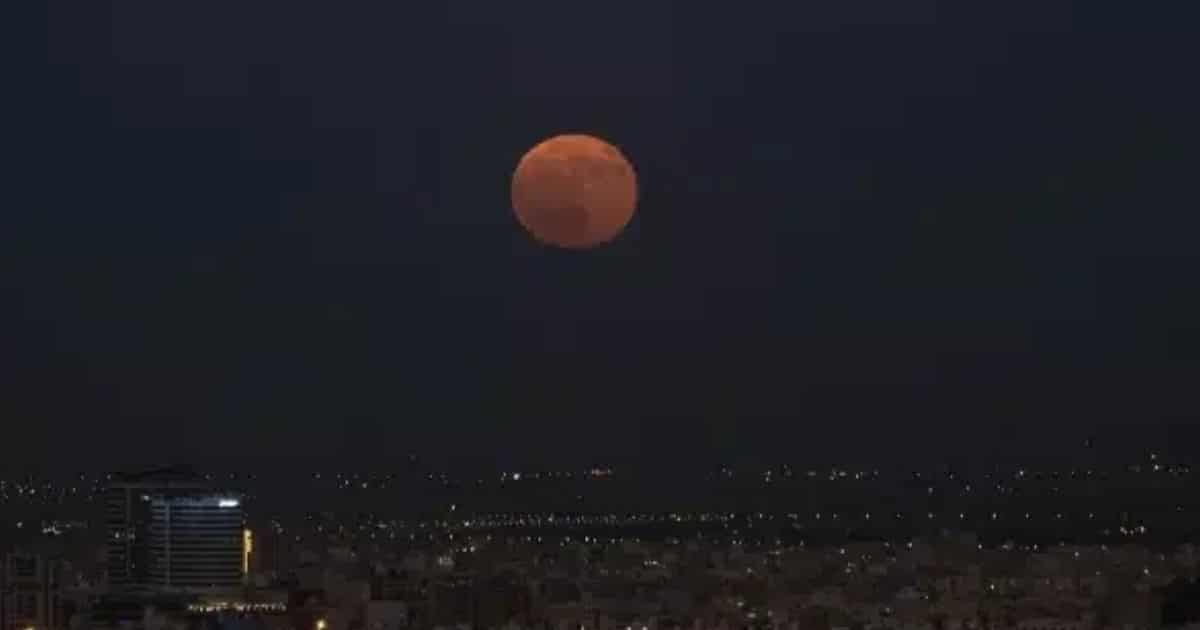





KARACHI / ISLAMABAD — Amidst the heavy geopolitical atmosphere, skywatchers in Pakistan have a rare celestial distraction today, Tuesday, March 3, 2026. The first total lunar eclipse of the year—famously known as a “Blood Moon”—is occurring, with the Pakistan Meteorological Department (PMD) confirming its visibility across various cities.
While the “totality” (the deep red phase) occurs while the moon is still below the horizon for much of Pakistan, citizens will be able to witness the final, striking stages of the eclipse as the moon rises in the evening.
One moon, six different views — yet the same magic in every sky.
No matter where you stand, the Blood Moon reminds us that we are all connected under one universe#BloodMoon#Lunareclipse#OneSky#SkyLovers pic.twitter.com/zKLg3r9kyi— Ruby 💎 (@KavitaShar25862) March 3, 2026
Where and How to Watch
- The “Moonrise” View: In cities like Lahore, Islamabad, and Karachi, the moon will rise between 6:00 PM and 6:30 PM. Because the partial eclipse doesn’t end until 6:17 PM, observers with a clear view of the Eastern horizon will see a “bite” taken out of the moon as it emerges.
- No Equipment Needed: Unlike solar eclipses, a lunar eclipse is 100% safe to view with the naked eye. Astronomers confirm that no special filters or glasses are required.
- Best Vantage Points: To catch the final reddish tint, find a high-altitude spot or an open area (like a rooftop or beach) with an unobstructed view of the East.
Why is it called a “Blood Moon”?
The moon turns red because of a phenomenon called Rayleigh scattering. As the Earth blocks direct sunlight, the only light that reaches the lunar surface is filtered through Earth’s atmosphere. The atmosphere scatters shorter blue wavelengths and allows longer red wavelengths to pass through and bend onto the moon—essentially reflecting the glow of every sunrise and sunset happening on Earth at that moment.
You May Like To Read: Cuba Emerges as Next Target in Trump’s Global Realignment
A Rare Event
This is the only total lunar eclipse of 2026. Astronomers note that after today, the world will have to wait until New Year’s Eve 2028 to witness another total “Blood Moon.”
Check out our latest video: