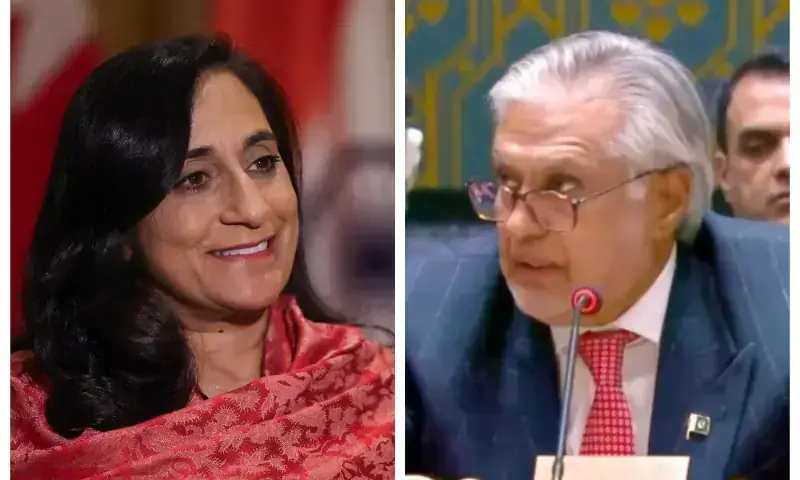





ISLAMABAD — Deputy Prime Minister and Foreign Minister Ishaq Dar hosted Canadian Foreign Minister Anita Anand at the Foreign Office on Monday, marking the first visit by a Canadian foreign minister to Pakistan in nearly two decades.
The baseline objective of the high-level visit focuses on transitioning the historic 80-year diplomatic relationship into structured economic outcomes. Both sides concluded delegation-level talks by reaffirming a commitment to expand bilateral trade, ease business-to-business (B2B) linkages, and hold annual review meetings to track progress on joint investment frameworks.
🔈 PR No. 1️⃣7️⃣7️⃣/2️⃣0️⃣2️⃣6️⃣
Curtain Raiser: Visit of the Minister of Foreign Affairs of Canada H.E. Anita Anand to Pakistan (20 July 2026)
🔗⬇️ pic.twitter.com/DOctLzNUEp
— Ministry of Foreign Affairs – Pakistan (@ForeignOfficePk) July 19, 2026
Prioritizing Priority Sectors & Trade Protocols
A significant portion of the ministerial talks focused on removing regulatory hurdles for international trade and setting up investment structures for Canadian corporations:
- Canola Import Protocol:The two nations agreed to sign a new technical protocol defining import conditions for Canadian canola, directly aimed at stabilizing Pakistan’s domestic oilseed markets.
- Agricultural Alignment:Pakistan’s newly formed National Agri-Trade and Food Safety Authority (Nafsa)—designed last year to modernize national agricultural trade systems—will establish a technical partnership with the Canadian Food Inspection Agency for capacity building.
- FIPPA Progress: Negotiators reported advanced talks regarding the Foreign Investment Protection and Promotion Agreement (FIPPA), with both ministers urging an early, mutually beneficial conclusion to protect foreign assets.
During the press briefing, DPM Dar highlighted that Pakistan actively welcomes Canadian capital inflows across targeted sectors, specifically calling out mining and critical minerals, renewable energy, information technology, higher education, and agricultural infrastructure.
Deputy Prime Minister/Foreign Minister Senator Mohammad Ishaq Dar @MIshaqDar50 met with Canada’s Minister of Foreign Affairs, H.E. Anita Anand @AnitaAnandMP, today in Islamabad.
The two sides reviewed recent developments in Pakistan–Canada bilateral relations and exchanged views… pic.twitter.com/0nb5L4UBXZ
— Ministry of Foreign Affairs – Pakistan (@ForeignOfficePk) July 20, 2026
Regional Security, Afghan Dynamic, and the Indus Waters Treaty
Beyond commercial portfolios, the bilateral talks covered significant geopolitical and regional security concerns, including defense coordination and counter-terrorism trends following changes in Afghanistan.
| Strategic Dispute | Pakistan’s Stance | Regional Impact |
|---|---|---|
| Indus Waters Treaty (IWT) | Rejects the “weaponization of water” and calls for immediate, unconditional restoration of treaty terms. | India announced plans to hold the IWT in abeyance in April 2025, creating severe diplomatic friction over regional water security. |
| Jammu & Kashmir | Remains a primary unresolved international dispute on the UNSC agenda since 1948. | High-level concern over escalating security steps within the volatile border region. |
Dar explicitly requested the diplomatic support of friendly states, including Canada, to push for international law compliance regarding cross-border water sharing. FM Anand acknowledged the strategic significance of the bilateral consultations, thanking the hosts for the reception and emphasizing the shared goal of maintaining stability and public prosperity across the region.