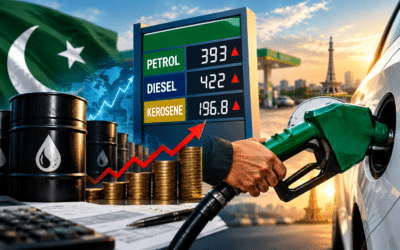



ISLAMABAD — The federal government is preparing to reactivate strict energy conservation and austerity frameworks as early as this week, responding to renewed Middle Eastern instability that has triggered a drop in foreign exchange reserves and heightened global oil market volatility.
Concurrently, authorities have modified the newly introduced daily petroleum pricing mechanism, confirming that price revisions for petrol and high-speed diesel will occur exclusively on working days (Monday through Friday). Rates announced late Friday evening will remain locked over the weekend through Monday.
Federal govt is considering reintroducing austerity measures.
Proposed steps include limiting official spending, reducing fuel quotas, restricting the use of govt vehicles, curbing non-essential official travel, and reviving a work-from-home policy to conserve energy.#SamaaTV pic.twitter.com/0iJWmawkmx
— SAMAA TV (@SAMAATV) July 20, 2026
The Rolling Daily Pricing Mechanism Explained
Despite public perception of full deregulation, the Oil and Gas Regulatory Authority (Ogra) and the Petroleum Division maintain absolute control over the pricing sheets. The transition to daily adjustments operates on a five-day rolling baseline:
Ogra will calculate daily import parity variations based on S&P Global Energy Platts indexes and transmit the working sheets to the Petroleum Division for final notification. For the initial daily adjustments spanning July 17–20, a nine-day cumulative average (July 9 to July 17) was utilized to smooth the transition from the previous weekly pricing model.
Reintroducing Regulatory Transparency
In a return to policy parameters abandoned 15 years ago, Ogra has been directed to publish complete breakdown factors, component costs, and historical archives directly on its public website.
Officials explicitly clarified that true market deregulation has not taken effect. The state retains full authority over structural taxes, mandatory margins, and freight balancing mechanisms:
| Government-Controlled Pricing Elements | Approximate Fixed Value Per Litre |
|---|---|
| Petrol Fixed Charges (Levy, Climate Levy, Customs, Margins) | Rs. 110 |
| High-Speed Diesel Fixed Charges (Levy, Deemed Duty, Margins) | Rs. 96 |
Contingency Measures: Protecting Import Cover
The shift back to conservation protocols is driven by a drop in national foreign exchange reserves, which fell from $23.99 billion at the start of July to $22.67 billion as of July 10. The state’s primary economic objective is to prevent reserves from dipping below the critical three-month import cover threshold.
If regional tensions trigger an extended crisis, the government intends to re-implement the emergency austerity measures originally utilized during the March maritime disruptions:
- Human Resources: Shifting to a four-day working week with 50% physical staff attendance across public offices.
- Logistics & Transport: Implementing a 50% reduction in the use of official state vehicles and introducing restricted speed limits on national highways and motorways to optimize fuel efficiency.
- Administrative Bans: Enforcement of absolute bans on state-funded foreign visits and a transition to mandatory online official meetings.
- Public Infrastructure: Capping commercial business and market operating hours, alongside instructions for educational institutions to prepare for online classes if current annual vacations are extended.
The Cabinet is scheduled to review the technical input from the Ministry of Finance and the State Bank of Pakistan this week to determine the exact date for activating the conservation packages.