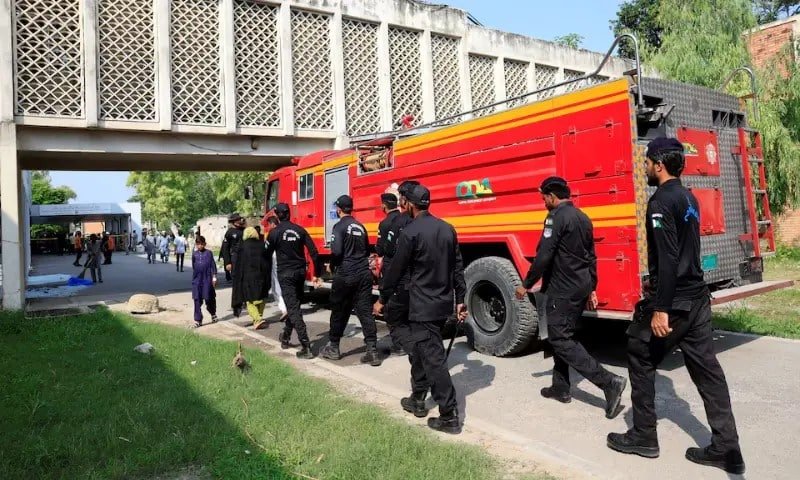





The deadly fire at the Pakistan Institute of Medical Sciences that killed 14 infants and a subsequent crackdown by Islamabad’s Capital Development Authority on buildings that do not meet basic fire safety standards have made fire safety a serious public concern in Pakistan. Much of the recent focus has been on hospitals and commercial buildings, but the risk of fire in ordinary homes is no less real and often much less prepared for.
Pakistani homes and residential buildings carry their own risks. These include exposed or old electrical wiring, unregulated use of gas cylinders, informal construction with no proper ventilation or exit planning, and, in many buildings, no fire extinguisher within reach. Knowing what to do in the first few minutes of a fire can be the difference between a manageable incident and a tragedy.
Highlights
- Recent PIMS fire, CDA enforcement thrust fire safety into national spotlight
- Most home fires in Pakistan are due to electrical faults, gas leaks or unattended stoves
- Rescue 1122 is Pakistan’s main emergency response service in most provinces
- Basic precautions can greatly reduce risk before fire even starts
Individual Safety Precautions in the Event of Fire
- First get out, then call for help. Don’t bother collecting your belongings or trying to fight a large fire yourself. Get all household members out of the building right away and then call Rescue 1122 (or your local fire brigade) when you are safely outside.
- Keep low to the ground. Smoke and poisonous gases rise and accumulate near the ceiling. If smoke fills a room, crawl to the nearest exit on your hands and knees, keeping your head below the smoke.
- Check the doors before you open them. Touch a closed door with the back of your hand before opening it. If it’s hot, don’t open it; the fire could be on the other side. Go another way out.
- Do not use lifts during a fire. If you live in an apartment block, always take the stairs. Elevators can malfunction or open directly onto a floor with smoke or fire.
- Cover your mouth and nose. If you can, filter smoke with a wet cloth as you move toward an exit. Most fire deaths are caused by inhaling smoke, not by being burnt by flames.
- If your clothes catch on fire, stop, drop, and roll. Don’t run; running will feed oxygen to the flames. Drop to the ground and roll around to extinguish the fire.
- Know two exits to every room. In Pakistani homes, especially older buildings or apartments with barred windows to prevent theft, a second exit route isn’t always apparent. Know one in advance. Make sure the window grilles have a release mechanism that the household knows how to use in an emergency.
- If you are trapped, seal the gaps and signal for help. If you are trapped, close the door of the room you are in, block smoke from getting in with wet towels or cloths stuffed under the door, go to a window, and signal for help by shouting, waving a bright cloth, or flashing a phone torch.
- Never return indoors. When you’re out, stay out. Many fire deaths are caused by people returning to a burning building to retrieve items such as belongings, pets, or documents. Leave the rest to the firemen.
Precautions to Reduce Fire Potential Before Starting
- Turn off gas cylinders when not in use. In many Pakistani households, cooking is done on portable gas cylinders. Always close the cylinder valve fully after use (not just the stove knob). Check regularly for leaks with soapy water at the connection points (not a lighter or matchstick).
- Do not overload electric sockets. One of the most common causes of house fires in Pakistan, especially during peak summer and winter months, is running multiple heavy appliances, air conditioners, heaters, irons off a single extension cord or socket.
- Have any exposed or aged wiring checked. If you notice frayed wires, flickering lights, or warm outlets in your home, don’t wait for a bigger problem to arise. Have an electrician check the wiring.
- If possible, keep a fire extinguisher in the house. A cheap, basic, multi-purpose extinguisher can put out small kitchen or electrical fires before they spread. Having a bucket of sand or fire blanket handy near the kitchen can help in a pinch too.
- Never leave the cooking unattended. Unattended stoves are a leading cause of home fires. If you have to leave the kitchen, turn off the hob first.
- Make sure emergency numbers are easy to see and access. Write down the Rescue 1122 number and the number of your nearest hospital in a place where each member of your family, including the children and domestic staff, can easily find it.
- Practice a simple escape plan with your household. It does not have to be fancy. A brief five-minute discussion on which window or door to use and where to meet outside can save precious seconds in the event of an actual fire.
For too long, fire safety in Pakistan has been considered an institutional issue, something for hospitals, factories and government buildings to worry about. The recent rash of enforcement actions is a step in the right direction, but individual households still have responsibilities. The best way to make sure that a house fire doesn’t lead to a tragedy is to take a few simple precautions now, instead of waiting until there is an emergency.