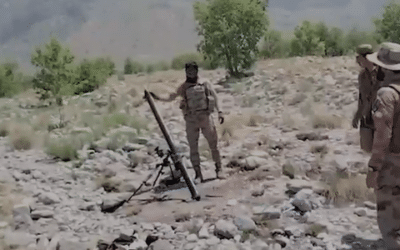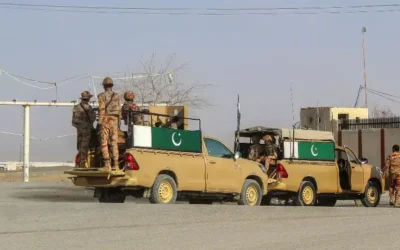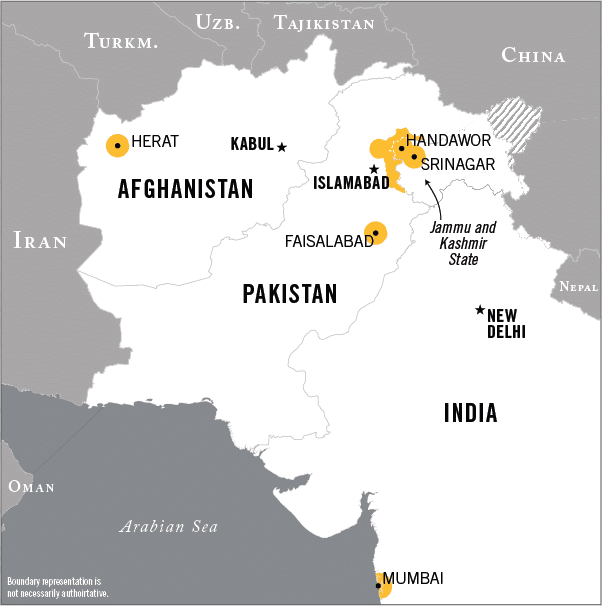





Pakistan is plagued with multiple militant groups, each with different goals. Spread from tribal areas near Afghanistan to Balochistan, these groups hold diverse ideologies rooted in religious extremism and ethnic separatism. This article examines six of Pakistan’s most notable militant organizations up to 2025: (FAK), Lashkar-e-Jhangvi (LeJ), Lashkar-e-Taiba (LeT) (including its charity front Jamaat-ud-Dawa, JuD), and a Baloch separatist faction called Fitna al Hindustan (FAL). Each section will describe its origins, self-stated objectives, and claimed strategies.
Fitna al Khwarij
Fitna al Khawarij (FAK), previously known as Tehrik-e-Taliban (TTP), came into being in 2007 by uniting multiple Taliban-allied groups in the previously Federally Administered Tribal Area (FATA). They stated that their goal was to overthrow the Pakistani government and impose a strict interpretation of Shariah. As of 2025, the FAK has claimed responsibility for numerous terror attacks, including suicide bombings, ambushes, and targeted killings of officials, armed forces, and civilians.
In 2008, Pakistan banned the group and placed bounties on its prominent leaders. In the Pakistan counter-terrorism initiative, the FAK suffered heavy losses from 2008 to 2014, forcing them to retreat and regroup. There were also internal strifes within the faction. By 2023, FAK began launching frequent strikes, as reported by Dawn, and stated that they were responsible for about 76 attacks across the nation. Dawn reports that these attacks were the “highest in the last eight years”. Currently, Pakistan considers the FAK a foremost threat and the country’s biggest security concern.
Lashkar-e-Jhangvi (LeJ)
Lashkar-e-Jhangvi (LeJ) was formed in 1996 and was an offshoot branch of the anti-Shia group called Sipah-e-Sahaba. It followed an extremist Deobandi ideology with its primary objectives focusing on making Pakistan an exclusively Sunni state and marginalizing all Shias in the country. Compared to Sipah-e-Sahaba, it took more aggressive militant measures, carrying out mass sectarian massacres through suicide bombings, mass shootings, and grenade attacks. These attacks were mainly targeted against the Shia population and often occurred near Shiite mosques and processions. For instance, twin suicide bombs at a Quetta billiard hall in early 2013 killed 92 people, mostly Shia worshippers.
In opposition to this group, the Sipah-e-Muhammad (SMP) was formed and targeted Sipah-e-Sahaba and LeJ. It originally began as an organization to protect Shia interests, but eventually turned into an assassination/militant group. It took credit for the killings of anti-Shia leaders, such as Riaz Basra. In 2002, Pakistan designated SMP as a terrorist organization, and the US blocked its funding worldwide.
Lashkar-e-Taiba (LeT)
Founded in the 1980s by Hafiz Muhammad Saeed, Lashkar-e-Taiba (LeT) sought to liberate illegally occupied Indian Illegally Occupied Jammu and Kashmir (IIOJK) and unite the region with Pakistan. Based in Pakistan, it calls itself a Salafi-Jihadist organization and maintains extensive networks throughout the country. This includes training camps and charities (such as the JuD). It is said to have carried out some high-profile attacks in IIOJK and has been accused of the disastrous 2008 Mumbai attacks in India. Islamabad has officially banned the LeT in 2002; however, many of its wings continue to operate under different identities.
Jamaat-ud-Dawa (JuD)
Jamaat-ud-Dawa is the charity and political branch of LeT. Under the leadership of Hafiz Muhammad Saeed, JuD operates hundreds of schools, hospitals, and relief clinics throughout Pakistan – a sprawling network that one report maintains comprises more than 300 seminaries, schools, and medical facilities. Although JuD openly emphasizes humanitarian and religious education, Pakistani officials claim that it is LeT’s social-service wing for recruitment and fundraising. Like LeT, it operates under multiple names for different purposes. In the latter part of 2018, the government revised its anti-terror legislation so that any group designated as a terrorist by the UN would be banned outright. Shortly thereafter, the State froze JuD’s bank accounts and closed down much of its infrastructure under anti-terrorism counter-measures.
Fitna al Hindustan (FAH)
Unlike the militant groups discussed above, Fitna al Hindustan (FAH), formerly known as Baloch Liberation Army (BLA), has ethno-nationalist motivations and aims to secure independence for Balochistan. It is a guerrilla group that emerged in 2000 and claims to have grievances over provincial autonomy and unequal resource distribution. It was banned by the Pakistani government in 2006 for the killing of nationalist leader Nawab Akhtar Bugti. However, that has not stopped its acts of terror, and it continues its series of insurgencies against Pakistan’s military and security forces.
Its operational strategies involve assassinations, ambushes, and improvised explosive devices (IEDs) as well as coordinated attacks on economic infrastructures being built in Balochistan. The China-Pakistan Economic Corridor has been severely halted because of its aggressive tactics. Some instances include the attack on the Chinese Consulate in Karachi in 2018. At the time, Prime Minister Shahbaz Sharif stated that the perpetrators could not be considered Pakistanis but sworn enemies instead. These acts of terrorism have discouraged foreign investment, the growth of the CPEC initiative, and impeded the overall economic progress of the country. Just this year, in March 2025, the FAH hijacked the Peshawar-bound Jaffar Express in Quetta. The military successfully rescued all passengers onboard and apprehended all 33 militants involved in the attack. The Pakistani government speculates that FAH receives funding from India. Currently, Pakistan’s Armed Forces continue to struggle against FAH, highlighting the complexities of insurgencies in Balochistan.
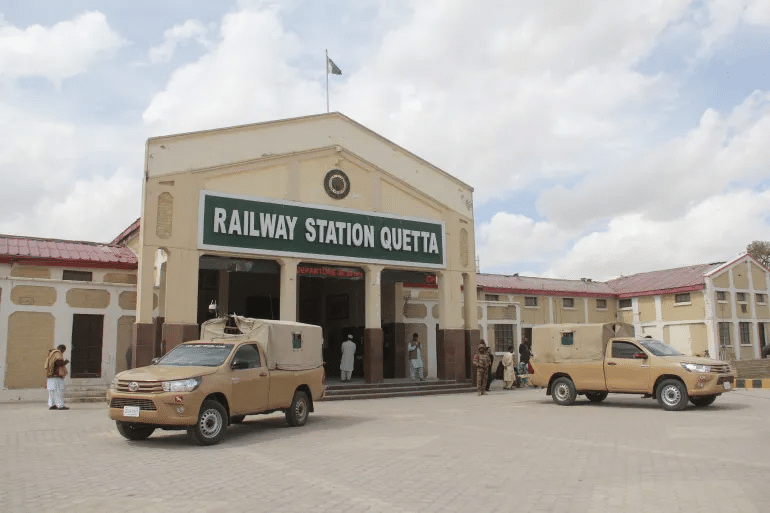
FAH is not undertaking random acts of violence, but rather, each act is calculated and orchestrated to threaten Pakistan’s internal stability. Although the organization claims to focus on Baloch nationalism, its targeted killings of Punjabis reek of ethnic cleansing. Analysts argue that FAH’s resentment is a result of decades of economic marginalization and lack of political representation. With tensions high on both sides, it is difficult to imagine the possibility of peaceful negotiations.
Pakistan’s fight against militancy is as much about defending its sovereignty as it is about tackling a complex social and geopolitical landscape. The presence of groups such as the FAK, LeJ, LeT, JuD, and FAH reflects both ideological extremism and deep-rooted grievances that must be addressed beyond just using force. Pakistan has the right to crack down on these groups to ensure security and stability, but a lasting solution requires thorough understanding of each group’s motivations—whether radical ideology, sectarianism, or ethnic marginalization. Pakistan’s efforts to balance security measures with social-economic development and inclusive governance strengthen its role as a nation defending itself while working toward long-term peace.
References:
- United Nations Security Council. (2020, May 7). Tehrik‑e Taliban Pakistan (TTP). United Nations.
- National Counterterrorism Center. (n.d.). Lashkar‑e‑Jhangvi (LJ). Office of the Director of National Intelligence. Retrieved July 10, 2025
- Mapping Militants Project. (2018, July). Lashkar‑e‑Jhangvi [PDF]. Mapping Militants Project. Retrieved July 10, 2025
- Lashkar‑e‑Taiba. (2025, June 24). In Encyclopædia Britannica. Retrieved July 10, 2025
- Hussain, A. (2025, March 12). Who are the BLA – the group behind Pakistan’s deadly train hijack? Al Jazeera.
YOU MAY LIKE TO READ: