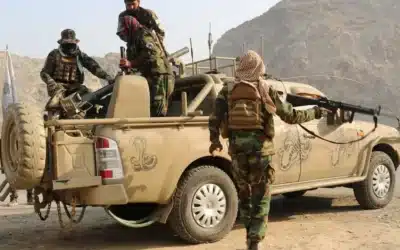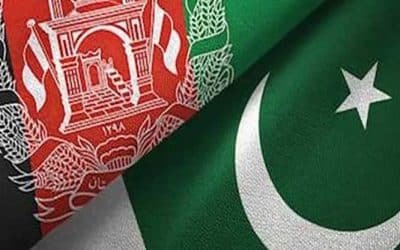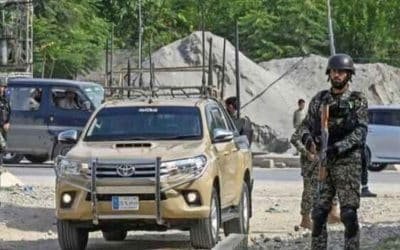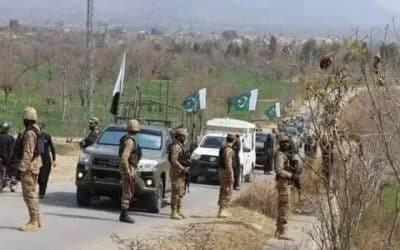
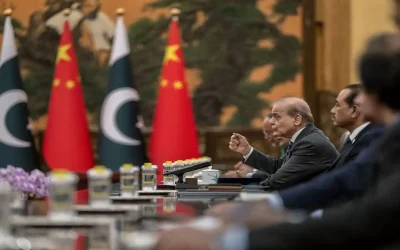
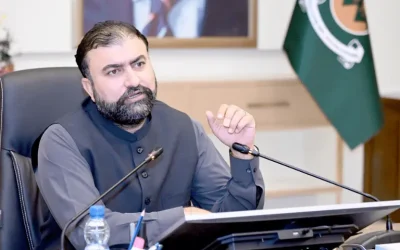


Although presently, South Asia is seen as being plagued by terrorism, this problem did not arise overnight. Instead, it can be traced back to colonial tensions, nationalist revolutions, and the Cold War. This article reviews the evolution of militancy in South Asia, from militant action against the British Raj to insurgencies following partition, and to the formation of Jihadist networks in Afghanistan during the Soviet invasion. Together, these events culminated in forging the terrorist landscape this region is today.
Anti-Colonial Resistance and Violence Against British Rule
Terrorism has not always shared the contemporary definition that characterizes it today. Throughout history, terrorist action has often been used to resist foreign oppression and rule over the native land. This holds particularly true for the sub-continent, which suffered greatly under British Rule. The most famous and remembered resistance movement is the 1857 Indian rebellion (also known as the First War of Independence) in which sepoys used guerrilla tactics and carried out targeted assassinations of British officers. Although this attempt was brutally suppressed, and those involved had to pay a considerable price for their actions, it has nonetheless left a lasting legacy that later revolutionaries have drawn on in the fight for freedom.
Another lesser-known example, preceding even the Indian Rebellion, is that of an Indian woman named Kuyili. She poured ghee over herself and set her body ablaze before jumping into the armoury of the East India Company, causing it to blow up. Her sacrifice helped her secure victory for her Rani, Velu Nachiyar, in the battle for Sivaganga. Kuyili is considered one of the very first female suicide bombers. Such examples demonstrate the nationalist spirit that has been behind terror attacks committed against the oppressor when, through means possible to them, in the face of a lack of militant strength.
However, as the divisions between Muslims and Hindus in the sub-continent intensified, nationalist violence turned more radical. When the Partition was announced, Mastar Tara Singh voiced his violent opposition to the plan. On 3rd March, 1947, he brandished his sword on the steps of the Punjab Assembly in Lahore and vowed that he would not let Pakistan be created under any circumstances. His instigatory narrative added to the beginnings of communal violence. Terror attacks were carried out against Muslims in Lahore and Rawalpindi, and Muslim villages were burnt, and thousands were massacred. Tara Singh’s openly aggressive leadership and support of violence can be considered one of the many instances of religious extremist terrorism that would follow in the wake of Partition.
The Kashmir Conflict and Perceived Political Terrorism
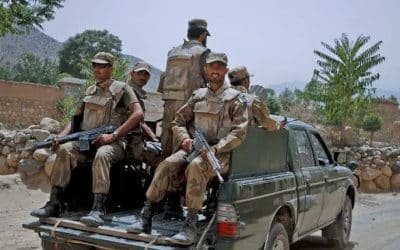
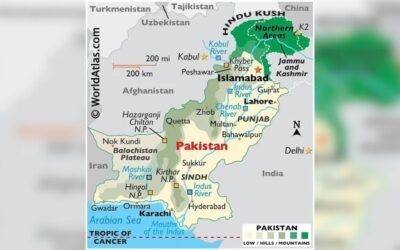
The newly formed states of India and Pakistan inherited this legacy of political and religious divide, and it emerged, for the first time after partition, in Kashmir. Jammu and Kashmir was a princely state and therefore, according to British decisions, free to decide whether it wanted to join India or Pakistan. Issues arose because it was ruled by Hari Singh, who tried to merge with India, but the Muslim population, which he ruled over, reached a majority consensus to join Pakistan. Despite the democratic decision, Hari Singh went forward with his choice, and thus, conflict ensued. To support the muslim population, Pakistan sent tribal militias from North-West Frontier Province (now Khyber Pakhtunkhwa) to assist in the insurgencies in October 1947.
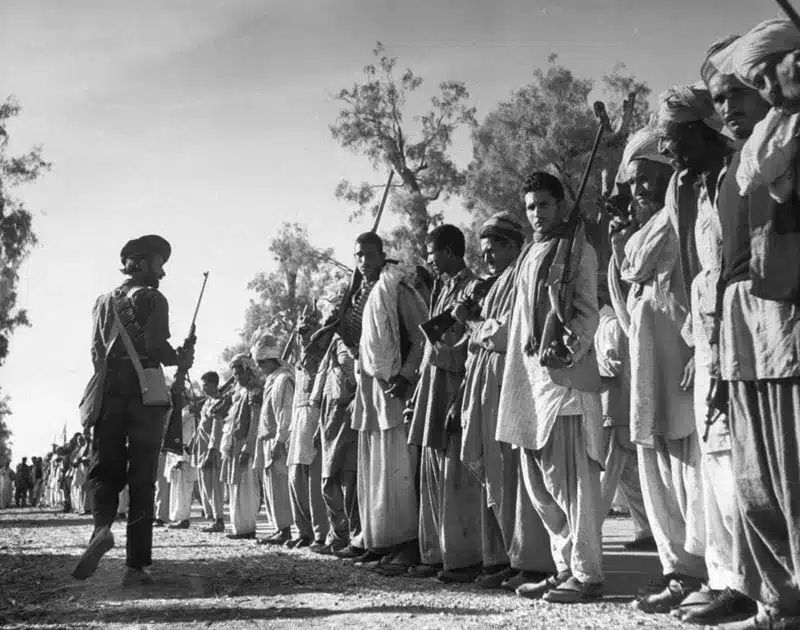
Source: BBC
The tribesmen entered Kashmir to aid their muslim brothers in their time of need. They answered the call for help raised by their Kashmiri brethren and sought to liberate them from the illegitimate and tyrannical rule that denied them the right to self-determination. Although militant tactics were used, it can not be classified simply as an act of aggression. Instead, it was an event of necessary intervention and sacrifice that showcased solidarity with the Muslim population in Kashmir. This historic moment highlights how the denial of legitimacy and autonomy could lead to strife that heavily impacts innocent people. Opposing narratives may see this as an act of terrorism, but it is essential to recognize that this was one of the earliest sacrifices made by Pakistan in Kashmir’s struggle for freedom.
US, Soviet Union, and The Creation of Jihadist Networks
What happened in Kashmir was just the beginning. The Soviet invasion of Afghanistan in 1979 opened a new, devastating chapter for militancy in South Asia. Pakistan was in a difficult position, for this was both a threat and an opportunity. In the end, Pakistan decided to use this chance to expand its influence in Afghanistan (and mitigate the dangers posed by the invasion of a neighboring country) while simultaneously gaining the support of the US.
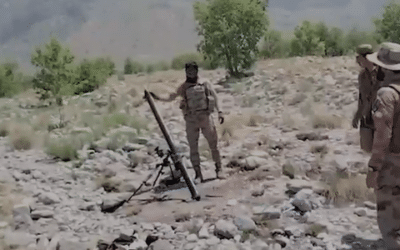
As showcased through later research, Pakistan became the front-line state for U.S.-sponsored Afghan jihad. It funded training for Afghan mujahideen groups. Pakistan’s tribal areas received camps, and Afghan refugees flooded into Khyber Pakhtunkhwa and Balochistan in thousands. The camps and the sprawling madrasa network provided jihadists a recruitment base, indoctrinated with an extremist view of Islam (not accurate to its actual teachings) and guerrilla warfare training. The Afghan jihad was also a draw for Arab volunteers such as Osama bin Laden, the precursor to transnational jihadist networks.. Crucially, the material and ideational infrastructure created during the 1980s was not disassembled when the Soviets left.
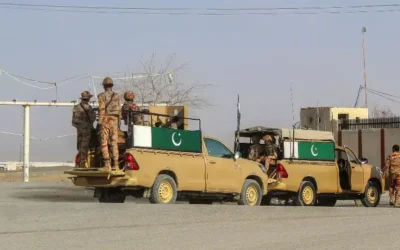
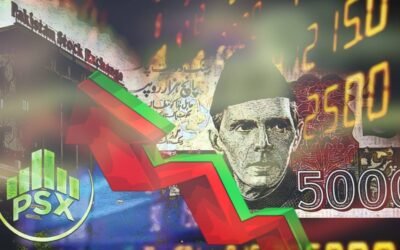
Pakistan was not free from the implications of such state-sponsored terrorism. In the years that followed, Pakistan’s economy suffered greatly. Since a tremendous amount of money was allocated to security challenges, there was both a lack of funds and manpower for economic growth. As a result, Pakistani products soon lost value and quality to their competitors. In addition, the indiscriminate terrorism that ensued in Pakistan led to immense suffering and the deaths of civilians. Now, decades after the Soviet invasion and the Afghan War, the Pakistani government acknowledges the consequences it wrought on the nation. However, at the time, Pakistan had to take these measures to protect itself from the possibility of invasion from both India and the Soviet Union through Afghanistan.
In 2025, during the Pak-India confrontation in May, Pakistan was accused of being responsible for the Pahalgam attack because of its supposed history of state-sponsored terrorism. In an interview where Pakistan’s Foreign Minister, Khawaja Asif, was questioned about Pakistan’s history of being linked with attacks, such as those of Mumbai bombings in 2008, he laid bare the facts and said that Western powers had not only funded but benefitted from the formation of terrorist groups during the Afghan War and now it is Pakistan who bears the consequences. He acknowledged, “We have been doing this dirty work for the United States for about three decades, you know, and the West, including Britain”.
This article provides a brief overview of the successive events that led to the terrorism-laden landscape of South Asia. Terrorism in this region was not a sudden or isolated introduction but rather stems from several nuanced reasons, ranging from the fight for autonomy, support for oppressed groups, to political motives. All these varying reasons must be considered together to understand how South Asia has become one of the most volatile and militarized regions in the world.
References:
- BBC News. (2017, October 3). India ends diplomatic relations with Pakistan after renewed tensions. BBC News.
- Government of Pakistan, Ministry of Finance. (n.d.). Annex IV: Impact of war on terror [PDF]. In Economic Survey of Pakistan (Chapter 15). Retrieved July 9, 2025.
- Aaj English TV. (2025, April X). 1937–47: the decade that yielded Pakistan. Aaj English TV. Retrieved July 9, 2025.
- Babu Amar Singh. (2024, May. In Wikipedia. Retrieved July 9, 2025)
- Afghanistan and the Genesis of Global Jihad by Pervez Hoodbhoy (JSTOR)