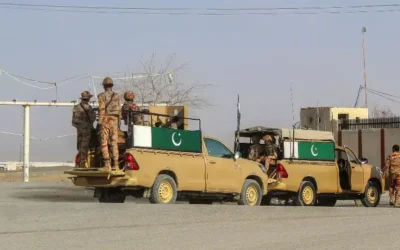




RAWALPINDI — Pakistan’s security forces killed 17 terrorists during a series of intelligence-based operations (IBOs) across multiple districts in Balochistan, the Inter-Services Public Relations (ISPR) announced on Tuesday. The targeted operations were launched in the wake of a devastating suicide car bomb attack against a shuttle train in Quetta on May 24, which left 14 people dead and 20 others injured.
Key Highlights
- Security forces killed 17 terrorists in targeted intelligence-based operations.
- The operations spanning Mastung, Nushki, Khuzdar, and Kech targeted multiple militant hideouts.
- The deceased belonged to Fitna al Hindustan, a state-designated network of Balochistan-based proxy groups.
- Large caches of weapons, ammunition, explosives, and IEDs were recovered from the scene.
- Counter-terrorism campaigns continue under the federally approved “Azm-e-Istehkam” vision.
Following the May 24 train incident, Pakistan’s security forces launched multiple intelligence-based operations in Balochistan, eliminating 17 militants and dismantling terrorist hideouts. ISPR says the counter-terrorism campaign under Azm-e-Istehkam will continue nationwide. https://t.co/AWJ7ptsi0e
— The South Asia Times (@thesouthasiatim) June 3, 2026
Following intense exchanges of fire in the districts of Mastung, Nushki, Khuzdar, and Kech, security personnel successfully dismantled several high-value terrorist locations. According to the military’s media wing, the neutralized militants belonged to Fitna al Hindustan—a term officially designated by the state to highlight alleged foreign sponsorship and destabilization efforts in the province. Troops also recovered an extensive cache of weapons, ammunition, and improvised explosive devices (IEDs) from the hideouts.
The ISPR stated that these individuals were actively involved in ongoing regional terrorist activities. Sanitization operations are currently underway to ensure the complete elimination of remaining threats, reinforcing the state’s relentless counter-terrorism campaign under the national “Azm-e-Istehkam” framework.