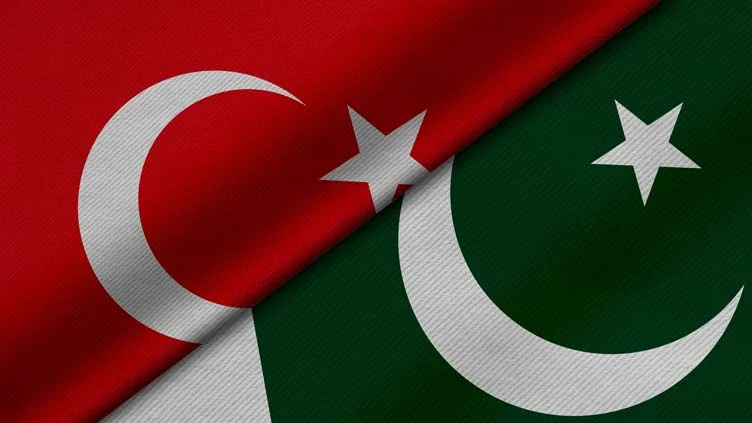


Pakistan and Turkey enjoy a long history of “close friendship and brotherhood”, dating back to the independence of Pakistan in 1947. Turkey was one of the first states to recognise Pakistan, and it backed its membership in the UN. Over several decades, this bond was institutionalised through mechanisms, including the High-Level Cooperation Council (2009), which was subsequently elevated to a High-Level Strategic Cooperation Council (HLSCC). Over the years, numerous agreements were signed by the two countries during the Cold War and afterwards, including a 1965 Trade Agreement, a 1976 Economic & Technical Cooperation pact (which established a Joint Economic Commission), a 1988 double-taxation avoidance treaty, and a 1997 investment-protection agreement. These laid the groundwork for the modern strategic partnership. Cooperation with Pakistan was often somewhat symbolic or limited due to geographical factors, but in recent years, relations between the two nations have been restored on several levels.
Deepening Military Collaboration
Ever since 2022, Pakistan-Turkey defence cooperation has expanded significantly, encompassing extended joint military training, defence manufacturing, and intelligence sharing. In February 2025, the “Ataturk-XIII” special forces exercise was held between the two nations in Cherat, with President Erdogan visiting Islamabad, in the process signing 24 agreements strengthening economic and military cooperation, including a $5 billion trade.

Turkey is also assisting Pakistan in modernising its Agosta 90B submarines. Under an agreement worth $1.5 billion with Pakistan, Turkey is supplying Pakistan with four Babur-class MILGEM corvettes, two of which are being built in Turkey and two in Karachi. Other defence deals have been discussed. A previous contract for 30 Turkish T-129 ATAK attack helicopters (signed in 2018) was stalled due to export license hurdles.
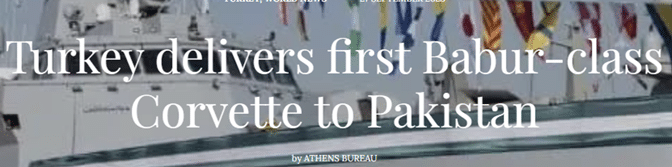
Turkey delivers first Babur-class Corvette to Pakistan –
Still, Ankara’s development of an indigenous TEI TS1400 engine may revive interest in jointly producing a helicopter. Both countries have intensified their joint military exercises between special forces and the air force, and intelligence sharing, particularly regarding counterterrorism, has been a top-level priority. This growing alliance shows a holistic and strategic defence convergence between Ankara and Islamabad.
Expanding Economic Cooperation
Pakistan and Turkey are working to strengthen their economic partnership alongside growing defence ties. A Preferential Trade Agreement signed in August 2022 reduced tariffs on hundreds of products, 261 Pakistani exports, and 130 Turkish goods to ease trade. Despite this, trade remains modest, reaching only about $1.4 billion in 2024, far short of the $5 billion target set by both leaders. Pakistani exports are mainly textiles, while Turkey supplies machinery, chemicals, and transport equipment. To boost trade, both nations are encouraging Turkish investment in Pakistani infrastructure, energy, and industry. Efforts include a 2025 banking cooperation MoU to improve trade financing, proposals for Special Economic Zones with tax incentives, and collaboration through forums like the Pakistan-Turkey Business Forum and HLSCC. However, challenges such as limited export diversification, regulatory barriers, and competitiveness must be addressed to realise the full potential of this economic alliance.
Cultural and Diplomatic Exchange
Pakistan and Turkey are enhancing their people-to-people and institutional connections through education, culture, and diplomacy. The Pak-Turk Maarif educational institution, a branch of the Turkish Maarif Foundation, encourages the Turkish education system in Pakistan. One of the most significant efforts to connect top Turkish universities with thousands of Pakistani students and to explore opportunities in education and scholarships was the 2025 Turkish University Fair in Islamabad. Over 5,000 Pakistani students are already studying in Turkey, and there is increasing cross-border cooperation in academics, trade, and a Turkish university fair held there.
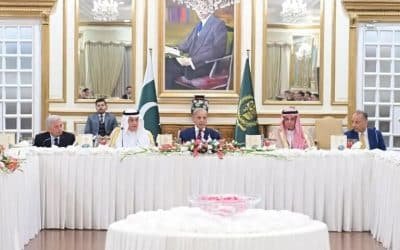
Diplomatically, there is strong cooperation. The High-Level Strategic Cooperation Council (HLSCC) has been renewed. In February 2025, President Erdogan’s visit to Islamabad marked the 7th HLSCC session.
It was an honor to host the 7th Session of the Pakistan-Türkiye High-Level Strategic Cooperation Council in Islamabad. Our brotherhood, rooted in trust, shared values, and mutual respect, continues to grow ever stronger, facilitated by collaboration in defense, trade, and… pic.twitter.com/uRYbNvEUBa
— Shehbaz Sharif (@CMShehbaz) February 13, 2025
Prime Minister Sharif reciprocated with a trip to Ankara in May 2025, and dozens of MOUs were signed on tourism, science, and energy, with high-level visits taking place. The two nations also work together in global organisations such as the OIC and D-8, where they tend to support each other’s positions. For example, Turkey-backed Pakistan during the Pakistan-India confrontation in May 2025, and vice versa, regarding issues of Palestine and regional matters. The mutual diplomatic support, participation in cultural projects, and collaboration on joint commissions demonstrate a broad and expanding bilateral partnership.
Geopolitical Context and Strategic Implications
As global dynamics shift, the relationship between Pakistan and Turkey is strengthening as the two nations seek to maintain a balance of power and regional influence. Pakistan considers Turkey an essential ally in the Muslim-majority world, challenging the emerging closeness between India and the West, particularly in related matters such as Kashmir and counterterrorism. In turn, Turkey values Pakistan’s unwavering support for its decisions regarding Cyprus and Palestine. The two countries share many commonalities in their Islamic priorities and regional security, thereby strengthening their positions in South Asia and the Middle East.
Geopolitically, both nations avoid overreliance on a single power. Pakistan remains allied with China but also interacts with the U.S. and Russia, while Turkey, despite being a NATO member, has independently established relationships with Russia and China. Their cooperation acts as a hedging strategy: when one faces Western pressure, the other provides diplomatic support. They are also participating in multilateral forums such as ECO.
Conclusion
This intricate relationship includes defence (e.g., joint exercises and co-production of warships), trade, education, and cultural exchange. It forms part of a broader effort to strengthen international stature and regional influence. Based on a shared history and aligned ambitions, the Pakistan-Turkey relationship is evolving into a strategic and comprehensive partnership shaped by the complexities of a turbulent geopolitical landscape.