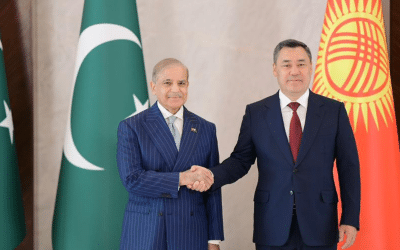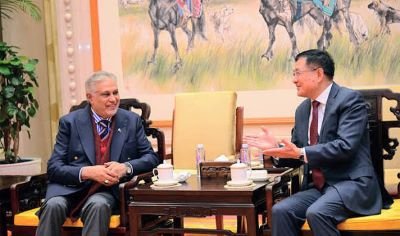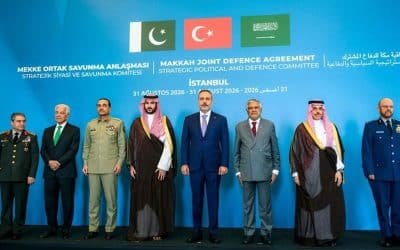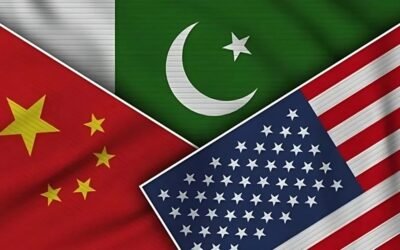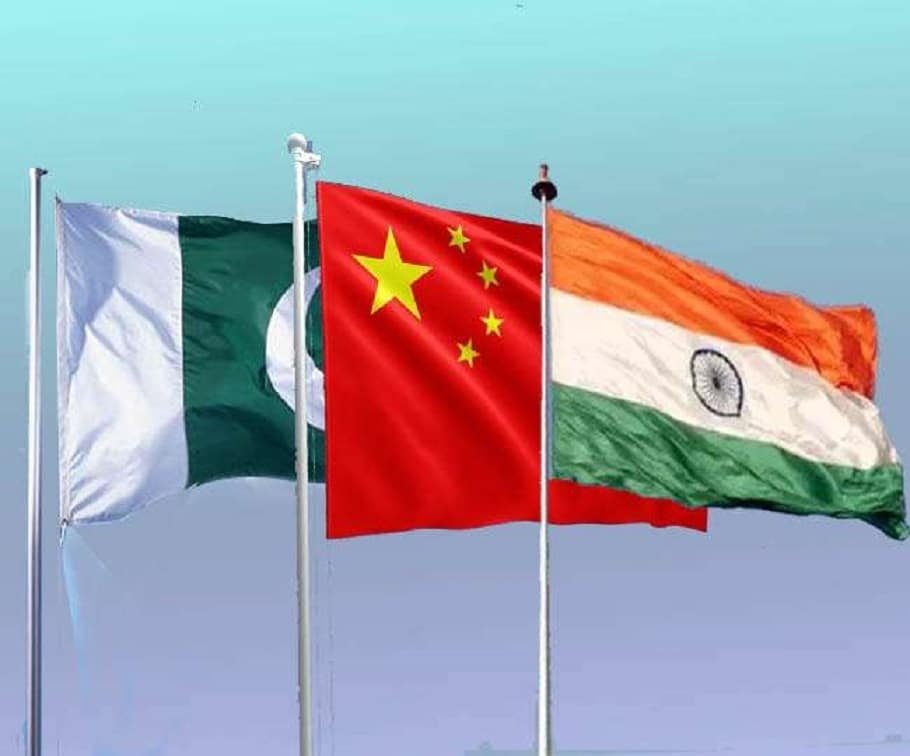
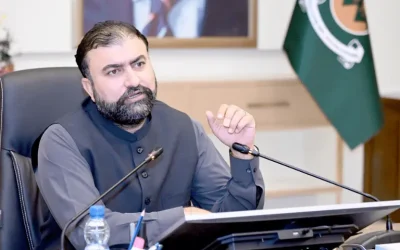
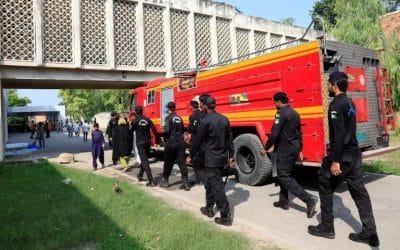
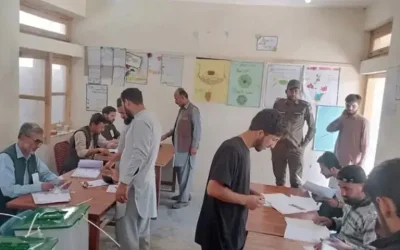


China and Pakistan characterize their long-term partnership as an all-weather strategic cooperative partnership and an ironclad friendship. Beijing stresses that the relationship is a priority in its Chinese foreign policy, and Islamabad refers to it as a cornerstone of its foreign policy. In official statements, this bond is described as one that extends beyond geopolitical interests, as it is a contributing factor to regional peace and stability. China is perfectly aware of Pakistani security concerns, according to the Chinese Foreign Ministry, which described Beijing as “an ironclad friend and all-weather partner” of Pakistan. Pakistan, in Beijing’s calculations, thus serves as a vital buffer against Indian and U.S. influence in South Asia today.
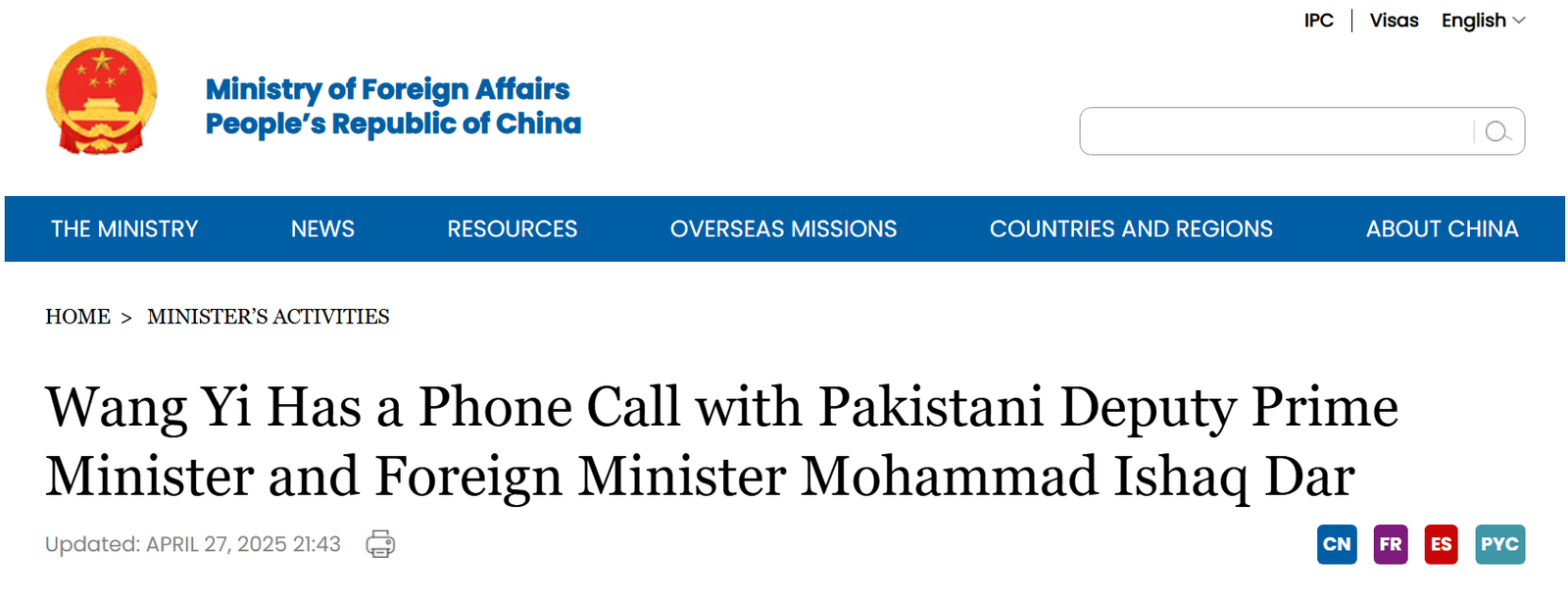
Source: Foreign Ministry of China
Historical Background
Pakistan was one of the early states to recognize the PRC in 1951, establishing a foundation of trust. Beijing and Islamabad mutually resolved their border dispute in 1963, which is often cited as a notable example of regional diplomacy. They formalized the partnership with a Treaty of Friendship signed in 2005. By 2015, during a state visit by President Xi Jinping, the relationship was upgraded to an all-weather strategic cooperative partnership based on the new CPEC corridor. These events also characterize the way both governments have perceived each other as major security allies in an evolving regional order.
Security and Defense Cooperation
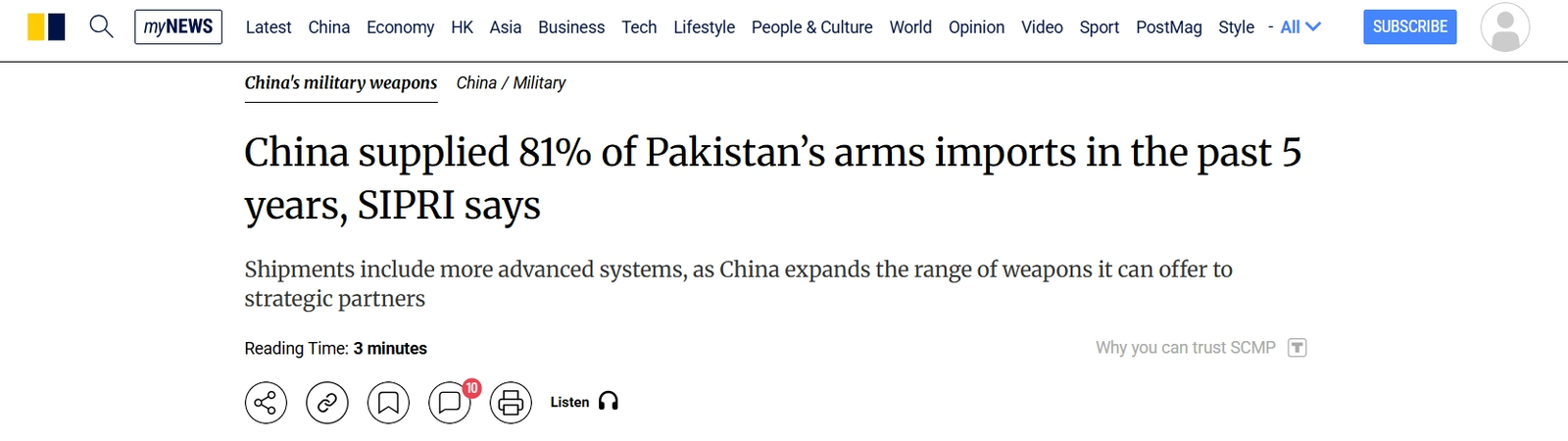
China and Pakistan are deeply entrenched in their defense cooperation. According to a communiqué in 2025, their militaries have long enjoyed high-level mutual trust. They are committed to maintaining the momentum of military-to-military visits and exchanges, including joint training and exercises, as well as collaboration in high-end technologies. In 2023, Pakistan’s military leader traveled to China to discuss defense matters, representing bilateral collaboration in areas such as joint exercises and training, equipment, and technology cooperation. China is the largest supplier of arms to Islamabad. SIPRI reports that approximately 81% of Pakistan’s weapon imports are currently from China. This hardware alliance has fortified Pakistan.
Source: SIPRI
China vows to support the security of Pakistan: in 2025, when Foreign Minister Wang Yi reaffirmed China’s support to Pakistan in countering terrorism and defending its sovereignty. For Example, China, alongside Pakistan, condemned attacks on joint projects and emphasized that “no attempt to undermine China-Pakistan friendship and cooperation will ever succeed”.
Economic Collaboration
One of the main pillars of the China-Pakistan relationship is economic relations. China forms the largest trading partner with Pakistan (for eight consecutive years), as well as a major investor in the Pakistani infrastructure and energy. Their flagship initiative is the China-Pakistan Economic Corridor (CPEC), a multi-billion-dollar network of highways, rail, pipelines, and industrial zones connecting Xinjiang in China with Gwadar in Pakistan. According to official Chinese government statements, CPEC is described as a game changer for Pakistan’s economy, as well as a symbol of China’s determination in Pakistan’s development. The corridor focuses on cooperation in transport, energy, and industry, as one Chinese commentary observes, providing” necessary support for building an even closer China-Pakistan community with shared future”. These economic ties strengthen the stability of Islamabad and enhance Chinese access to the Arabian Sea through Pakistani territory.
Diplomatic Cooperation
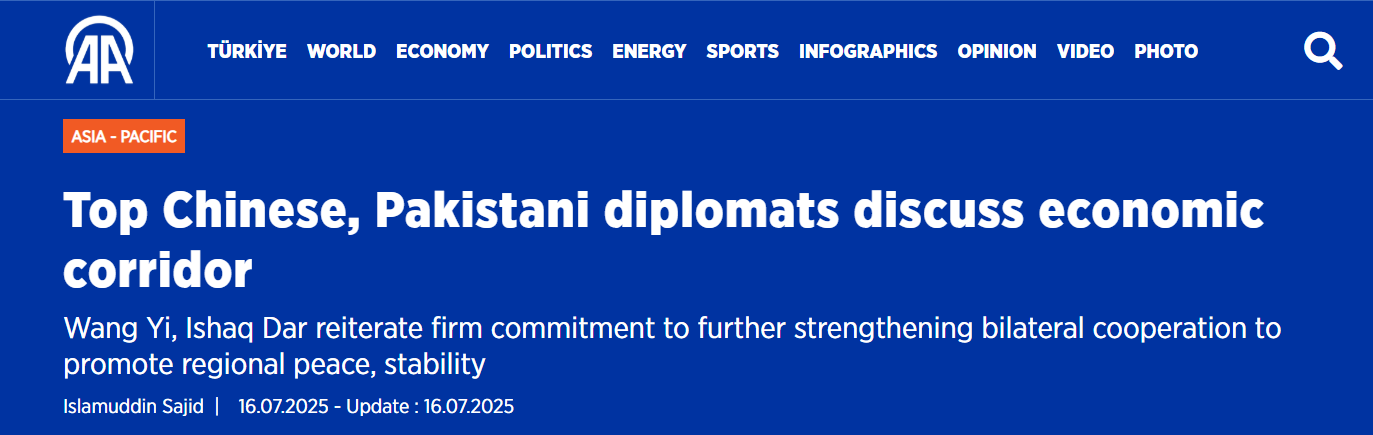
China and Pakistan strongly support one another at global forums. A 2024 joint statement expressed a commitment to help one another on matters that relate to their fundamental interests: Pakistan supports Chinese positions on Taiwan and Xinjiang, and China acknowledges its support of Pakistan’s territory and anti-terrorism efforts. Both parties claim to choose dialogue over confrontation, partnerships over alliances in international matters. Their strategic partnership is periodically reaffirmed in the framework of the Shanghai Cooperation Organization (SCO). As an example, during the July 2025 meeting of SCO foreign ministers, both Ishaq Dar of Pakistan and Wang Yi of China stated that they had a strong All-Weather Strategic Cooperative Partnership and would enhance cooperation towards regional peace and development. These developments illustrate why Chinese strategists view Pakistan as an indispensable buffer against Indian and American encroachment.
Source: Asia Pacific
Contemporary Strategic Context
Beijing has supported Pakistan during recent crises. FM Wang Yi assured Islamabad in early 2025 that China, as its ironclad friend and all-weather partner, is fully aware of Pakistan’s security concerns and also supports its counter-terrorism efforts. He urged restraint and said that the conflict “serves the fundamental interest of neither country”. Analysts observe that, as the U.S. and India grow closer, China treats Pakistan as a strategic hedge. One report indicated that Chinese weapons to Pakistan were used to increase Chinese influence in South Asia, in rivalry with the United States. In a joint statement issued in 2024, the relationship between China and Pakistan was described as “of strategic significance,” and efforts to undermine it are “bound to fail”.
Conclusion
The Chinese view Pakistan as a strategic buffer based on a long history of decades of military cooperation, economic ties, and diplomatic coordination. As regional geopolitics become more complex and the relationship between the U.S. and India strengthens, Beijing continues to depend on Islamabad as one of its most trusted allies for maintaining regional stability and countering Indian influence. Pakistan will always play a central role in China’s regional strategy, serving as a shield against encirclement and an entry point for broader geopolitical ambitions, with projects like CPEC highlighting China’s long-term commitment and mutual trust. High-level strategic dialogue has also been increasing.