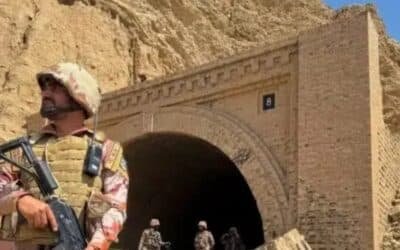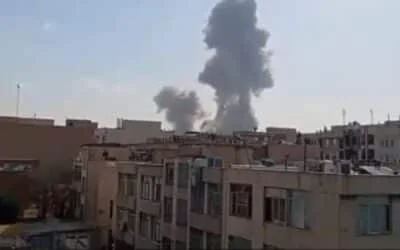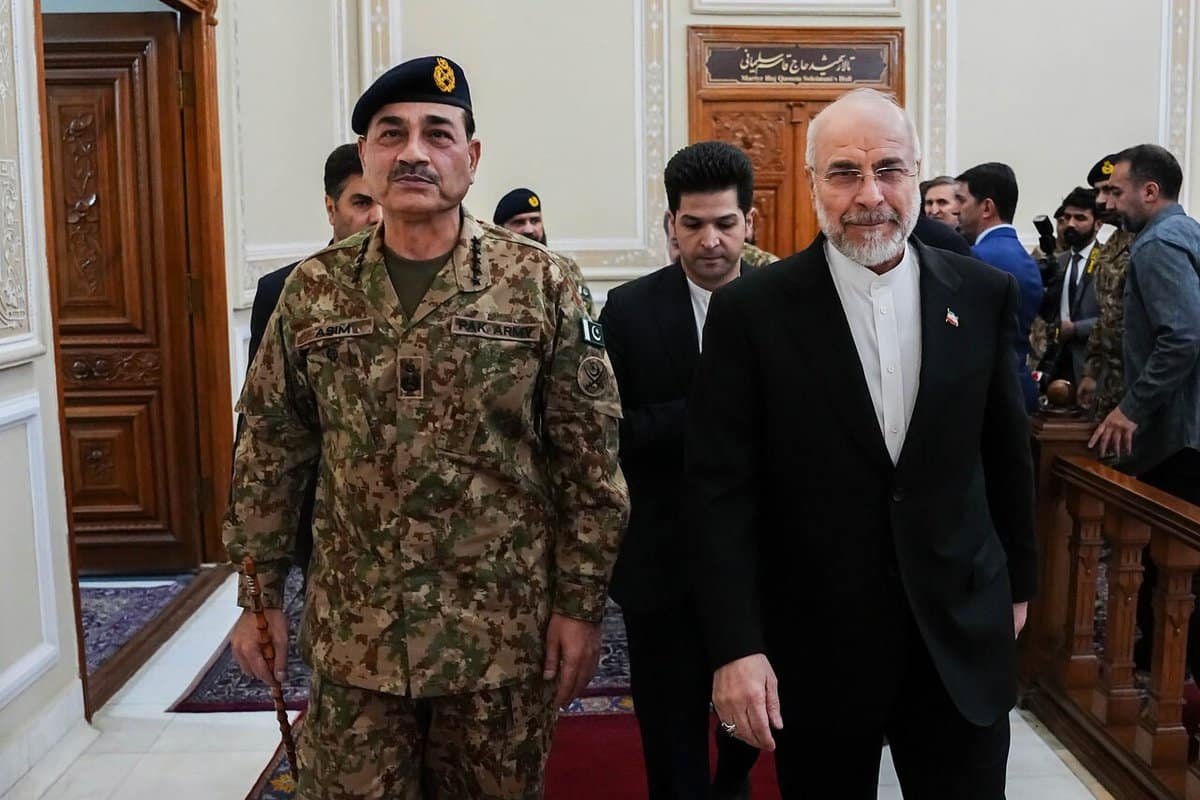





TEHRAN — Pakistan’s Chief of Defense Forces (CDF), Field Marshal Syed Asim Munir, arrived in Tehran on Friday to lead intensive diplomatic mediation efforts aimed at containing the escalating West Asia crisis and reviving stalemated peace talks between Iran and the United States. Munir’s high-stakes arrival marks his second strategic intervention in the region since the conflict erupted on February 28. Upon his arrival, the army chief was warmly received by Iranian Interior Minister Eskandar Momeni alongside Pakistan’s Interior Minister Mohsin Naqvi, who has spent the past week engaging the Iranian leadership to prevent a total communications breakdown.
Pakistan’s Army Chief Field Marshal Asim Munir met with Iranian Parliament Speaker Mohammad Bagher Ghalibaf in Tehran. pic.twitter.com/fK4YgzKH84
— IRIB (Islamic Republic of Iran Broadcasting) (@iribnews_irib) May 23, 2026
Key Highlights
- CDF Field Marshal Asim Munir arrived in Iran to lead critical, high-stakes peace mediation.
- The army chief held extensive, late-night consultations with Iranian Foreign Minister Abbas Araghchi.
- Discussions focused on reducing regional instability, securing a durable ceasefire, and maritime safety.
- The diplomatic push coincided with “slight progress” reported in text-based US-Iran communications.
- Islamabad is leveraging its unique bilateral ties to bridge deep structural gaps between Washington and Tehran.
Late-Night Diplomacy Targets De-escalation and Regional Stability
Field Marshal Munir entered into extended consultations with Iranian Foreign Minister Abbas Araghchi late into Friday night to review diplomatic initiatives designed to prevent further military escalation and promote permanent security across West Asia. The Pakistani military confirmed that the trip forms part of Islamabad’s ongoing commitment to facilitate direct dialogue, de-escalate tensions, and stabilize global energy corridors that have faced severe disruptions.
Pakistan’s Field Marshal Syed Asim Munir arrives in Tehran as part of ongoing mediation efforts between Iran and the US. pic.twitter.com/OyZpgfEcd2
— Wajahat Kazmi (@KazmiWajahat) May 22, 2026
According to Iranian state sources, the discussions spearheaded by the CDF focused squarely on finding immediate parameters to end the war and ensuring the operational stability of the strategic Strait of Hormuz. To keep the immediate peace framework viable, highly contentious details—including long-term economic sanctions, frozen assets, and technical aspects of Iran’s nuclear program—are reportedly being excluded from this specific phase of the Munir-led negotiations.
Islamabad Maneuvers as Turning Point Approached in Peace Push
The timing of Field Marshal Munir’s intervention is seen as a pivotal moment for the backchannel diplomatic corridor. Iran’s Foreign Ministry spokesperson Esmaeil Baghaei noted that the active presence of senior Pakistani officials signals a decisive turning point in the mediation process, though he cautioned that the fundamental gaps between Washington and Tehran remain deep and significant.
While Western officials, including US Secretary of State Marco Rubio, acknowledged a “little bit of movement” and slight progress in parallel text-based exchanges, Tehran has maintained to the Pakistani delegation that a comprehensive ceasefire on all fronts remains an essential prerequisite for any final agreement. As prolonged instability threatens international energy safety and drives inflationary pressures, regional observers note that the CDF’s shuttle diplomacy, heavily supported by a foundational backing role from Qatar, remains the primary operational buffer preventing the conflict from expanding further.