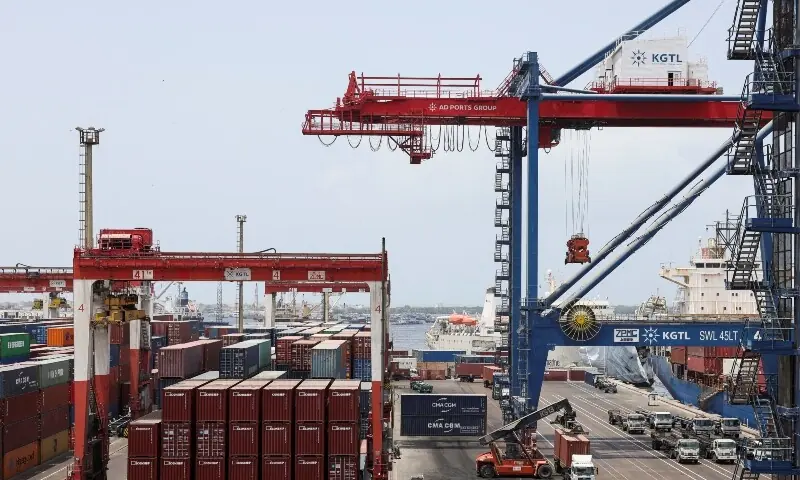



KARACHI — Karachi Gateway Terminal Limited (KGTL) has announced a major expansion plan to invest up to $100 million over the next five years, aiming to lock in a massive shipping surge triggered by the recent Middle East conflict.
The strategic move, backed by the Abu Dhabi Ports Group, focuses on slashing regional freight costs, expanding terminal yards, and transforming Karachi into a highly competitive international transshipment hub.
A Step Forward 🚢
Pakistan is emerging as a regional transshipment and logistics hub, strengthening its position as an attractive destination for trade and investment. 🌎🤝@official_kpt handled a record 2.651 million Twenty-foot Equivalent Units (TEUs) in fiscal year 2026,… pic.twitter.com/zplu59nm1l
— SIFC | Special Investment Facilitation Council🇵🇰 (@sifcpakistan) June 19, 2026
Key Commercial Highlights
- Karachi Gateway Terminal plans to invest up to $100 million over the next five years.
- A completed $60 million dredging project allows the port to handle double its previous cargo vessel sizes.
- Global shipping disruptions from the Middle East conflict rerouted massive trade volumes through Pakistan.
- The company plans to acquire its own trains and locomotives to connect farming areas to the coast.
Turning Conflict Disruptions into Regional Trade Gains
The massive shakeup in global maritime traffic caused by the recent Middle East war created an unexpected opening for Karachi Port to serve as a key transshipment hub. As cargo ships avoided traditional high-risk lanes, regional trade rerouted straight through Pakistan. KGTL is moving fast to convert these sudden shipping re-routes into permanent economic gains.
Karachi Port Expansion & Investment Metrics
• Total New Capital: Up to $100 million dedicated to terminal automation.
• Vessel Capacity: Up from 60,000 tonnes to 120,000 metric tonnes.
• Cargo Handling: Turnaround time cut from 12-15 days down to under 3 days.
• Infrastructure: New grain silos with an annual capacity of 8.5 million tonnes.
To make these maritime upgrades truly sustainable, the terminal operator emphasizes that Pakistan must significantly improve its domestic road and rail networks. By upgrading automated conveying systems, building massive agricultural storage warehouses, and integrating cargo handling with the national railway line, the expansion plans aim to drastically reduce shipping costs and make local agricultural exports far more competitive globally.