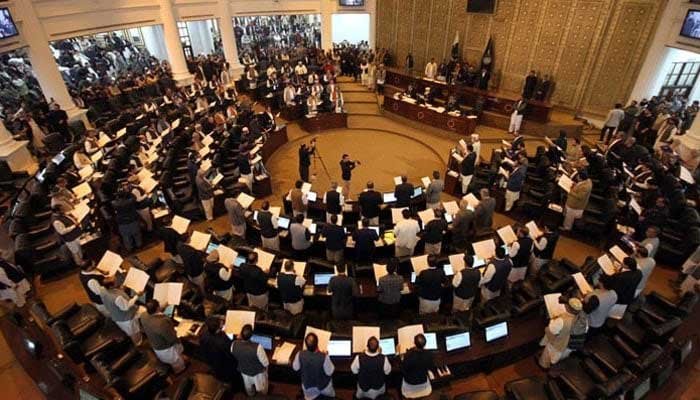





The federal government launched a sharp political broadside against the Pakistan Tehreek-e-Insaf (PTI) on July 8, 2026, over newly uncovered provincial legislation that significantly expands the financial perks, legal immunities, and weapon licenses of provincial lawmakers in Khyber Pakhtunkhwa (KP). Minister of State for Interior Tallal Chaudhry heavily criticized the laws, taunting the PTI leadership for abandoning its foundational anti-establishment rhetoric and long-standing public pledges to eliminate “VIP culture” across the country. The controversy escalated after details emerged of three distinct acts quietly passed by the KP Assembly, which granting members sweeping protections from criminal prosecution and lifetime official benefits.
Key Highlights
- The Controversy:Federal ministers lambasted the PTI-led KP government for enacting secretive laws that vastly expand lawmakers’ privileges.
- Legal Immunities:Section 10 and Section 11 of the new act grant MPAs blanket protection from preventive detention and require the speaker’s prior permission for criminal arrests.
- Arsenal Expansion: Lawmakers are now entitled to up to eight weapon licenses—including four free lifetime licenses—reversing previous de-weaponization standards.
- Official Pushback: KP Assembly Speaker Babar Saleem Swati denied that any extraordinary privileges were introduced, claiming 99 percent of the provisions existed in a 1988 law.
Sweeping Privileges Granted to Lawmakers in Secretive KP Law
The legislative changes stemmed from three separate bills passed by the KP Assembly on April 30, including the KP Provincial Assembly (Powers, Immunities, and Privileges) Act 2026, alongside companion acts regulating salaries and speaker powers. Although KP Governor Faisal Karim Kundi signed off on the bills on May 6, provincial authorities kept the legislation entirely under wraps, failing to upload the official gazette notifications to the assembly’s public website. Commenting on the hidden perks, Chaudhry pointed out the sharp contradiction between the party’s public positioning and their legislative output.
“Do common people receive the conveniences of free travel, free arms licenses, free stays at rest houses, blackout windows, special number plates on their cars, security for their whole families, and blue passports?” Chaudhry asked during his public address. The minister of state for interior added that the federal government is under no obligation to facilitate provincial legislation designed primarily as “political bribery.”
Federal Coordinators Demand Immediate Reversal of Immunities
Addressing a joint press conference in Islamabad on Wednesday, Prime Minister’s Coordinator for KP Affairs Ikhtiar Wali Khan demanded the immediate withdrawal of the acts, warning that the text effectively places provincial politicians above local law enforcement. Under the newly implemented legal framework, local police are legally barred from detaining an assembly member on criminal charges unless the custodian of the house grants explicit permission—a scenario Khan described as highly improbable under a partisan speaker.
Khan also expressed deep concern regarding provisions allowing lifetime blue official passports for assembly members and their spouses, alongside clauses that empower the government to bar specific journalists from covering legislative proceedings. “Blue passport for life means that these people will leave on their passport and surrender it, and then get political asylum,” Khan contended, adding that the weapon allowance expansion directly undermines national security.
Meanwhile, the KP speaker’s office maintained that the amendments were merely clarifications of preexisting regulations rather than a new system of elite perks. Despite those explanations, federal observers noted that the timing of the secretive legislation, combined with clauses curbing press freedoms, will likely intensify the ongoing political standoff between Islamabad and the provincial administration.