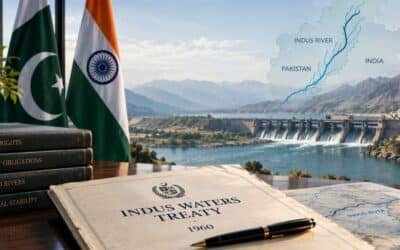





ISLAMABAD — The Foreign Office (FO) issued a stern warning on Thursday, stating that any deliberate attempt by New Delhi to block or curtail water essential to Pakistan’s survival would face “far-reaching consequences”. Addressing a weekly media briefing, the ministry emphasized that treating vital transboundary water resources as a tool of coercion could be interpreted as an act of war under the United Nations Charter.
Key Highlights
- Pakistan warned that any attempt by India to block vital river flows could trigger a right to self-defense under Article 51 of the UN Charter.
- The warning follows statements from Indian Water Minister CR Patil claiming “not a single drop of water” would flow to Pakistan in the coming years.
- The FO characterized the potential blockade of shared rivers as a direct threat to the livelihoods of over 250 million citizens.
- Islamabad expressed no surprise over a recent SIPRI report detailing the expansion of India’s nuclear arsenal.
- The state reiterated it does not seek an arms race but will take all necessary measures to ensure strategic stability.
Pakistan’s Foreign Office has issued a stern warning that any deliberate attempt by India to block vital water flows essential to the nation’s survival and development will result in “far-reaching consequences.” #Pakistan #India pic.twitter.com/EK8VpMhkmn
— Hoot Republic (@HootRepublic) June 11, 2026
Water Security as a Non-Negotiable Right
The diplomatic friction escalated following recent public remarks by Indian Water Minister CR Patil, who stated that India was actively working under directives from Prime Minister Narendra Modi to ensure no water reaches Pakistan in the future. FO spokesperson Tahir Andrabi strongly rejected the notion that transboundary water could be utilized as a political weapon, noting that such actions would directly violate international laws and existing bilateral agreements.
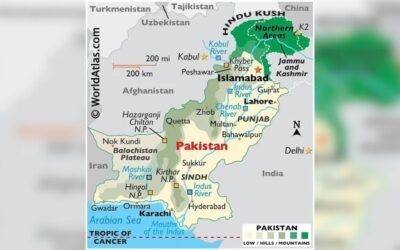
The spokesperson declared that Pakistan’s water interests are entirely non-negotiable. The state is prepared to vigorously defend its geographical rights using all available diplomatic, legal, and economic channels to safeguard its population. The FO added that the country will maintain close monitoring of physical developments on the ground within India-occupied Kashmir, where these critical water resources originate.
Addressing India’s Vertical Nuclear Expansion
During the same briefing, the Foreign Office addressed findings from the Stockholm International Peace Research Institute (SIPRI) regarding the rapid expansion of India’s nuclear weapons cache. Andrabi remarked that the data simply confirms Pakistan’s long-standing global warnings regarding India’s continuous vertical proliferation.
The ministry highlighted specific tactical concerns, including India’s canisterization of missile systems, the expansion of its sea-based nuclear-capable submarine fleet, and the pursuit of long-range intercontinental ballistic missiles extending far beyond its immediate periphery. While asserting that Pakistan has no interest in matching warheads or ammunition numbers in a regional arms race, the FO urged international high-technology suppliers to recognize the destabilizing global consequences of integrating advanced strategic capabilities into India’s military posture.