
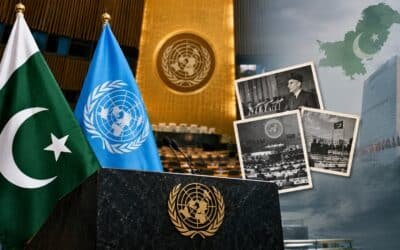




This year, September 6 carries a unique weight. On one hand, it marks Defence Day, the anniversary of the nation’s historic stand in 1965, when Pakistanis united against external aggression with unshakable courage. On the other hand, it coincides with 12 Rabi ul Awwal — the blessed day of the birth of Prophet Muhammad ﷺ, whose life and example remain the guiding light for Muslims everywhere.
The overlap of these two days is more than symbolic; it is deeply instructive. It reminds us that true defense of Pakistan lies not only in the valor of our soldiers but also in the moral strength of our people. And no example of moral strength is greater than that of the Prophet ﷺ, who taught humanity the values of unity, compassion, and resilience in the face of adversity.
Lessons from History and Faith
Defence Day commemorates the sacrifices of our soldiers and citizens who defended Pakistan in 1965 with courage and determination. They fought not only with weapons but also with faith and unity. This spirit mirrors the Prophet’s ﷺ message, which centered on the collective strength of the ummah, the importance of standing together, and the duty of every believer to uphold justice and protect the vulnerable.
At the heart of 12 Rabi ul Awwal is the celebration of mercy. The Prophet ﷺ was sent as “a mercy to all mankind” (Qur’an 21:107). His life was a living example of empathy — caring for the poor, defending the oppressed, forgiving enemies, and building a community based on brotherhood and justice. As we remember his birth, we must ask ourselves: are we embodying these values in our individual and collective lives?
A Nation Tested Again
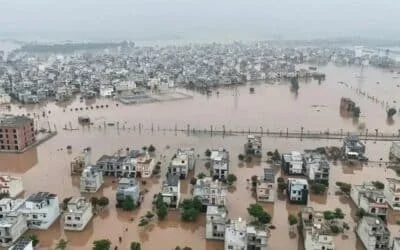
Pakistan today stands at a crossroads. Just as in 1965, we face threats that challenge our survival and dignity. Terrorist attacks continue to target innocent lives, political rifts deepen divisions, and devastating floods have displaced millions of our fellow citizens. These are not challenges to be taken lightly. They demand both courage and compassion — the very qualities that Defence Day and Rabi ul Awwal teach us to uphold.
The floods in particular are a test of our humanity. Entire communities have lost homes, livelihoods, and loved ones. To respond with indifference would be a betrayal of our faith and our national spirit. The Prophet ﷺ taught us that the believer is like a single body — if one part suffers, the whole body feels the pain. Today, the pain of our flood victims must be felt by us all. Empathy must move beyond words into action: supporting relief efforts, opening our doors to the displaced, and ensuring that those who have lost everything are not left behind.
Unity as Our Strongest Weapon
Both September 6 and 12 Rabi ul Awwal emphasize the necessity of unity. In 1965, unity gave us the strength to repel aggression. In the time of the Prophet ﷺ, unity transformed a divided people into a powerful community bound by faith. The lesson is clear: disunity is weakness, while unity is strength.
In today’s Pakistan, political polarization, intolerance, and mistrust have weakened our social fabric. This is exactly what our enemies — whether external or internal — seek to exploit. The Prophet ﷺ warned against division and emphasized the importance of holding fast to the rope of Allah together. Defence Day teaches the same lesson in a different context: without unity, survival itself becomes difficult.
Walking in the Prophet’s ﷺ Footsteps
If we truly wish to honor both the martyrs of 1965 and the legacy of the Prophet ﷺ, we must move beyond ceremonial commemorations. True honor lies in action. This means adopting honesty in our dealings, fairness in our politics, compassion in our social relations, and courage in the face of injustice.
The Prophet ﷺ was not only a spiritual leader but also a statesman, a reformer, and a unifier. His example shows us that national integrity cannot be built on force alone; it must be grounded in justice, service, and mutual respect. If every Pakistani, from leader to laborer, commits to these values, no flood, no terrorist threat, and no political rift will be able to weaken us.
A Shared Responsibility
September 6 and 12 Rabi ul Awwal together remind us that defending Pakistan is not the responsibility of soldiers alone, nor is following the Prophet ﷺ confined to ritual observance. Both demand participation from every citizen. The soldier who stands guard at the border and the citizen who lends a hand to a flood victim are both fulfilling sacred duties.
This Defence Day, let us pledge to defend Pakistan not just with arms, but with character. And this Rabi ul Awwal, let us pledge to celebrate the Prophet ﷺ not just with words, but with actions that reflect his mercy, empathy, and commitment to unity.
Conclusion
The convergence of Defence Day and 12 Rabi ul Awwal is a rare and profound reminder. It tells us that our survival as a nation depends not only on military might but also on moral strength. It tells us that unity is our greatest shield and compassion our greatest weapon. And it tells us that to truly defend Pakistan, we must walk in the footsteps of those who sacrificed in 1965, and more importantly, in the footsteps of the Prophet Muhammad ﷺ, who showed us the path of justice, mercy, and unity.
On this September 6, 2025, let us stand firm, let us stand together, and let us embody the values that define us — as a nation, and as an ummah.
You May Like To Read: September 6: The Day That Defines Our Unity