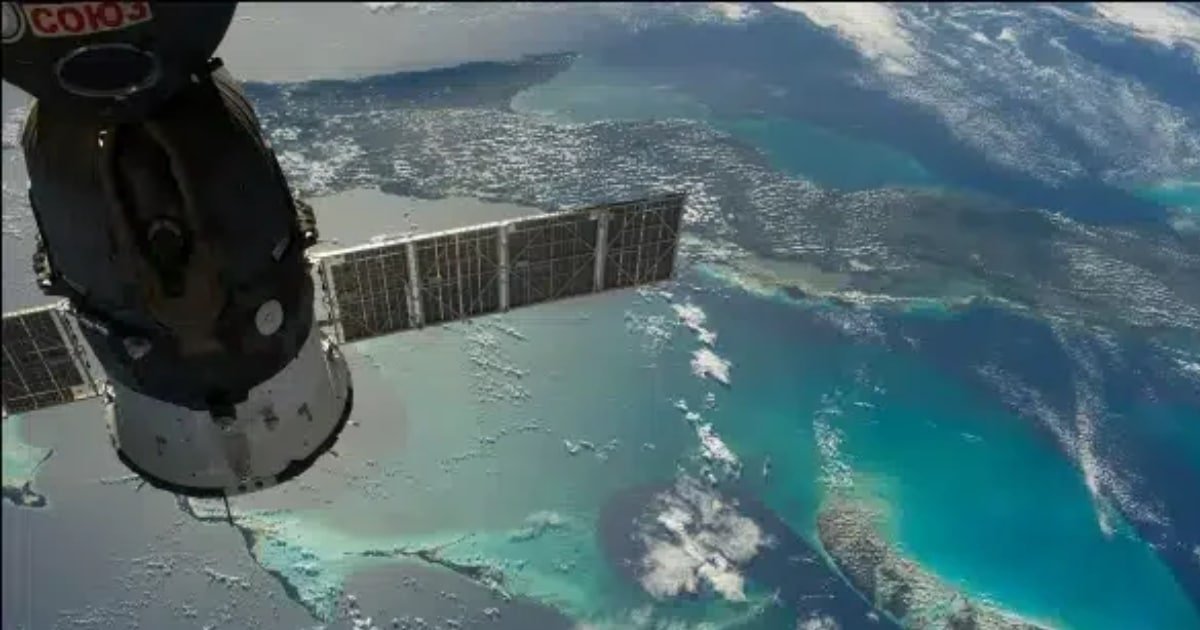





On March 27, 2026, NASA released a groundbreaking new map of the global seabed, created entirely from satellite data.The map utilizes data from the Surface Water and Ocean Topography (SWOT) satellite, a joint mission between NASA and the French space agency CNES, launched in December 2022.
By measuring “centimeter-level” bumps and dips in the ocean surface caused by the gravitational pull of underwater features, SWOT can “see” the seafloor through kilometers of water.This mission aims to complete a detailed global map by 2030, revealing thousands of previously unknown underwater mountains (seamounts), ridges, and canyons.
For decades, the standard phrase has been that we have better maps of the Moon and Mars than our own ocean floor. As of March 2026, that narrative is rapidly changing. While traditional sonar mapping by ships has covered only about 25% of the seabed, NASA’s SWOT satellite is filling in the massive “blind spots” at an unprecedented scale.
How Space Technology Maps the Deep Sea
Mapping the ocean floor from 891 kilometers above Earth sounds impossible, but NASA uses an ingenious application of physics:
- Gravity Gradients: Massive underwater features like seamounts and ridges have more mass than the surrounding water. This extra mass creates a stronger gravitational pull, literally pulling the ocean water toward it.
- Sea Surface “Bumps”: This pull creates subtle “humps” on the ocean’s surface. A 1,000-meter tall underwater mountain can cause a small, measurable rise (a few centimeters) in the sea level directly above it.
- Precision Radar: The SWOT satellite uses radar interferometry to measure these tiny surface variations with centimeter-level accuracy, allowing scientists to infer the topography of the hidden floor below.
What the New Map Reveals
The data collected between 2023 and 2026 has already transformed our understanding of the abyss:
- Hidden Seamounts: Previous satellites could only detect massive underwater volcanoes (over 1 km tall). SWOT can detect features less than half that size, potentially increasing the known count of seamounts from 44,000 to over 100,000.
- Abyssal Hills: The map provides the first clear look at “abyssal hills”—the most common landform on Earth—which cover nearly 70% of the ocean floor but were previously too small for satellite detection.
- Tectonic Clues: By seeing the “scars” and ridges on the seafloor, geologists can more accurately reconstruct how tectonic plates have moved over millions of years.
Practical and Economic Benefits
Beyond scientific curiosity, this data has immediate real-world applications:
- Maritime Navigation: Identifying uncharted underwater peaks is critical for the safety of submarines and deep-sea shipping vessels.
- Infrastructure: The map helps engineers identify the safest routes for laying undersea communication cables that power the global internet.
- Climate Modeling: Underwater mountains influence deep-sea currents. Knowing their exact location helps scientists predict how heat and nutrients move through the ocean, refining climate change models.
- Hazard Detection: Improved bathymetry (depth mapping) allows for much more accurate tsunami forecasting and modeling of how giant waves will hit various coastlines.
SWOT Mission Quick Facts
| Feature | Detail |
| Launch Date | December 16, 2022 |
| Collaborators | NASA (USA), CNES (France), CSA (Canada), UK Space Agency |
| Orbit Cycle | Scans 90% of the Earth every 21 days |
| Resolution | Detects features as small as 5–8 kilometers across |
| Primary Goal | Detailed global seafloor map by 2030 |
You May Like To Read: IHC Schedules Hearing for PTI Founder and Bushra Bibi in £190m Case
Check out our latest video: