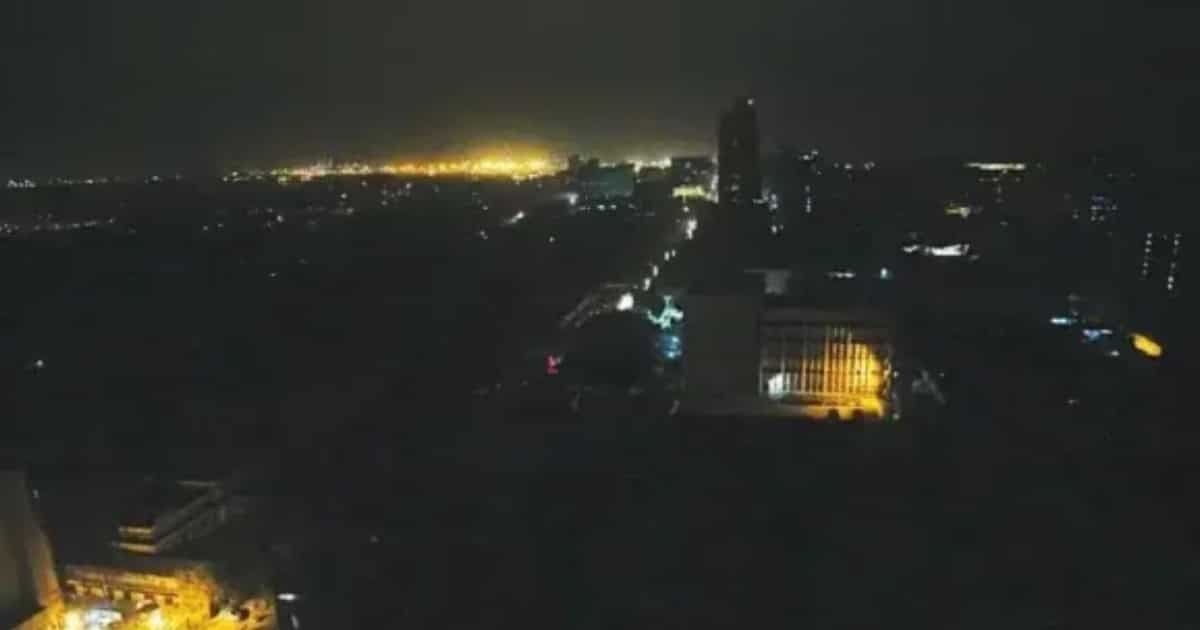


ISLAMABAD: The government on Sunday acknowledged widespread power outages across the country over the past 8 to 10 days despite surplus electricity generation capacity, attributing the situation to adverse weather conditions, fuel mismanagement, and transmission constraints.
Addressing a press conference in Islamabad, Power Minister Awais Leghari said electricity supply disruptions were caused by a combination of dense fog, north-to-south transmission limitations, delayed restoration of a major nuclear power plant, and operational issues at the Sahiwal Coal Power Project. He said repeated tripping of the transmission system due to weather conditions was the primary factor behind the outages.
The minister said these issues led to a shortfall of several hundred megawatts, compounded by reduced hydropower generation during the annual canal closure. He apologised to consumers for the inconvenience but maintained that weather-related challenges limited the authorities’ ability to prevent the disruptions.
Mr Leghari also strongly contested the findings of the State of the Industry Report (SOIR) 2025 released by the National Electric Power Regulatory Authority (Nepra), calling it “outdated” due to a delay of five to six months in its publication. He said the report should have been shared with the power division for fact-checking before release.
Rejecting Nepra’s claim that a Rs3.23 per unit surcharge imposed an additional burden on consumers, the minister said the charge had existed for years and would otherwise have continued for decades. He said the government had limited its continuation to six years. He also disputed Nepra’s assertion that system losses above regulatory targets burdened consumers, arguing that these gaps were being covered by the Ministry of Finance through taxpayer funds.
The minister acknowledged surplus generation capacity, estimated by Nepra at up to 8,700 megawatts, and agreed that ‘take or pay’ and ‘must run’ contracts contributed to higher costs. However, he said the installed capacity had gone through regulatory approval and that the government had introduced a discounted surplus power package for industrial and agricultural users to boost demand, with positive results emerging in December.
You May Also Like: Stocks rally on easing geopolitical jitters
On planning shortcomings highlighted by Nepra, Mr Leghari said the regulator had approved earlier generation expansion plans without sufficient scrutiny. He said the newly submitted Indicative Generation Capacity Expansion Plan (IGCEP) 2025–35 excluded nearly 8,000MW of high-cost projects, prioritised low-cost and renewable energy sources, and was expected to save $17 billion.
Leghari says electricity cuts due to fuel mismanagement, transmission constraints, among other causes. https://t.co/tcZIeRNy7f
— Dawn.com (@dawn_com) January 19, 2026
He also cited improvements in bill recoveries by power distribution companies, reductions in unrecovered bills, and steps toward automated meter reading. Contesting Nepra’s assessment of circular debt reduction, the minister attributed recent improvements to lower losses, waived surcharges, and macroeconomic stability rather than external financial injections.
Responding to concerns over affordability, Mr Leghari said the average electricity tariff had declined from Rs53.04 per unit in March 2024 to Rs42.27 in December 2025.
Check out our latest video: