
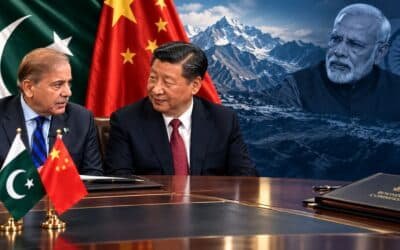


KARACHI — Prime Minister Shehbaz Sharif stated on Saturday that India is increasingly resorting to “covert tactics and proxies” to destabilize Pakistan, following a humiliating defeat in a conflict in May last year.
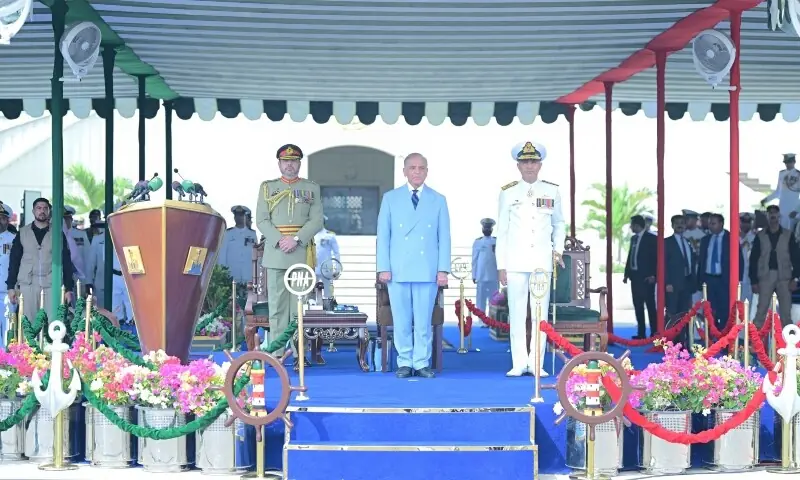
Addressing the 125th Midshipmen and 33rd Short Service Commission passing out parade at the Pakistan Naval Academy (PNS Rahbar), the premier noted that Pakistan is successfully navigating a complex combination of international and internal security threats, including foreign-sponsored terrorism on its western borders.
Prime Minister Muhammad Shehbaz Sharif attends the passing out ceremony of 125th Midshipmen and 33rd SSC courses at Pakistan Naval Academy, PNS Rahbar. Karachi, 27 June 2026. pic.twitter.com/HQdZLA3G8t
— Prime Minister’s Office (@PakPMO) June 27, 2026
Diplomatic Milestones and Maritime Security
Despite these challenges, the Prime Minister framed Pakistan as an active regional peacemaker, highlighting key geopolitical breakthroughs:
The Islamabad MoU: Pakistan’s mediation efforts successfully facilitated the historic signing of the Islamabad Memorandum of Understanding between the United States and Iran.
Strategic Partnerships: The recent visit of Iranian President Masoud Pezeshkian stands as a clear acknowledgment of Pakistan’s constructive diplomatic weight.
Command Leadership: Special tribute was paid to the Chief of Defence Forces and Chief of Army Staff, Field Marshal Asim Munir, for his untiring efforts in regional stabilization.
Turning to maritime dynamics, PM Shehbaz emphasized that freedom of navigation and the right of free passage are no longer luxuries but absolute necessities for international supply chains. He reaffirmed the government’s commitment to equipping the Pakistan Navy with modern technologies, artificial intelligence, and unmanned systems.
“The rank you wear carries immense responsibility. Remember: calm waters do not test a sailor nor do fair winds define a captain. It is the rough seas and strong winds that test one’s mettle,” the premier told the graduating class, which remarkably included young officers from Turkiye, Bahrain, Bangladesh, Iraq, Sri Lanka, and Djibouti.