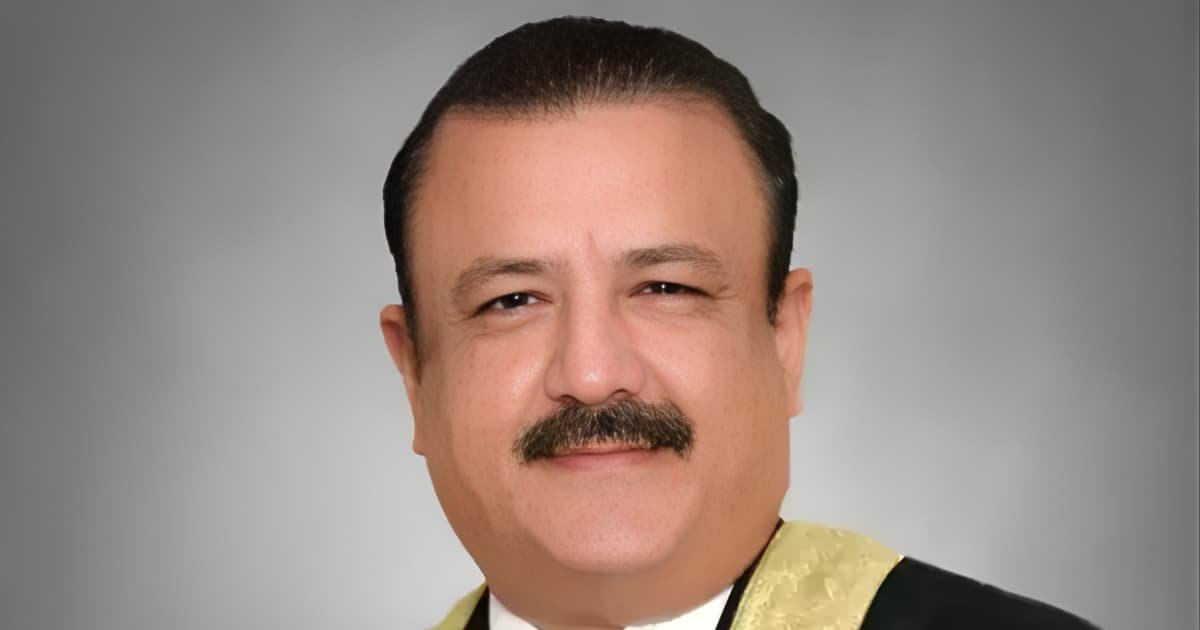




ISLAMABAD: Islamabad High Court (IHC) judge Justice Tariq Mehmood Jahangiri has accused Chief Justice Sardar Muhammad Sarfraz Dogar of bias and misconduct, moving the Federal Constitutional Court (FCC) and filing a formal complaint before the Supreme Judicial Council (SJC) over proceedings related to a petition challenging the authenticity of his law degree.
In a petition filed through senior counsel Uzair Karamat Bhandari, Justice Jahangiri requested the FCC to set aside the IHC’s December 9 order declaring maintainable a quo warranto petition questioning the legality of his appointment as a high court judge. The petition challenges allegations that his LLB degree from the University of Karachi was obtained through unfair means.
Justice Jahangiri argued that Chief Justice Dogar was disqualified from hearing the matter due to alleged bias, noting that he had previously challenged the chief justice’s transfer to the IHC and subsequent elevation as chief justice. In such circumstances, the plea maintained, judicial propriety required Justice Dogar to recuse himself from proceedings involving the legitimacy of Justice Jahangiri’s appointment.
The petition recalled that another judge, Justice Khalid Hussain Soomro, had recused himself from the case on October 28, while Chief Justice Dogar not only constituted a division bench headed by himself but also passed an interim order on September 16 restraining Justice Jahangiri from performing judicial functions. That restraining order was later set aside by the Supreme Court, which held that a high court could not bar a sitting judge from judicial work through an interim order in a quo warranto petition.
You May Also Like: EU sanctions name Pakistani-Canadian trader over Russian oil dealings
Justice Jahangiri further contended that the IHC division bench violated the Supreme Court’s directions by deciding the issue of maintainability without issuing him notice or providing an opportunity to be heard. He alleged that he was given only three days to submit a reply on the merits, terming this a procedural impropriety.
The FCC was told that CJ Dogar was biased against Justice Jahangiri and therefore disqualified from hearing any matter relating to his appointment.https://t.co/zQ0H9Yvx3X
— Dawn.com (@dawn_com) December 18, 2025
Separately, Justice Jahangiri filed a complaint against Chief Justice Dogar before the SJC under Article 209 of the Constitution, accusing him of misconduct, bias and violations of the judicial code of conduct. According to the complaint, while the matter was pending, the chief justice discussed the case with him and allegedly advised him to resign.
The complaint further claimed that Chief Justice Dogar acknowledged that “tremendous pressure” was being exerted on him to decide the case swiftly and against Justice Jahangiri. It alleged that the chief justice suggested submitting a post-dated resignation for “safe-keeping” as a means to manage the situation and delay proceedings.
The developments add a new dimension to an already sensitive legal controversy involving a sitting high court judge, raising questions about judicial propriety, internal court dynamics and institutional accountability.
Check out our latest video: