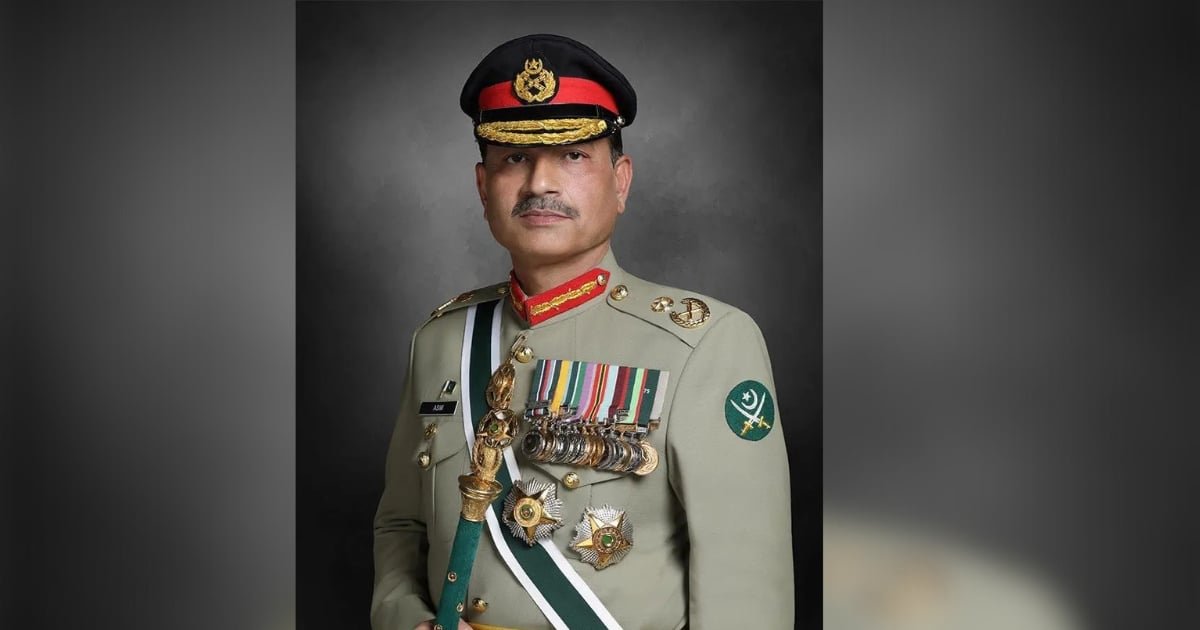




ISLAMABAD: Chief of Defence Forces (CDF) and Chief of Army Staff Field Marshal Asim Munir has stated that a majority of the banned Tehreek-i-Taliban Pakistan (TTP) formations infiltrating into Pakistan comprise Afghan nationals, underscoring Islamabad’s longstanding concerns over militancy emanating from across the western border.
Addressing the National Ulema Conference held in Islamabad on December 10, Field Marshal Munir said that around 70 per cent of militants entering Pakistan as part of TTP formations were Afghans. While full details of his address were not officially released, excerpts from his speech were broadcast by television channels on Sunday.
*چیف آف آرمی سٹاف و چیف آف ڈیفنس فورسز فیلڈمارشل سید عاصم منیرکا قومی علماء مشائخ کانفرنس سے اہم خطاب*
کانفرنس کا انعقاد 10 دسمبر 2025 کو اسلام آباد میں ہوا، جس میں ملک بھر سے تمام مکاتب فکر کے علماء اور مشائخ نے بھرپور شرکت کی
فیلڈ مارشل نے ملک کو درپیش چیلنجز، دہشتگردی، قومی… pic.twitter.com/pORQSDxoBh
— PTV News (@PTVNewsOfficial) December 21, 2025
Pakistan has repeatedly called on Afghanistan’s interim government to prevent militant groups from using Afghan soil to plan and carry out attacks inside Pakistan. Kabul has consistently denied these allegations, maintaining that it does not allow its territory to be used against any country.
Referring to the issue during his speech, Field Marshal Munir questioned the continued violence, asking whether Afghanistan was not “spilling the blood of Pakistani children.” He recalled that Pakistan had previously urged the Afghan Taliban to make a clear choice between maintaining relations with Pakistan or supporting the TTP.
The defence forces’ chief also touched upon regional security developments, including the four-day military confrontation with India in May. He said Pakistan’s armed forces experienced “divine help” during the retaliatory operation, codenamed Bunyanum Marsoos, launched in response to Indian strikes.
You May Like To Read: Three died, Nine Injured in Smog-Related Accidents Across Punjab
The brief conflict erupted after India carried out missile and aerial strikes on Pakistani territory on May 7, leading to the most intense military escalation between the two countries in decades. Both sides employed fighter jets, missiles, artillery and drones, resulting in dozens of casualties before a ceasefire was reached. The escalation followed an April 22 attack on tourists in Pahalgam, in Indian-occupied Kashmir, which killed 26 people. India accused Pakistan of involvement without presenting evidence, an allegation Islamabad strongly denied.
Field Marshal Munir also spoke on religious and ideological themes during his address. He noted that among the world’s 57 Islamic countries, Pakistan had been bestowed with a special responsibility, referring to the protection of the Haramain Sharifain (Makkah and Madina). He further drew historical parallels between the creation of Pakistan and the early Islamic state in the Arabian Peninsula, citing similarities in purpose, timing and the element of migration.
Emphasising the state’s authority, he said that in an Islamic state, only the state itself had the right to declare jihad. “No individual or group can issue a fatwa for jihad without the permission and authority of the state,” he said, while also citing verses from the Quran to support his position.
The conference was attended by religious scholars from across the country and focused on issues related to faith, security and national cohesion.
Check out our latest video: