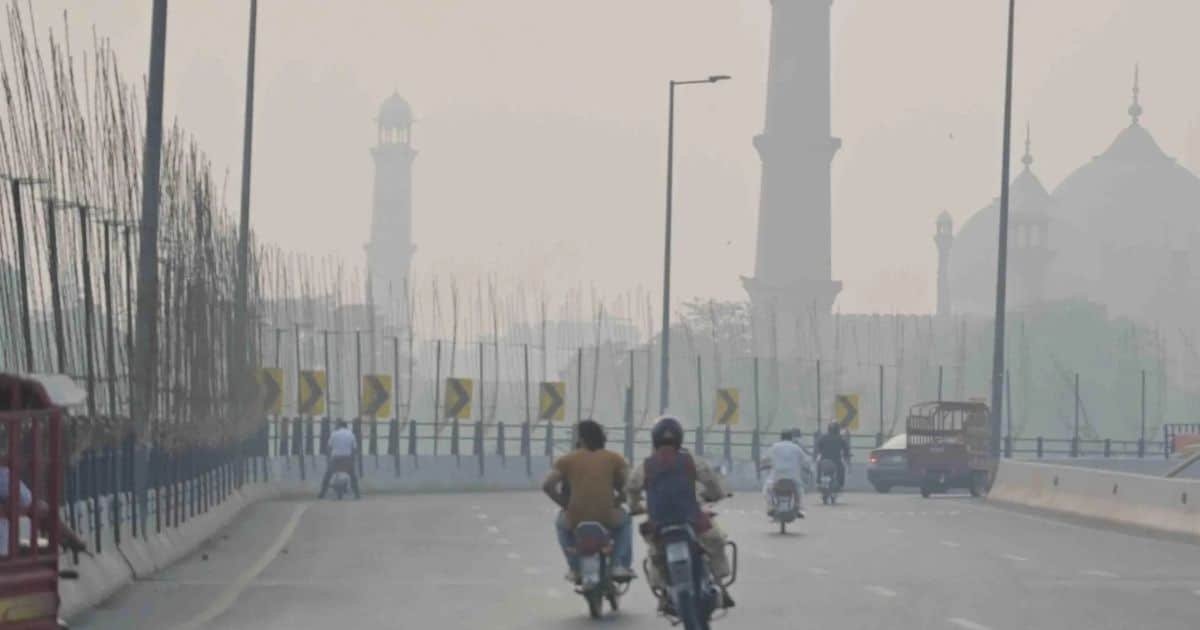





ISLAMABAD / GILGIT: The National Assembly’s Standing Committee on Climate Change and Environmental Coordination has directed the Ministry of Climate Change to present a comprehensive air-quality monitoring mechanism and an action plan, after being informed that Pakistan’s emission standards remain critically outdated at Euro-II levels.
During a meeting on Wednesday, officials from the ministry and the Islamabad administration briefed the committee that vehicle emission limits and National Environmental Quality Standards had not been upgraded in years, even as global standards moved to Euro-V and Euro-VI.
The @NAofPakistan Standing Committee on Climate Change and Environmental Coordination convened today. Minister of State Shezra Mansab Ali, along with senior officials from the Ministry, attended the meeting and briefed the Committee on key environmental and climate priorities. pic.twitter.com/DCGQqOOaz6
— Ministry of Climate Change, Pakistan (@ClimateChangePK) October 22, 2025
Committee Chairperson Munaza Hassan termed the lack of oversight “a fundamental failure,” noting that no system currently exists to check emissions or ensure compliance. Islamabad Deputy Commissioner Irfan Nawaz Memon informed the panel that the Pakistan Environment Protection Agency (Pak-EPA) lacked both financial and technical capacity, relying on borrowed equipment from Punjab’s EPA and limited support from the Capital Development Authority (CDA).
The committee instructed the ministry to deliver a time-bound plan within four weeks, calling for additional funding and prioritisation of climate issues in Pakistan’s foreign policy. Experts suggested targeted interventions — including staggered school timings, catalytic converters, and Euro-V compliant fuels, that could cut air pollution by up to 30 per cent.
You May Also Like: Tremors Jolt Twin Cities and Northern Pakistan as 5.3-Magnitude Earthquake Strikes Hindu Kush Region
Meanwhile, the Senate Standing Committee on Kashmir Affairs, Gilgit-Baltistan (GB) and SAFRON, meeting in Skardu, urged the federal government to strengthen climate resilience in GB, one of Pakistan’s most vulnerable regions. Chairperson Senator Asad Qasim highlighted recent glacier-melt disasters and urged better forest protection and clean energy initiatives to reduce dependence on timber.
A separate Senate session on the UNDP-funded GLOF-II project reviewed 292 early-warning stations in GB and Khyber Pakhtunkhwa, with senators directing full coordination among agencies and shared access to real-time climate data for disaster prevention.