


Islamabad, December 4, 2025. What began as a single unverified report from an Afghan news outlet on November 25 rapidly spiralled into one of the most dangerous disinformation campaigns Pakistan has faced in recent years. The false claim that former prime minister Imran Khan had been assassinated in Adiala Jail was not a case of mistaken reporting; evidence now points to a deliberate, cross-border effort to trigger panic, unrest, and lasting damage to national cohesion.
How the Hoax Unfolded
The story first appeared in the little-known Afghan Times, which cited unnamed “military sources” alleging that Mr Khan had been killed by the Inter-Services Intelligence (ISI) inside the Rawalpindi prison. Within hours, the claim was amplified by more than a dozen major Indian news platforms, including India Today, NDTV, Times of India, Republic TV, and CNN-News18. Headlines ranged from cautious question marks (“Imran Khan murdered?”) to outright assertions, broadcast repeatedly during prime-time slots and pushed aggressively on social media.
By the evening of November 26, the rumour had reached tens of millions of viewers and generated hundreds of thousands of shares on X (formerly Twitter). Hashtags related to Mr Khan’s supposed death trended in both India and Pakistan.
Azaad Fact Check has identified that a fake post-mortem report of Imran Khan is being circulated on social media by certain Indian handles. This report is fake and fabricated. It is a forgery and part of a propaganda campaign funded by the Indian Ministry of Defense’s DPR… https://t.co/u6vlRJCQPU pic.twitter.com/s0LLg4wmrG
— Azaad Fact Check (@azaadfactcheck) November 28, 2025
Imran’s Family on Enemy Airwaves
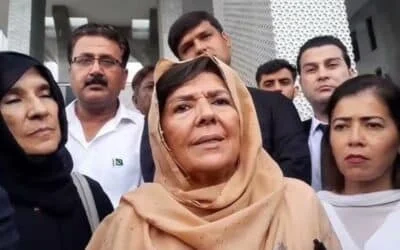
In an extraordinary and painful turn, Mr Khan’s sisters, Aleema Khanum and Noreen Khan, appeared on the very Indian channels that had helped spread the falsehood. Speaking to CNN-News18 and NDTV on November 27 and 28, they confirmed that their brother was alive, though held in solitary confinement and facing severe restrictions. “He is safe but he is not free,” Aleema Khanum said, her voice cracking with emotion.
On December 2, another family member, Uzma Khan, was granted a brief meeting with the former prime minister inside Adiala Jail. Photographs and video footage of the meeting were promptly released, conclusively proving that Mr Khan was in good health.
https://youtube.com/shorts/nNRRpDozTPU?si=ZKlE7PObMB2moOm8
Silence Instead of Accountability
To date, none of the Indian channels that ran the story for more than 48 hours have issued formal retractions or apologies. The original Afghan Times report remains online without correction. This refusal to acknowledge the error has deepened suspicion that the episode was never about journalism, but about calculated destabilisation.
https://youtu.be/zycTd8QzVxA?si=5tUUW5r7dsFU2OJf
Digital Forensics Points to Coordination
Independent cyber analysts who monitored the spread of the hoax have documented a clear pattern of orchestration:
- At least 50 high-engagement X accounts based in India and Afghanistan posted near-identical messages within minutes of one another.
- More than 60 per cent of the top 200 posts pushing the rumour were geo-tagged to Indian or Afghan IP addresses.
- Several verified Indian accounts linked to official information channels added unverified claims of “torture” and “deteriorating health”.
- The campaign generated over 50,000 interactions in the first 48 hours and briefly caused a 2 per cent dip in the Pakistan Stock Exchange on November 26 morning.
A Familiar Playbook, Sharper Execution
This was not the first attempt to weaponise rumours about Mr Khan’s life. A similar “poisoning” hoax in May 2025 fizzled out quickly. The November operation, however, was timed to exploit multiple pressure points: renewed border tensions with Afghanistan, ongoing PTI protests, and the former prime minister’s continuing detention on multiple charges.
Analysts believe the objective was to create a leadership vacuum within PTI, provoke street violence reminiscent of the May 9 riots, and erode public trust in state institutions at a moment of acute economic strain.
Pakistan’s Response and the Way Forward
Creditably, Pakistani authorities moved swiftly to counter the narrative. The Inter-Services Public Relations (ISPR) issued a clear denial, prison authorities facilitated the family meeting, and PTI leaders urged supporters to remain calm. Most citizens treated the reports with scepticism from the outset, limiting the potential for widespread disorder.
Yet the episode has exposed dangerous vulnerabilities. In an era where disinformation can travel faster than official clarification, Pakistan must treat such campaigns as acts of hybrid warfare.
Strengthening cyber-defence capabilities, real-time monitoring of coordinated inauthentic behaviour, and proactive diplomatic engagement with platforms hosting malicious content are no longer optional. Equally important is building public resilience through media literacy and responsible reporting within our own ecosystem.
You May Like To Read: AJK Cabinet Approves Universal Health Card, Revival of Student Unions
Imran Khan is alive, as everyone saw with their own eyes this week. Pakistan, too, remains standing — bruised by the malice of others, but unbroken. The real question now is how quickly and firmly we close the door that was so brazenly forced open.