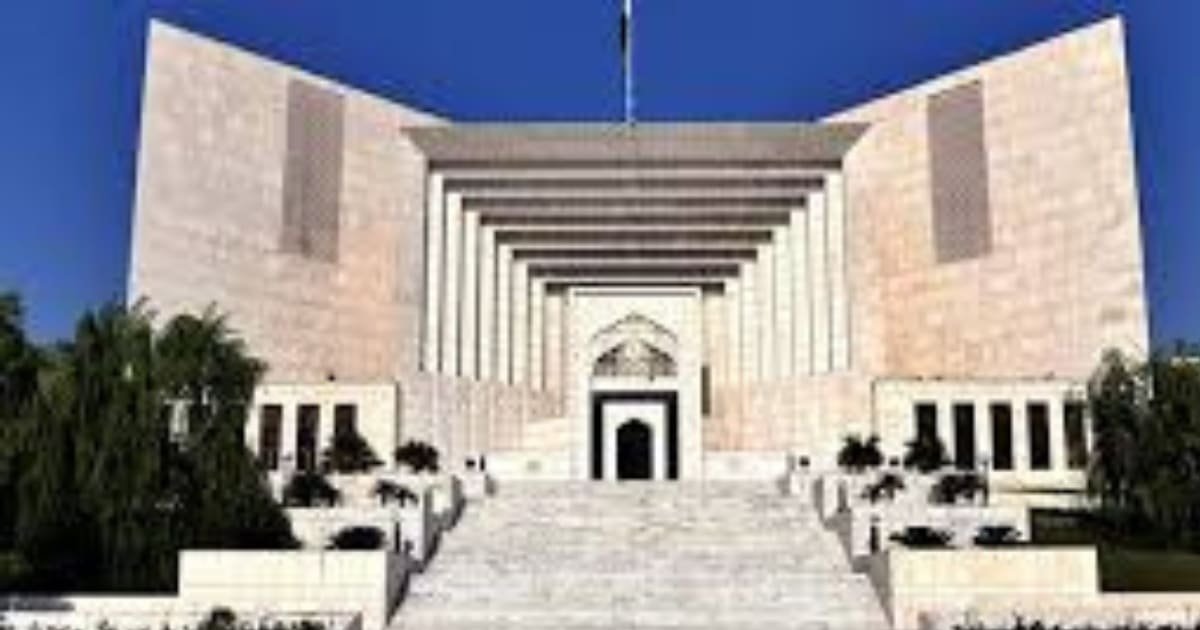





ISLAMABAD — In a landmark ruling aimed at curbing administrative overreach, the Supreme Court of Pakistan has declared that audit observations made by the Auditor General of Pakistan (AGP) against government departments cannot be used as “definite information” to trigger tax audits or recovery proceedings against private taxpayers.
The decision, authored by Justice Munib Akhtar on Thursday, January 29, 2026, reinforces the constitutional separation between the Auditor General’s mandate and the statutory powers of the Federal Board of Revenue (FBR).
The Case: Diamond Filling & CNG Station
The ruling stems from a sales tax dispute involving Diamond Filling and CNG Station, Peshawar.
- The Notice: In March 2023, the Inland Revenue Department issued a show-cause notice to the CNG station based on an audit observation by the Director General of Revenue Receipt Audit (DGRRA)—a wing of the AGP.
- The Challenge: The taxpayer argued that an audit of the Inland Revenue Department’s accounts (the government entity) could not be legally repurposed to target a private business.
- Legal Journey: The taxpayer won at every level—Commissioner (Appeals), Appellate Tribunal, and the Peshawar High Court (PHC)—before the Supreme Court finally dismissed the FBR’s appeal this week.
Key Judicial Findings
1. Distinct Legal Compartments
Justice Akhtar emphasized that the Auditor General operates under the 2001 Ordinance to ensure parliamentary oversight of public funds, while tax authorities operate under fiscal statutes (like the Sales Tax Act 1990). These spheres are “distinct compartments that do not overlap.”
2. Direct vs. Indirect Action
The court invoked the well-settled legal maxim: “What cannot be done directly cannot be done indirectly.” > The AGP is constitutionally mandated to audit the accounts of the Federation and Provinces—not the accounts of private sector entities for fiscal purposes.
You May Also Like: Six Terrorists Killed in Mianwali CTD Operation; Eight Flee
3. “Definite Information” Standard
The judgment clarified that an audit remark against a government office does not constitute “definite information” under tax laws. Stretching the law to include private entities in the AGP’s scope was described as a complete “misreading and misunderstanding” of the provision.
Impact on Tax Administration
| Feature | Former Practice (FBR) | New Supreme Court Mandate |
| Basis for Audit | Often relied on AGP/DGRRA “Audit Paras.” | Must be based on independent FBR evidence. |
| AGP Role | Viewed as an auxiliary tax investigator. | Restricted to auditing government receipts/expenditure. |
| Taxpayer Rights | High risk of “double jeopardy” and overreach. | Stronger protection against procedural shortcuts. |
What This Means for Taxpayers
This ruling prevents tax officials from using “internal government audit objections” as a shortcut to harass private businesses. Any notice issued solely on the basis of an AGP audit observation is now legally void.
AGP called on Honourable President of Pakistan @PresOfPakistan, Dr. Arif Alvi, @ArifAlvi at Aiwan-e- Saddar and presented him the Annual Audit Reports, including pertaining to the Federal Government pic.twitter.com/PYgIkXjBwE
— Auditor-General of Pakistan (@SAI_Pakistan) August 21, 2023