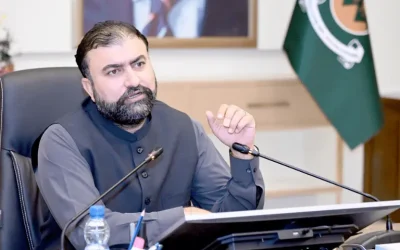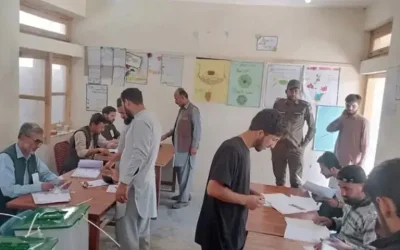





ISLAMABAD — The National Assembly Standing Committee on Information Technology and Telecommunication on Tuesday expressed deep concern over deteriorating internet and mobile connectivity across Pakistan, noting that even major metropolitan hubs like Karachi are experiencing severe service disruptions.
During the session, chaired by Syed Aminul Haque, lawmakers highlighted that users are facing sluggish data speeds and constant call drops.
Power Outages Crippling Telecom Towers
The committee identified prolonged electricity load-shedding as a primary driver of poor cellular and broadband services. In several areas, power cuts lasting up to 10 hours a day have exhausted backup power systems at mobile towers, bringing local telecom networks down.
NA Standing Committee Slams Telecom Operators Over Deteriorating Services.
Members criticized worsening network quality, with Ufone facing sharp criticism. PTA and IT Ministry say 5G upgrades will fix services.#techjuice #pakistan #telecom #ufone #pta #5g #technews pic.twitter.com/awJaZ2Vvt5— TechJuice (@TechJuicePk) July 14, 2026
To counter the energy crisis, the panel recommended transitioning mobile towers to renewable energy by urging operators to deploy solar and wind systems, leveraging Pakistan’s coastal and wind corridors to build dedicated clean energy loops for telecom infrastructure, and working with Nepra and regional power distribution companies (Discos) to secure uninterrupted grid feeds.
Pakistan Telecommunication Authority (PTA) Chairman Hafeezur Rehman confirmed that a high-level committee, established by the Prime Minister, is actively drafting a plan to safeguard power supplies for critical digital infrastructure.
5G Rollout Lacks Dedicated Infrastructure
Addressing queries on the 5G transition, the PTA chief revealed that while the country’s total spectrum has expanded from 274MHz to 754MHz following recent auctions, operators have launched 5G services in 22 cities without deploying new physical infrastructure.
Instead, 5G signals are running on existing, congested 4G towers. Rehman assured the panel that dedicated 5G infrastructure will be phased in over the next six to eight months, which is expected to resolve urban bandwidth issues.
“We have the spectrum, but the physical infrastructure must catch up. True service improvements will materialize over the next six to eight months as dedicated 5G nodes go live.” — Hafeezur Rehman, Chairman, Pakistan Telecommunication Authority
Local Smartphone Assembly Hits 92%
The PTA briefed the committee on the domestic mobile manufacturing landscape, highlighting major milestones in import substitution. Approximately 92% of smartphones used in Pakistan are now locally manufactured or assembled, with only 8% of active devices being imported — dominated almost exclusively by premium brands like Apple iPhone and Google Pixel.
The committee directed the Ministry of IT to actively engage with Apple and other global giants to set up physical assembly plants within Pakistan to eliminate import duties. The PTA clarified that taxes collected on the remaining 8% of imported devices are directly deposited with the Federal Board of Revenue (FBR), with PTA’s role limited to whitelisting compliant IMEI numbers via its Device Identification, Registration, and Blocking System (DIRBS).
Standing Committee on Information Technology & Telecommunication expressed serious concern over the unsatisfactory state of internet services in the country, noting that poor connectivity is affecting not only remote areas but also major cities such as Karachi.
In a committee… pic.twitter.com/jBR9E5EF6z
— Bloom Pakistan (@bloom_pakistan) July 14, 2026
Key Legislative Amendment Deferred
The committee deferred the Electronic Transactions (Amendment) Bill, 2026, following strong opposition from the Pakistan Peoples Party (PPP).
Lawmakers, including Sharmila Faruqui and Sadiq Memon, raised concerns over proposed administrative changes that would transfer authority from the federal cabinet directly to the prime minister. State Minister for IT Shaza Fatima Khawaja defended the amendment as a measure to bypass bureaucratic delays, but agreed to delay the bill until a political consensus is reached.