


MUZAFFARABAD — A severe administrative and security crisis has gripped Azad Jammu and Kashmir (AJK) following fierce clashes in Rawalakot that left four police officers martyred and dozens of citizens injured. However, the true scale of the tragedy remains heavily obscured from the public eye. Due to the government’s suspension of mobile data services across the region, a complete digital and journalistic blackout has cut off the flow of authentic, real-time information from the ground.
Key Highlights
- Four police officers were martyred and 20 others were injured during the layout of security operations near CMH Rawalakot.
- Severe information blockades exist across the state due to the total shutdown of mobile internet services.
- A massive discrepancy in casualties has emerged: the state confirms only two civilian deaths, whereas local demonstrators claim the actual death toll exceeds 20 citizens.
- The escalation follows the regional government’s highly controversial decision to ban and criminalize the Joint Awami Action Committee (JAAC).
- The family of a slain local trader refuses to conduct his burial until the state withdraws its “terrorist” designation against the rights movement.
Severe Disparity in Casualties Amid Total Digital Blackout
The enforcement of a strict mobile data shutdown across AJK has severely hindered independent news verification, leading to vastly conflicting narratives regarding the human cost of the clashes. While official state reports maintain that only two protesters lost their lives, local demonstrators and rights advocates on the ground claim a far more devastating reality, asserting that more than 20 citizens have been killed in the heavy-handed state crackdown.
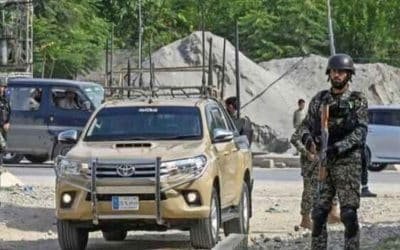
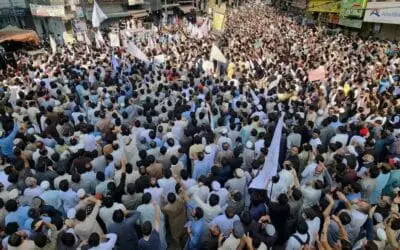
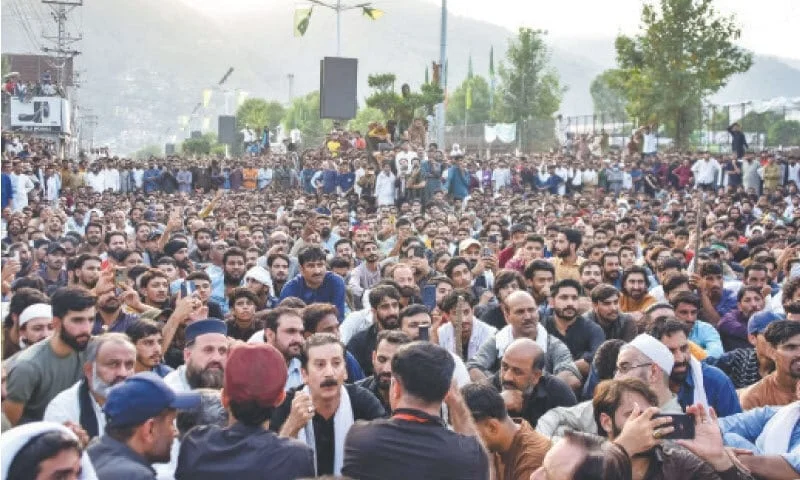
The friction intensified drastically when riot police deployed tear gas and batons to disperse a persistent civilian sit-in outside the Combined Military Hospital (CMH) in Rawalakot. The demonstration was initially triggered by the Friday night shooting of a local trader during an encounter with law enforcement. Local sentiments have hardened significantly, with the victim’s family declaring they will not bury his body until the government retracts its executive notification branding the public action committee as a terrorist organization.
A Mismanaged Crisis Over Legitimate Public Grievances
From a local perspective, observers view the current bloodshed as the direct result of the government’s severe mismanagement and rigid approach toward a mainstream civil rights movement. The JAAC’s platform originally gained widespread public legitimacy by advocating for essential economic relief, including lower energy pricing, inflation control, and free healthcare—demands the government claims it had largely agreed to address.
However, the political gridlock reached a breaking point when certain elements within the movement focused heavily on the contentious demand to abolish the 12 legislative assembly seats reserved for Jammu and Kashmir refugees ahead of the July 27 polls. Instead of defusing the political tension through sustained, peaceful negotiation, the executive’s sudden decision to completely proscribe the action committee effectively shut down the space for civil dialogue, pushing a desperate public further into a corner.
The Supreme Court’s Constitutional Stance
Amid the executive lockdown, the AJK Supreme Court issued its advisory opinion on a presidential reference regarding the fate of the 12 refugee seats. Chief Justice Raja Saeed Akram Khan emphasized that the constitution remains the supreme law and the collective property of the entire Kashmiri people.
The court ruled that any fundamental structural modifications to the Legislative Assembly must be achieved through proper legislative deliberation and democratic consensus-building by a fully mandated parliament, rather than being “wrested from a government under duress” through street agitation.
With the scheduled June 9 protest deadline fast approaching, local leaders stress that a peaceful resolution cannot be achieved through communication blackouts and state force. Restoring stability will require the executive to drop its aggressive criminalization of local dissent and enter into immediate, transparent mediation before the regional divide widens irreparably.