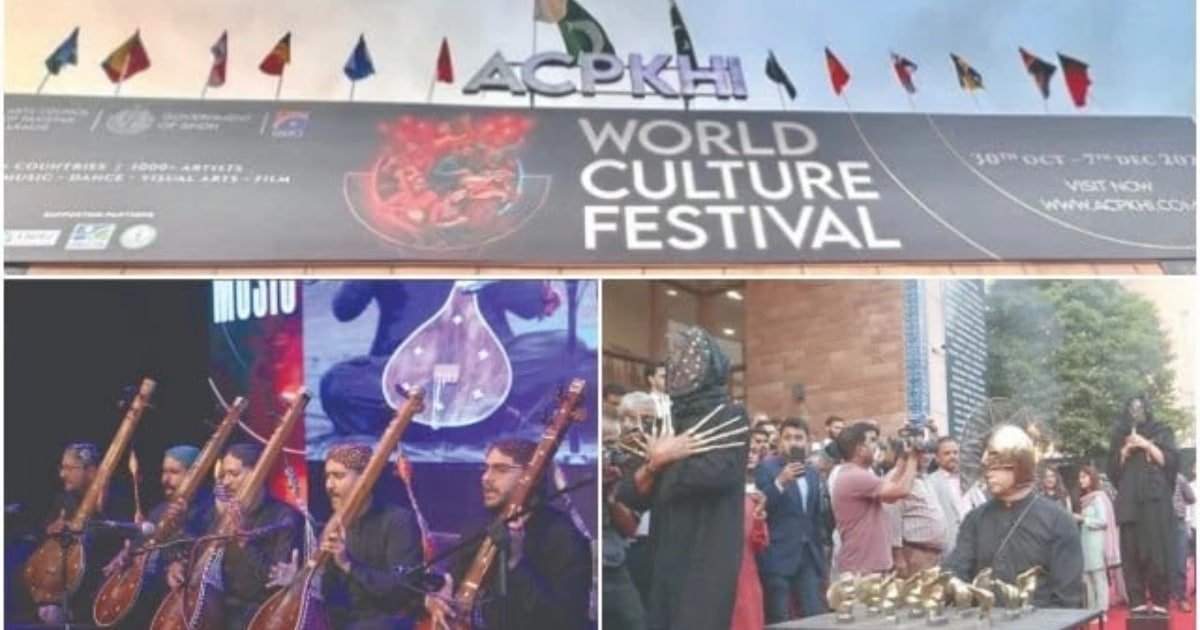



The ongoing World Culture Festival (WCF) provided a powerful duality of performance and purpose with the screening of the acclaimed Pakistani film Dukhtar and the theatrical presentation of Mulaqat. These two art forms, one deeply serious, the other comedically witty, illustrate the diverse ways Pakistani artists are engaging global culture while confronting major national issues.
View this post on Instagram
The Power of Social Cinema: Dukhtar
The screening of Afia Nathaniel’s 2014 film, Dukhtar (Daughter), served as a pivotal moment for social commentary at the festival. The film, which was Pakistan’s official entry for the Oscars that year, tells the emotionally charged story of a mother who escapes with her 10-year-old daughter to prevent her forced marriage to an older tribal leader.
The film’s reception was highly attentive, demonstrating the audience’s engagement with a subject that remains one of Pakistan’s most critical social problems: child marriage . Nathaniel underscored the film’s intent, stating that art should “reflect real social concerns and provoke thought.”
View this post on Instagram
Media’s Role in Framing the Issue
The screening highlights the evolving, yet often challenging, relationship between Pakistani media and sensitive social issues. While mainstream entertainment (like many TV dramas) has historically used such themes for sensationalism or to reinforce patriarchal norms, films like Dukhtar and socially conscious dramas demonstrate a transformative shift. They use powerful framing techniques in order to portray the child bride and mother with dignity and agency, rather than just as helpless victims, and challenge tradition by directly confronting the notion that cultural tradition or familial “honor” should supersede a child’s fundamental rights and safety.
View this post on Instagram
The Lighter Side of Life: Mulaqat
In contrast to Dukhtar’s heavy social realism, the theatrical performance of Mulaqat offered comedic relief and philosophical whimsy. Adapted from the French play Last Chance Encounter by Jean-Pierre Martinez, the Urdu production centers on a man and a woman who meet by chance on a suburban railway platform after their train is canceled.
You May Like To Read: Lok Mela 2025 Kicks Off in Islamabad: A Grand Celebration of Pakistani Heritage
Directed by Osama Ranjha, the two-character play uses its simple, confined setting to explore themes of fate, irony, and the unexpected encounters that can alter the course of one’s life. Its witty dialogue and mysterious, romantic undertones showcase the vibrancy of Karachi’s theatre scene and its ability to successfully translate and localize foreign dramatic works.
The programming of these two vastly different pieces side-by-side demonstrates the festival’s commitment to presenting art that both confronts reality and offers imaginative escapism.
Check out our latest video: