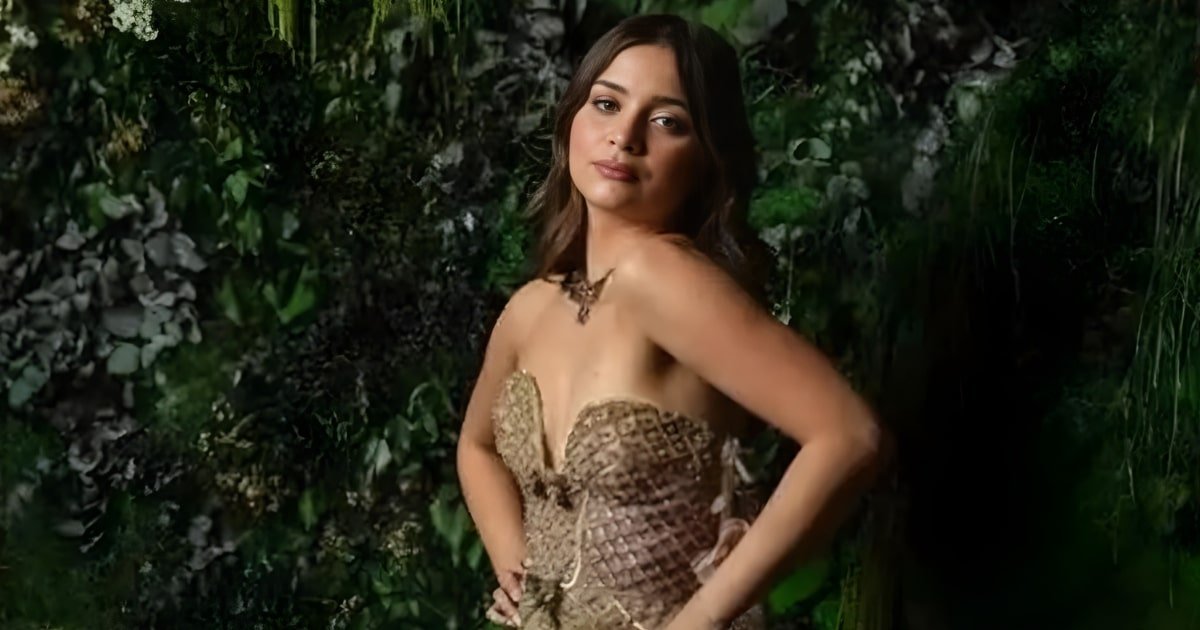





The annual Le Bal des Débutantes 2025 in Paris this weekend was, as always, a glittering spectacle of tiaras, tulle, and multi-million-dollar jewellery. Yet, the debut that captured the world’s imagination, and ignited a fresh cultural discourse, belonged to Ella Wadia, the great-great-granddaughter of Muhammad Ali Jinnah. Her presence at the exclusive ball was far more than a fashion moment; it was a profound, complex, and highly visual intersection of South Asian history, aristocratic tradition, and global elite society.
The Gilded Tradition and Its Democratic Critique
Held at the opulent Shangri-La Paris, Le Bal is an annual showcase of approximately 20 young women (and their cavaliers) chosen from the world’s most prominent political, aristocratic, and industrial families. The tradition is a direct descendant of the 18th-century debutante balls, designed historically to introduce marriageable young women into society.
In the 21st century, the event faces constant critique for being elitist, regressive, and archaic. Critics argue that the practice, which focuses on wealth, lineage, and physical presentation, is an uncomfortable relic in a supposedly egalitarian age. However, Le Bal has successfully rebranded itself, shedding the ‘marriage market’ label and presenting itself as a modern platform focused on philanthropy, haute couture, and career development. The emphasis today is on showcasing the next generation of global influencers, young women who are heading to top universities and beginning major careers.
View this post on Instagram
The Weight of History: Jinnah, Wadia, and the Contrast
Ella Wadia’s debut carried a historical weight unique among the attendees. Her connection traces back to Dina Wadia, Jinnah’s only daughter, who married Neville Wadia of the prominent Parsi industrialist family. Ella’s parents, Jehangir Wadia (Managing Director of the Wadia Group) and designer Celina Wadia, represent the latest fusion of this legacy.
The striking juxtaposition lies in the political contrast. The event celebrates the European tradition of inherited monarchy and entrenched aristocracy. Muhammad Ali Jinnah was the architect of a modern, democratic state (Pakistan), driven by self-determination and constitutional law, fundamentally rejecting colonial rule and monarchical systems.
For Jinnah’s descendant to be the focus of global media at an event celebrating inherited social capital creates a powerful, almost contradictory narrative. It symbolizes how the families that founded modern nations have now fully integrated into the highest strata of the international elite, where history is secondary to global standing. For Pakistan and the South Asian diaspora, her presence is a victory of soft power, a moment where a name intrinsically tied to the subcontinent commands attention on the most exclusive global stage.
Dynasty, Design, and Digital Fame
Beyond the history, the debut was a triumph of high fashion. Ella Wadia was introduced in a custom Elie Saab Haute Couture gown to ensure maximum impact. The selection of Elie Saab, a designer who embodies global glamour while maintaining a strong Middle Eastern heritage, was a deliberate choice, blending Eastern sensibilities with Parisian perfection. Her attire, typically valued in the tens of thousands of dollars, underscored the event’s commitment to high design.
The modern ‘debutante’ is expected to parlay this visibility into digital and professional influence. Le Bal provides an instant global profile, securing high-fashion contacts and media exposure invaluable for the young women’s future philanthropic or professional ambitions.
View this post on Instagram
Ella Wadia’s debut is thus a potent symbol of globalized identity. She represents a generation that does not compartmentalize its heritage; instead, she wears the complex history of the subcontinent on a couture sleeve while confidently stepping into a world defined by global capital, digital celebrity, and exclusive access. The Wadia legacy, rooted in the foundational politics of the 20th century and the industrial heart of the 19th, has successfully entered the 21st-century stage, not through politics, but through the universally recognized language of high society and haute couture.
You May Like To Read: Global Harmony 2: Pakistan’s Vibrant Culture Captivates Riyadh, Driving Soft Power Diplomacy