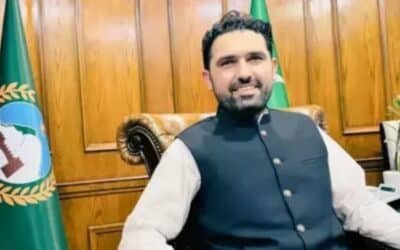



ISLAMABAD — At the Hand-in-Hand National Agriculture Investment Summit on Tuesday, February 3, 2026, Federal Minister for National Food Security and Research Rana Tanveer Hussain delivered a call to action for the private sector, emphasizing that Pakistan’s agricultural salvation lies in long-term capital rather than short-term cycles.
The summit, organized by the UN Food and Agriculture Organization (FAO) in collaboration with the Pakistani government, focused specifically on the “untapped goldmines” of the olive and dairy sectors.
Capital vs. Productivity
Minister Rana Tanveer highlighted a structural flaw in the current agricultural economy:
- The “Short-term” Trap: Most investment is currently locked into seasonal production cycles (seeds and fertilizer) rather than long-term infrastructure.
- Infrastructure Deficit: There is a critical lack of investment in cold chains, modern processing units, and climate-resilient technology.
- Productivity Gap: Despite having the land and labor, yields remain stagnant due to a lack of “development-oriented” financing.
Pakistan makes history as goods exports cross $3 billion in a single month for the first time on record. pic.twitter.com/k2H0wlIogB
— Mansoor Ahmed Qureshi (@MansurQr) February 4, 2026
The Olive and Dairy Sectors
The FAO’s Hand-in-Hand (HiH) initiative identifies these two sectors as the most viable for immediate high-impact investment:
1. The Olive Sector ($3 Billion Potential)
Pakistan is aiming to transition from an edible oil importer to a global exporter:
- Current Status: Only 55,000 acres developed out of 10 million suitable acres.
- The Goal: A “National Olive Plan 2030” aims to plant 50 million trees by the end of 2026.
- Investment Need: Private sector partners are needed for oil extraction mills, high-end packaging, and “Made in Pakistan” branding for international markets.
2. The Dairy Sector (Modernizing the Value Chain)
Despite being one of the world’s largest milk producers, Pakistan struggles with massive wastage and low quality:
- Bottlenecks: Inefficient collection points and lack of pasteurization technology for smallholders.
- Proposed Solution: The government is pushing for “Blended Finance” models—combining public funds with private capital—to integrate small-scale farmers into modern commercial value chains.
The $4.5 Billion Chinese Factor
The summit follows the Pak-China Agri Investment Conference held on January 19, which saw:
- 79 MoUs signed between Pakistani and Chinese firms.
- $4.5 Billion in potential investment commitments.
- Focus Areas: 10 key sectors, including agri-tech, smart irrigation (IoT), and deep-sea fisheries.
Agricultural Investment Roadmap (2026-2030)
| Priority | Strategy |
| Regulatory Clarity | Streamlining licenses for agribusiness through the Asaan Karobar framework. |
| Cluster Development | Establishing “Olive Clusters” to centralize research, processing, and marketing. |
| Climate Resilience | Incentivizing “Climate-Smart” farming to reduce the carbon footprint and soil erosion. |
| Technology | Adopting AI for yield prediction and autonomous machinery (a key focus for 2026). |
“Agriculture is no longer just about farming; it is a symbol of prosperity and self-reliance. We will make the olive the identity of Pakistan.” > — Minister Rana Tanveer Hussain
The Ministry is currently finalizing the “National Olive Plan 2030” framework.
You May Also Like: Wetlands as “Frontline Defenders” of Pakistan’s Coast and Blue Economy
Check out our latest video: