



Islamabad — Pakistan and Uzbekistan have set an ambitious goal to boost bilateral trade beyond $2 billion within the next two years — more than quadrupling last year’s figure of around $450 million — through an expanded Preferential Trade Agreement and deeper economic ties.
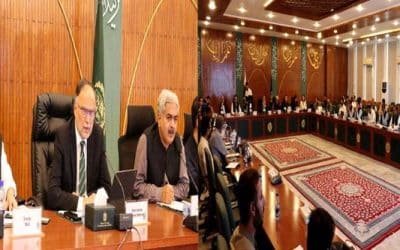
The commitment came during the 10th session of the Pak-Uzbek Intergovernmental Commission (IGC) on Trade, Economic and Scientific-Technical Cooperation, co-chaired by Special Assistant to the Prime Minister on Industries and Production Haroon Akhtar Khan and Uzbekistan’s Minister of Investment, Industry and Trade Laziz Kudratov.
🚨BREAKING: Pakistan-Uzbekistan aim $2B trade by 2028 with stronger PTA & economic ties.
🔗https://t.co/LdMOA4GXwQ pic.twitter.com/OT2z4lDiog
— The Daily CPEC (@TheDailyCPEC) February 3, 2026
Key Highlights
- Trade target: Over $2 billion in two years (from ~$450m last year).
- Expand PTA item list from 17 to more than double.
- Phase II concessions under PTA welcomed and progressing.
- Joint working group on labour mobility, skills, safety, and visas.
- Direct air services and regional railway projects under review.
- Phytosanitary protocols advance Uzbek fruit exports to Pakistan.
- Focus on agriculture, livestock, research, and food security.
- Academic exchanges, joint research, and innovation agreements signed.
- Cooperation on climate resilience, glacial protection, water management.
The joint statement highlighted steady progress since last year’s session and reaffirmed resolve to enhance trade facilitation, logistics, customs digitalisation, transit trade, regional corridors, and business-to-business links — backed by easier visas for traders.
In transport, both sides welcomed direct flights and alternative corridors to strengthen connectivity. Agriculture saw emphasis on plant protection, livestock, and sustainable growth, while higher education and tech partnerships aim at faculty/student exchanges and vocational training.
Environmental collaboration emerged as a priority, covering climate resilience, glacial ecosystems, water sustainability, and gender-inclusive adaptation.
This forward-looking roadmap signals Pakistan’s push for stronger Central Asian partnerships — unlocking new markets, investment flows, and shared prosperity while advancing regional stability and economic self-reliance.
You May Like To Read: KSE-100 Index Drops Over 1,500 Points in Early Trading
Check out our latest video: