




ISLAMABAD, May 19 — Pakistan’s export-led trade with the Middle East faced a significant setback in April, contracting by eight percent year-on-year to drop to $230.079 million. Official data compiled by the State Bank of Pakistan (SBP) reveals that the ongoing geopolitical conflict and disruptions in critical regional shipping corridors have heavily impacted the country’s external trade. While outbound shipments to traditional Gulf partners tumbled, Pakistan’s energy-reliant imports from the region bounced back, further complicating the country’s balance of payments.
Quick Facts
- Pakistan’s exports to the Middle East fell 8% year-on-year in April to $230.079 million.
- Total exports for the first 10 months of FY26 dipped by 2% to $2.635 billion.
- The trade deficit with the Middle East stands at a massive $11.263 billion for July-April FY26.
- Exports to the UAE—Pakistan’s largest regional market—contracted by 7% in April.
- Imports from the region grew by 5% in April, driven by a 30% surge in shipments from the UAE.
- Double-digit export declines were recorded for Bahrain (39%), Kuwait (36%), and Qatar (21%).
The contraction marks the second consecutive monthly decline for Pakistani exporters since March, highlighting how acutely sensitive the country’s trade flows are to regional stability. In April, outbound shipments to the UAE, Qatar, Kuwait, Bahrain, and Jordan all faced negative growth, while Saudi Arabia posted only nominal growth. For the first ten months of the current fiscal year (10MFY26), overall exports to the region slipped to $2.635 billion, down from $2.676 billion during the same period last year.
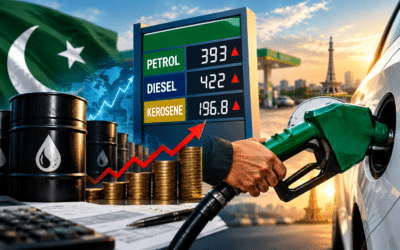
In contrast to falling exports, Pakistan’s import bill from the Middle East grew by five percent in April, totaling $1.548 billion. This increase was led primarily by the UAE, from which imports surged by 30 percent during the month due to the country’s structural reliance on Gulf energy. Combined, the UAE and Saudi Arabia supply nearly 90 percent of Pakistan’s imported fuel. Though the total trade deficit with the region technically narrowed by four percent to $11.263 billion across the 10-month period, analysts warn that the combination of rising fuel import costs and shrinking export revenues will keep Pakistan’s external accounts under severe pressure ahead of the upcoming federal budget.