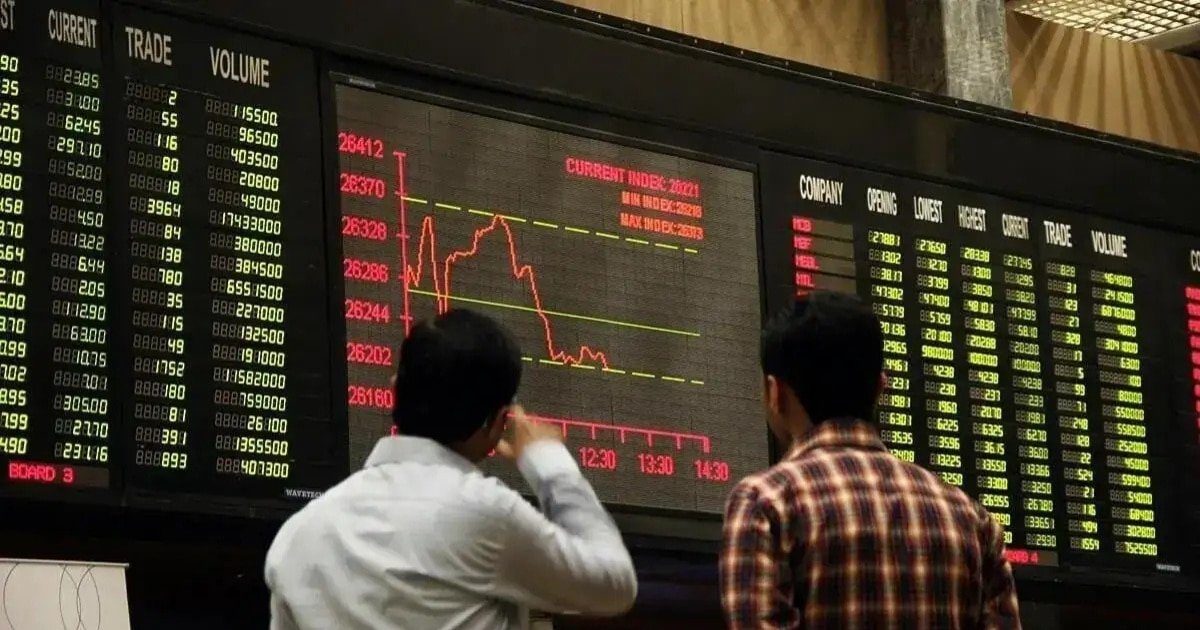





Islamabad — The KSE-100 index plunged sharply today, plunging amid heightened geopolitical tensions in the Middle East. Trading at the Pakistan Stock Exchange kicked off with a dramatic crash of over 15,000 points on March 2, 2026, forcing a temporary halt as investors reacted to the weekend’s US-Israel joint strikes on Iranian targets. By midday, the benchmark had partially recovered but remained deep in the red, down around 13,360 points — a stark reminder of how global instability can ripple through Pakistan’s economy.
Selling pressure gripped the Pakistan Stock Exchange (PSX) amid escalating geopolitical tensions in the region, driving the benchmark KSE-100 Index below the 154,000 level on Monday.
Read More:https://t.co/oNnOEAj0zM#intraday #PSX #KSE100 #PakistanEconomy #brecordernews
— Business Recorder (@brecordernews) March 2, 2026
Chief Executive Officer of Topline Securities Mohammed Sohail called it an initial overreaction driven by fund selling, yet noted some bargain hunting as valuations turned attractive after a 20 percent drop from recent peaks. With oil prices surging and safe-haven gold climbing, observers worry about broader impacts on Pakistan’s fragile recovery, including remittance flows from Gulf states.
- Initial Plunge and Halt: Market crashed over 15,000 points shortly after opening, triggering a PSX trading suspension due to circuit breakers.
- Resumption Figures: At 10:30 am, index down 12,334.88 points (7.34 percent) from previous close of 168,062.16.
- Partial Recovery: By 11:07 am, losses eased to 9,164.62 points (5.45 percent); however, by 11:45 am, down 13,360 points again.
- Geopolitical Trigger: US and Israel launched “pre-emptive” strikes on Iran on Saturday, with President Donald Trump announcing major combat operations.
- Commodity Shifts: Brent crude up 6.4 percent to $77.57 per barrel (peaked at $82.00); US crude rose 6.2 percent to $71.17; gold climbed 1.6 percent to $5,360 per ounce.
KSE-100 Index Down: What Sparked the Volatility?
The market’s wild swings — from an early halt to fleeting recoveries — stemmed directly from the escalating Middle East conflict. Sohail pointed out that a few leveraged players and funds fueled the panic selling, but calmer heads soon spotted value in stocks battered by recent declines.
Meanwhile, in a related development, protests erupted across Pakistan against the strikes, with at least 22 reported killed in clashes near US consulates in Karachi and northern areas, underscoring the nation’s sensitivity to regional strife.
Broader Implications for Pakistan’s Economy
Pakistan’s economy, already navigating a $7 billion IMF program, faces added pressure if tensions disrupt the Strait of Hormuz, through which a fifth of global oil flows. Economists like Farrukh Saleem warn that higher energy costs could strain imports, while threats to Gulf stability might hit the $41 billion remittance target vital for the balance of payments. Yet, Pakistan’s role in providing intelligence support highlights its strategic importance, potentially bolstering diplomatic ties amid the chaos.
You May Like To Read: A Midtown Metamorphosis: Pakistan and U.S. Sign Landmark Roosevelt Hotel Deal
As trading continues into the afternoon, investors hope for de-escalation signals from Vienna talks to steady nerves — a testament to Pakistan’s resilient markets, which have weathered global storms before and emerged stronger.
Check out our latest video: